Early motoring returns to Hershey
RM Sotheby’s held its Hershey auction on 7 and 8 October 2026 in Pennsylvania, alongside the annual Antique Automobile Club of America Fall Meet. Its focus on veteran and Brass-Era automobiles created a different collecting atmosphere from sales dominated by contemporary supercars.
This October event has already taken place, but final lot results need to be taken from the auctioneer’s confirmed record. An estimate appearing in an earlier catalogue should not be mistaken for the amount a particular car achieved.
The appeal of very early engineering
The Brass Era takes its name from the bright metal fittings commonly used on many early automobiles, but the vehicles are significant for much more than ornament. Their engines, controls and coachwork reflect a period when manufacturers were still testing different solutions.
A collector can learn a great deal by examining the layout of a vehicle and comparing original instructions with modern restoration practices. Two cars of similar age may require very different skills to operate or maintain.
A car that must be understood before use
Early brakes, steering arrangements and controls can behave very differently from those in a modern road vehicle. Owners need familiarisation and appropriate mechanical checks before considering any journey beyond a closed event site.
Specialist transport may be more sensible than attempting to drive an old machine over a long distance. Appropriate insurance and safe loading procedures should be planned before the vehicle changes hands.
Restoration and originality
Some collectors prefer a fully restored car that illustrates the appearance it might have had at delivery, while others value the historical evidence retained by a survivor. Each approach requires an honest record of replacement components and subsequent interventions.
Paintwork, upholstery and bright metal can create an impressive first impression without revealing the condition of the mechanical systems. An independent specialist should examine the individual car, not simply judge the quality of its presentation.
Individual cars give this sale its character
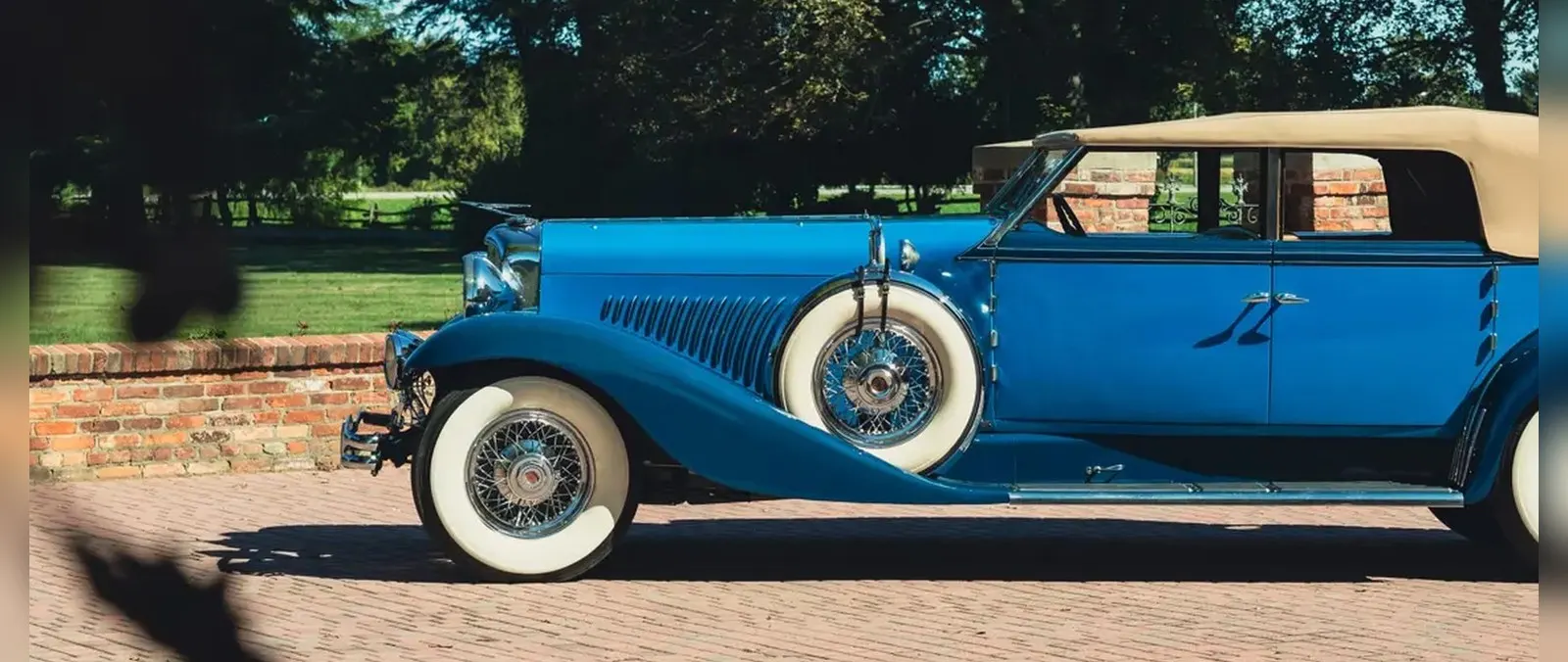
Among RM Sotheby's highlighted consignments was a 1934 Duesenberg Model J Convertible Berline with Murphy coachwork, carrying a presale estimate of $900,000 to $1.2 million. That was a valuation range before the auction, not a recorded price paid. The automobile's appeal lies in its combination of engineering, bespoke bodywork and documented ownership history.
A very different example was the one-off 1956 Cadillac Eldorado Brougham Town Car concept, known as XP-48. The design survived an instruction to destroy it, making the story of its survival central to its importance. A concept car preserves evidence of what a manufacturer imagined, even when it never produced a commercially available model.
Provenance and the outcome of a completed auction
The catalogue also included the first 1935 Auburn 851 Supercharged Speedster, a car with a significant restoration history and details unique to early examples. Collectors need to distinguish documented factory features from subsequent work. Chassis identification, specialist certification and photographic records can be as important as the outward appearance of a restored body.
The Hershey auction took place on 7 and 8 October, before this article's publication. Readers seeking prices should consult the auctioneer's actual results, not presume that published estimates were achieved. This distinction matters across collectible assets: rarity, condition, originality and the quality of documentation influence value, but do not guarantee a future return.
Collecting as preservation
Hershey’s established club community provides an opportunity to exchange knowledge about obscure parts, specialist workshops and documentary archives. For a new entrant to this category, those relationships may prove as valuable as finding a vehicle at auction.
An early automobile can reward patient ownership and an interest in history rather than daily usability. Responsible preservation and secure records are a stronger foundation than assuming rarity alone will ensure investment gains.