A culinary itinerary rather than a sequence of hotels
A journey through Peru can be organised around the different ingredients and landscapes that give its cooking such variety. Lima faces the Pacific, while the Sacred Valley provides a very different setting among the Andes. Even a traveller accustomed to arranging holidays around coastal destinations may find the change from the sea to an inland agricultural landscape particularly rewarding.
On 10 November 2026 Marriott International highlighted three dining experiences at its properties in these two regions. The selection includes Maras at The Westin Lima Hotel and Convention Center, Insumo at AC Hotel Lima Miraflores and a garden-based experience at Tambo del Inka, a Luxury Collection Resort and Spa. Each is associated with a different chef and a distinct approach to Peruvian gastronomy.
The announcement is a useful starting point for constructing a food-focused visit. It is not a newly launched inclusive travel package, and it does not give a single price covering all three experiences. They are separate reservations that can form part of an itinerary according to the traveller's interests and available time.
For Luxury Yacht Guide readers, the attraction is the relationship between the meals and the places in which they are served. A coastal restaurant can provide an introduction to the produce of the Pacific, while a subsequent experience in the Sacred Valley offers an opportunity to understand something of the agricultural practices behind the food. The transition between these environments is part of the journey, rather than an inconvenience to be minimised.
Maras and the contemporary interpretation of Peruvian ingredients
At Maras, executive chef Miguel Pulache develops contemporary dishes around seasonal produce sourced from different parts of Peru. Marriott describes the restaurant as a refined interpretation of the country's regional flavours. Its position within a city hotel provides an urban context for discovering ingredients that may be encountered again elsewhere during a visit.
The most rewarding introduction to an unfamiliar cuisine does not always require the largest available tasting menu. A diner may be particularly interested in the way an ingredient is prepared or the balance between different components of a dish. A thoughtful discussion with the restaurant's staff can help establish which offerings provide a useful introduction to its approach.
Peru's geography permits considerable variation in the produce associated with different regions. A city restaurant can bring together ingredients that would not necessarily be found in the same local market. That gives the chef scope to develop combinations that draw on several traditions while retaining an individual identity.
The November release does not identify a complete current menu, the origins of every farmed ingredient or the prices of individual dishes. Diners should therefore consult the restaurant's own information before booking, particularly if the availability of a particular preparation is important. The seasonal nature of the kitchen means that the offering can change. Dietary restrictions should be discussed with the restaurant in advance.
Maras offers an opportunity to experience contemporary Peruvian cooking before exploring its connections to specific landscapes. A visit can be appreciated independently of a stay at the hotel, subject to the restaurant's actual admission and reservation arrangements.
Insumo: a rooftop overlooking the Pacific
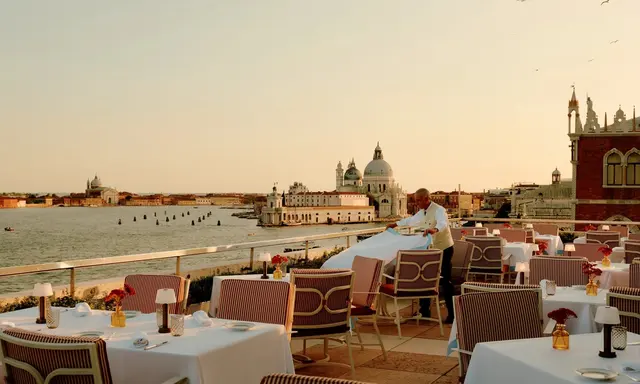
The second restaurant, Insumo, is located on the roof of AC Hotel Lima Miraflores. Chef Román Ucharima leads its kitchen, combining Peruvian flavours with Mediterranean influences. The operator describes the menu as drawing on coastal ingredients and the venue as offering views across the Pacific.
That combination has a natural appeal for travellers familiar with Mediterranean food and maritime leisure. The fact that both culinary traditions make use of ingredients associated with the sea does not mean that the resulting preparations are interchangeable. A chef may select familiar techniques while developing a distinctly Peruvian treatment of the ingredients available locally.
The rooftop location provides a connection between the food and the landscape. The appearance of the ocean can change during a meal as the light varies. For visitors planning an evening around that view, the position of the table and the actual weather conditions may matter. The announcement does not guarantee a specific table location or the visibility of a sunset.
The menu should also be considered independently of the restaurant's position. A diner particularly interested in seafood can ask which preparations are available and whether the kitchen can describe the origin of the fish served. Seasonal availability and practical supply considerations should be distinguished from the general intention to use coastal produce.
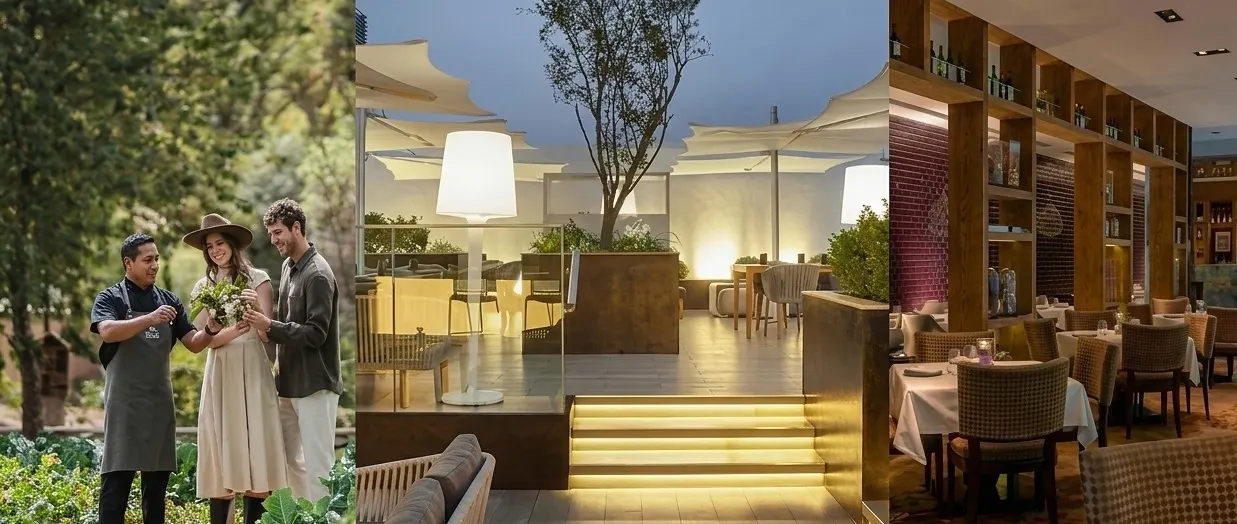
The official photographic triptych accompanying the announcement includes an image of the rooftop dining setting. It gives an indication of the venue's atmosphere but is not a current record of the view or table configuration on any particular evening. The pleasure of a meal at Insumo will ultimately depend on the experience of dining there.
Following the ingredients into the Sacred Valley
The third experience takes place at Tambo del Inka in an entirely different landscape. Executive chef Liner Vega leads a garden-based programme beside the Vilcanota River, with views towards the snow-covered Chicón mountain. Participants are invited to harvest ingredients, learn about regional agriculture and then explore aspects of their preparation.
The experience includes the making of uchucuta with a stone batán. This gives the visitor a direct opportunity to encounter a traditional method of processing ingredients, rather than simply reading about it before a dish arrives at the table. The practical qualities of a grinding surface and the effort involved in preparing food become visible through the activity itself.
The meal described by Marriott includes salads, regional starters, grilled meats, native potatoes and herbal infusions made with ingredients from the garden. Its emphasis is therefore broader than the preparation of a single representative dish. A visitor can encounter several ingredients in the context of the place where the programme is organised.
Participation in harvesting should be distinguished from an unrestricted opportunity to explore the agricultural property. The actual duration, group size, appropriate footwear and accessibility of the activity should be established before booking. The announcement does not specify the fees or whether every element is available throughout the year.
The Sacred Valley experience is particularly suited to travellers who appreciate meals with a clear connection to the landscape. The opportunity to meet the chef during preparation may be as interesting as the eventual lunch. It allows visitors to ask questions that might be difficult to explore during the ordinary service of a busy restaurant.
Making room for a slower journey
A culinary itinerary that incorporates both Lima and the Sacred Valley requires more planning than a sequence of restaurant reservations within one city. Transport, accommodation and the different elevations of the destinations must be considered. The move inland should leave sufficient time for the traveller to become comfortable with the changed environment rather than require an immediate commitment to a demanding schedule.
Visitors who have particular concerns about travelling to higher elevations should obtain appropriate medical advice. The November announcement is about the restaurants and their experiences, not a health assessment or a comprehensive guide to travel conditions in the Andes.
The dining arrangements can be organised around a series of different priorities. Someone particularly interested in contemporary cooking may want to devote more time to Lima, while another visitor may wish to remain in the Sacred Valley and explore its agricultural and cultural settings. There is no obligation to visit all three restaurants in immediate succession.
A thoughtful itinerary may also leave room for experiences independent of the hotel group. Local markets, specialist producers and meals at smaller establishments can introduce different perspectives on ingredients encountered at the three announced venues. The selection published by Marriott should be understood as a presentation of its own hospitality offerings, rather than an exhaustive ranking of Peruvian restaurants.
For families and small groups, the variety of the proposed activities can help establish a balance between more formal meals and experiences involving direct participation. Advance conversations with the venues should clarify reservations, children’s participation and dietary needs. Good planning should support the enjoyment of the journey rather than turn the visit into a rigid programme.
Gastronomy as a personal reason to travel
The three experiences demonstrate different ways in which a hospitality business can connect its guests with regional food. Maras brings ingredients from across Peru into a contemporary urban kitchen. Insumo connects coastal cooking and Mediterranean inspiration with its setting above the Pacific. Tambo del Inka introduces an opportunity to see ingredients in a garden and take part in aspects of preparation before sitting down to lunch.
Their appeal is not dependent on a claim that every other restaurant is less distinctive. The individuality of the experiences arises from their location, the choices of the chefs and the way in which the visitor is invited to encounter the food. One diner may be drawn to the visual presentation of an evening meal, while another may particularly remember a technique demonstrated beside the river.
The photograph supplied by Marriott brings together these three settings, but their practical differences should remain clear when arranging a trip. The release does not give confirmed availability, a complete menu or inclusive pricing. Prospective visitors should establish the arrangements for each experience separately.
For people who spend time exploring coastlines and ports, Peru offers the possibility of extending those interests into an inland landscape with a very different relationship to food. The November announcement provides a starting point for such a journey. Its most compelling proposition is not an attempt to collect restaurant visits, but the opportunity to understand how ingredients, preparation and setting contribute to the character of a meal.
Sources and lead image
Source documentation: https://www.prnewswire.com/news-releases/discover-peru-through-three-extraordinary-culinary-journeys-302933781.html. Lead image: Official photographic triptych of the Sacred Valley garden experience, Insumo and Maras — Marriott International, official editorial photographs accompanying its 10 November 2026 announcement.. Official issuer-supplied press photograph, reproduced for editorial coverage of the specific announcement and resized for web display.