An East Funen destination with a different character
Nyborg offers a rewarding opportunity to combine Danish coastal cruising with time in a town whose historical importance arose from its position beside the Great Belt. Rather than being simply a waypoint between larger nautical destinations, it has a distinct identity as a royal town, a centre of trade and an important place in Denmark's political history. For a family travelling aboard a luxury yacht between twelve and twenty-four metres in length, the appeal is the contrast between the maritime setting and the compact historical centre. A visit can be organised around a suitable berth in the area, or as an excursion from another confirmed harbour on Funen. The key is to treat the town as a destination worth exploring in its own right, rather than promising passengers that the yacht will necessarily be able to moor wherever a visitor guide shows a waterfront. The captain should establish berth suitability and availability before setting the itinerary.
A royal town shaped by geography
VisitNyborg's historical material describes a settlement first mentioned in 1202, which developed as a traffic and trade hub and received township rights in 1271. The position on eastern Funen linked the town with travel across the country and explains why the history of water transport is inseparable from its development. Understanding that relationship enriches a visit by yacht. The Great Belt is not merely a stretch of water to cross; it is part of the geographical structure that helped make the town important. A visitor who has spent time aboard during a Danish cruising programme can appreciate the difference between travelling through a waterway today and the challenges faced before modern transport links. The town's heritage is best explored ashore, where the castle, fortifications and older streets reveal how successive generations used this strategic location. Plan enough time for a walk without trying to fit every historical landmark between arrival and departure.
The castle and the changing role of a royal residence
Nyborg Castle is the central landmark. The local tourism authority dates its construction to around 1200 and associates it with Valdemar the Victorious. Of the original four-wing complex, the King's Wing survives. Nyborg subsequently became a meeting point for important political gatherings, and the castle was the setting for the signing of the 1282 charter by Erik Klipping, described by VisitNyborg as Denmark's first constitution. The medieval assembly known as the Danehof is an important part of the story. Later, in 1525, Nyborg was designated the residence of Frederick I, and Christian III also resided there. For a visitor, these layers of history are more interesting than a simple architectural checklist. They help explain why a relatively small contemporary town occupies such a prominent position in Danish heritage. Families with different interests can approach the castle through architecture, politics, local history or its relationship to the surrounding defences.
A restoration project rather than a fully open castle
The visitor authority states that the castle is undergoing extensive restoration and expansion, with no reopening date yet determined. That distinction is important when arranging a yacht holiday. A captain or concierge should not promise an interior visit based on photographs taken when the castle was operating differently. The published plans include a modern extension intended to accommodate further exhibitions, improve accessibility and provide climate-controlled conditions for more delicate objects. While the principal site is undergoing work, the castle exhibition at Borgmestergården provides another way to investigate the historical project. The tourism authority describes changing displays concerning archaeological discoveries and restoration materials. The Mayor's Yard itself is a half-timbered former merchant house dating from the Renaissance. Check the current museum arrangements directly before travelling and allow for changes to access around a working restoration site. This makes for a much more satisfying outing than discovering an unexpected closure after arranging the entire day's programme around it.
Exploring the fortress town on foot
VisitNyborg publishes a town-and-fortress walking-tour listing that describes the development from a medieval market town to the modern settlement. Its guided version is conducted in Danish, and visitors should check current dates rather than assume a tour will coincide with a yacht arrival. Independent exploration is another possibility, using current visitor information and choosing a route appropriate to the group's mobility. The historical streets include buildings associated with reconstruction following the fire of 1797. A walking visit allows guests to examine the scale and character of the town at their own pace. It also gives an opportunity to pause over the way the castle and defensive structures relate to the streets around them. For guests who are less interested in architecture, a leisurely visit to the centre can be combined with a meal or shopping, without requiring every member of the family to follow the same detailed historical itinerary.
Coastal space beyond the historic centre
The official destination information highlights more than forty kilometres of coastline beside the Great Belt in the surrounding area, alongside suggestions for walking, cycling and time outdoors. A yacht holiday offers a natural way to combine these activities with the maritime setting, provided the crew and guests take the seasonal conditions into account. A day ashore might include a coastal walk, a shorter outing to a beach or time exploring suitable cycling routes. The actual activity should be chosen according to weather, daylight, access and the abilities of the people taking part. An itinerary does not need to involve launching equipment directly from the yacht. Where the vessel cannot safely approach a particular stretch of shoreline, guests can still experience it by land. The tourism office's outdoor information is useful in identifying possible activities, but neither a destination photograph nor a recreational walking map provides navigational clearance for a yacht. Preserve the distinction between planning the guests' activities and planning movements of the boat.
Considering berth requirements in a busy maritime area
Nyborg's maritime position is attractive, but that does not automatically make every quayside suitable for a yacht in Luxury Yacht Guide's size range. A captain should confirm the maximum permitted dimensions, available depths, approach characteristics, mooring arrangements and intended arrival time directly with the relevant harbour operator. A yacht's published length alone may be insufficient if its beam, draft or fixed superstructure creates additional constraints. Confirm the arrangements for electricity, access, waste and any other essential services according to the vessel's actual requirements. Observe current navigational publications and local traffic requirements when planning passage through the Great Belt and nearby waters. The existence of bridges, commercial movements and purpose-built port facilities is a reason to prepare carefully, not a reason to assume that a particular recreational vessel has unrestricted access. Where a suitable berth cannot be confirmed, another established harbour and a land transfer can preserve the historical visit without compromising safe vessel operations.
Arranging an enjoyable stay with time for different interests
A private yacht is particularly valuable when it allows a group to spend time together without requiring every activity to be shared. In Nyborg, some guests may prefer historical attractions while others enjoy coastal scenery or a relaxed afternoon ashore. The owner can arrange the programme around these differences, allowing enough time to explore the old town and the castle's story before returning to the yacht or continuing to another destination. Local tourism information also identifies churches, manor houses and other historical sites in the wider area. A visit to these places may require separate transport, particularly if the yacht is based outside the town. Check opening conditions and journey arrangements before making commitments. The quality of the holiday will depend as much on the suitability of these practical arrangements as on the significance of individual attractions. A less ambitious itinerary with time to appreciate each place can be preferable to a long list of stops.
A considered addition to a Danish cruising programme
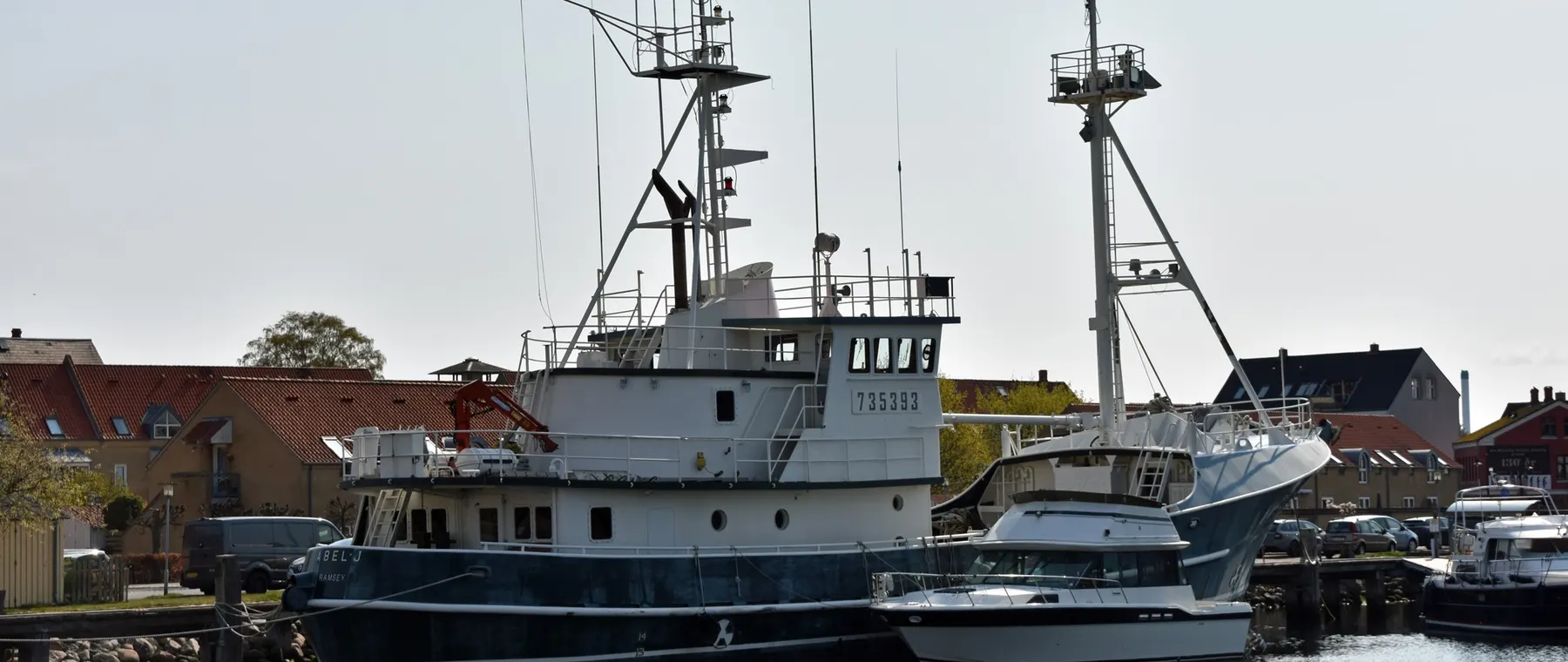
Nyborg's attraction for yacht owners lies in the way its historical identity and its position beside the Great Belt reinforce one another. It gives a contemporary coastal voyage an additional perspective on the movement of goods, people and political power through Denmark over the centuries. The ongoing castle restoration is part of that evolving story, not a reason to overlook the destination. Consult the official tourism authority for current access conditions and plan the visit around confirmed harbour and transport arrangements. On a longer itinerary, Nyborg can complement other destinations on Funen without duplicating their particular cultural experiences. The accompanying licensed photograph records the vessel Abel J in Nyborg harbour; it illustrates the town's working maritime environment and does not claim to show an available luxury-yacht berth. A thoughtful visit allows the guests to appreciate the place beyond the waterfront while leaving decisions about the yacht's movements to the people responsible for its operation.
Sources and photograph
Source documentation: https://www.visitnyborg.com/nyborg/highlights/nyborg-castle, https://www.visitnyborg.com/nyborg/highlights/history/history-nyborg, https://www.visitnyborg.com/nyborg/plan-your-trip/town-and-fortress-walk-gdk728391, https://www.visitnyborg.com/nyborg/highlights/active-vacation/outdoor-nyborg. Photograph: Abel J in Nyborg harbour — Thomas Dahlstrøm Nielsen / Wikimedia Commons, CC BY-SA 4.0. Resized for web display under CC BY-SA 4.0.