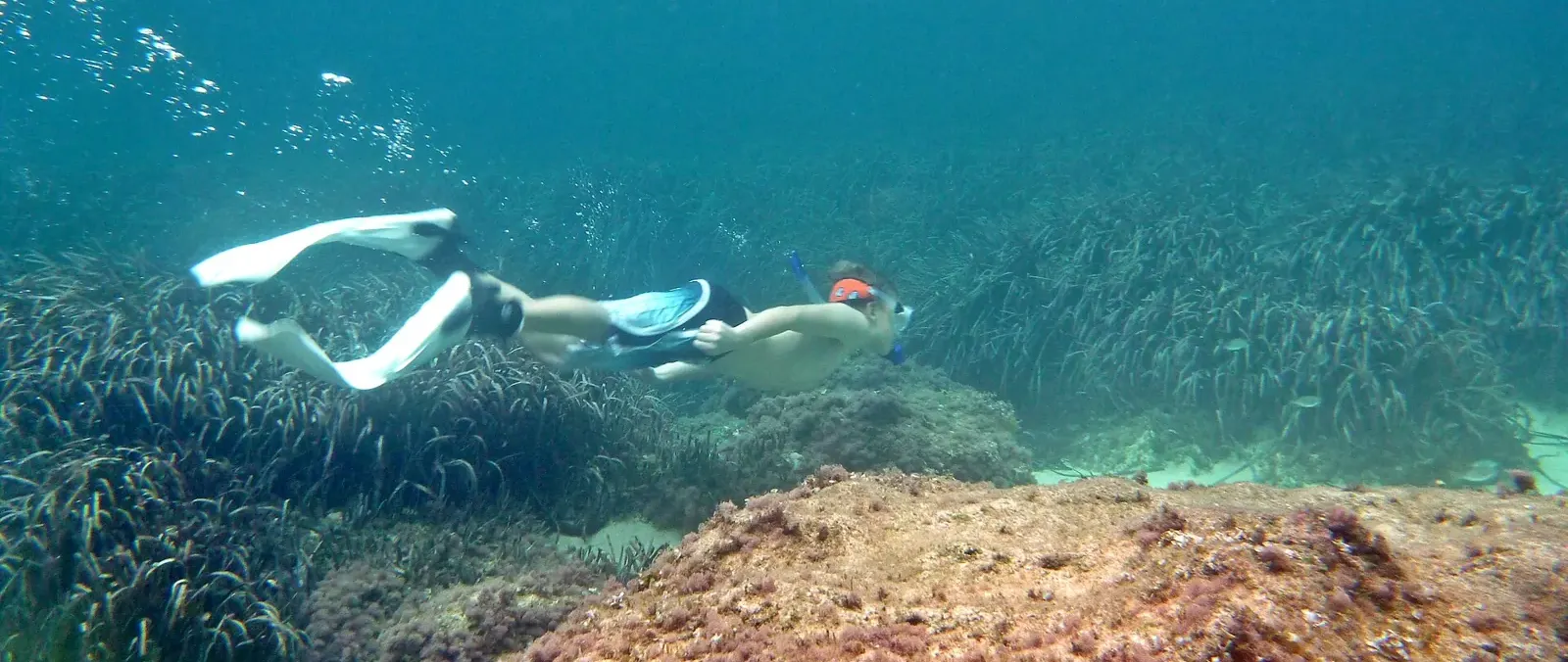
The sea floor is part of the holiday
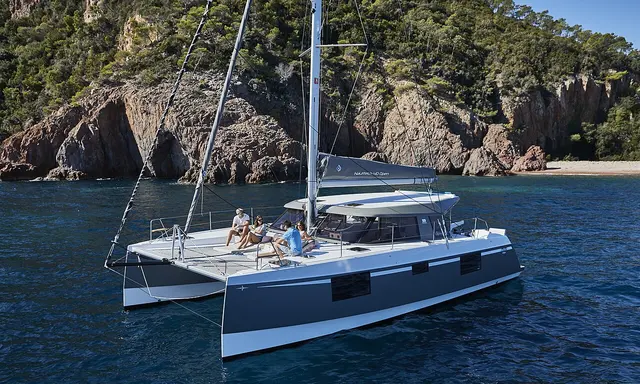
A favourite Mediterranean anchorage can look like a perfect circle of turquoise water from a yacht's foredeck. The less visible part is often the most important: the living seabed beneath the anchor and chain. Posidonia oceanica, a seagrass native to the Mediterranean, forms underwater meadows that support marine life and help stabilise coastal habitats. The Royal Yachting Association and its environmental programme The Green Blue both encourage boaters to avoid damaging seagrass through anchoring. For luxury yachts between 12 and 23.99 metres, this is not a concern reserved for much larger vessels. The everyday choice of where to drop the anchor can directly affect the destination guests have come to enjoy.
Why a meadow is not empty sand
Underwater seagrass is sometimes mistaken for a patch of seaweed, yet it is a flowering marine plant with long-lived habitat value. The Green Blue describes seagrass beds as important places for feeding, shelter and breeding, with the ability to help stabilise seabed sediment. These ecological functions are worth understanding before a yacht chooses its overnight spot. An anchor that grips well in a meadow may still damage plants or their root systems. The chain may also sweep across the bottom as wind and tide change. Seeing a lush patch beneath clear water should therefore be a reason for caution, not evidence of a particularly safe place to set the hook.
A small yacht can still leave a mark
It is easy for owners of relatively modest luxury yachts to assume that environmental anchoring rules are aimed entirely at vessels of 30, 50 or 80 metres. The practical effects of anchors and chain, however, do not disappear below a particular length. The industry's international association ICOMIA has emphasised protecting Posidonia and other seagrass habitats across yacht operations. Larger-vessel regulations may be more specific in some jurisdictions, but good practice applies to every crew. A 15-metre boat choosing a sandy patch instead of a meadow can reduce needless disturbance without giving up the pleasure of staying overnight in a beautiful bay.
Different countries have different rules
The French Mediterranean maritime authority maintains a framework of anchoring controls, including local decrees intended to protect Posidonia. Some rules specifically address larger vessels, and local provisions may differ by coastal area. It would be misleading to turn one headline threshold into a universal permission for yachts below that size. Other Mediterranean destinations have their own protected areas, buoy systems and restrictions. Owners should consult current official local notices and ask the harbour or marine-park authority when uncertain. This article explains responsible behaviour but cannot establish the legal position in every anchorage, especially where boundaries or designated mooring zones can change.
Choose the patch before dropping
An anchoring decision begins before the boat is stopped. Study current charts and environmental maps, check the forecast and look for designated anchoring zones. In clear water, visible patches of sand may provide an alternative to darker vegetation, but colour alone is not a reliable seabed survey. The skipper must still evaluate depth, holding, swing room, hazards and traffic. If the location is unsuitable for both secure anchoring and habitat protection, the right choice may be to move on. A successful holiday never depends on treating the first appealing bay as compulsory.
Mooring buoys can be the better option
Some sensitive areas offer authorised moorings intended to reduce repeated anchor damage. These can be attractive to yacht owners because they may simplify an overnight stay, but a buoy's appearance is not proof of its rating or availability. Confirm who manages it, the permitted vessel size, booking procedure and any load or weather limitations. A large luxury yacht should not attach to a small recreational mooring on the assumption that it will hold. The environmental benefit is meaningful only when the mooring itself is appropriate and maintained. An owner should treat approved eco-moorings as a useful tool, not an excuse to skip normal seamanship.
The chain deserves attention too
Even when an anchor lands on sand, chain can sweep over adjacent vegetation as the boat moves. The Green Blue's guidance focuses attention on how anchoring and mooring systems affect the seabed, rather than treating the anchor point alone as the entire footprint. A skipper should think about the yacht's full swinging area and where the rode may lie. Adjusting a position a little farther from a meadow might prevent the chain from dragging through sensitive plants. This is a planning question, not a formula that can be answered without local depth, wind and holding information. Safety and environmental care must be considered together.
Clear water and imperfect visibility
The Mediterranean often offers excellent underwater visibility, encouraging guests to enjoy swimming or snorkelling. Yet it is easy to misread water colour from a moving deck, particularly when the sun is low or the surface is disturbed. A dark patch might be vegetation, rock or shadow, and a bright patch might not offer reliable holding. Where a protected-area map or local mooring authority provides guidance, use it. Do not ask a guest to swim into an unsafe situation merely to inspect a potential anchor location. The boat's normal safety process remains essential even when the objective is environmental protection.
What to do when an anchorage is crowded
Crowding creates pressure to use less suitable corners of a bay. A skipper arriving late may find that the sandy areas are already occupied while vegetation remains visible nearby. The sensible decision is to keep a second option in the passage plan. Guests may initially be disappointed to miss a famous cove, but moving to a safe permitted berth or another anchorage often produces a better evening than spending hours concerned about dragging or damaging the seabed. Luxury cruising should include that flexibility. A beautiful anchorage loses much of its appeal if the skipper cannot relax about the boat's position.
Explain the choice to guests
Guests sometimes judge an anchorage by the photograph they hope to take or how close the boat sits to a beach. A short explanation of why the skipper has selected a sandy area or a designated buoy can turn a practical decision into part of the holiday's education. It helps children and adults alike understand that clear water and abundant marine life are not automatically resilient to visitor pressure. This approach need not become a lecture. A few minutes observing marine plants through the water can make the responsibility tangible. The experience becomes richer when guests know what the crew is protecting.
Ashore and tender habits matter
Protecting seagrass is not limited to the anchor. Tender landings, propeller use in shallow water, discharges and repeated movements can create additional pressure on sensitive coastal areas. Skippers should observe speed limits and access rules, use authorised landing points and avoid propeller operation where there is insufficient depth. Waste should be managed through suitable facilities. These principles are compatible with an elegant yacht holiday; they simply require forethought. A well-run boat does not need to choose between guest comfort and environmental responsibility, because careful planning usually supports both.
What the science does and does not say
Seagrass meadows are widely recognised as ecologically important, and government environmental guidance also describes the value of seagrass for marine biodiversity and coastal stability. That does not mean every damaged patch can be restored quickly or that one mooring installation solves all pressures. Recovery depends on species, location, disturbance and management. Owners should be cautious of overly confident claims that a particular product or technique is universally harmless. The practical evidence-based action is to avoid unnecessary disturbance in the first place and to follow local conservation measures. Prevention is generally easier to plan into a cruise than repair.
A five-minute crew briefing
Before the next anchoring day, the skipper can make the environmental side part of the standard briefing. Identify whether the proposed area is protected; check for official moorings; look at the likely seabed; discuss an alternative if the first choice is unsuitable; and explain why chain movement matters. This is an editorial checklist, not a substitute for formal anchor-handling training. The crew should also agree who watches the yacht's position, how the anchor is recovered and when to leave if conditions change. Integrating these decisions makes responsible behaviour routine rather than an improvised response after the anchor has already been dropped.
The luxury of leaving no unnecessary mark
Many people cruise the Mediterranean because of its translucent water, sheltered islands and lively underwater habitats. Those qualities are not guaranteed to persist under unlimited visitor pressure. RYA, The Green Blue, ICOMIA and the French maritime authority offer complementary evidence that anchoring practice and local rules matter. For a 12–23.99-metre luxury yacht, the most useful conclusion is straightforward: choose safe permitted places that avoid sensitive seabeds, use authorised appropriate moorings where available and keep an alternative anchorage in reserve. Protecting the sea floor is part of preserving the holiday experience for the next crew and the next generation.