Between the eastern and western harbours
Mariehamn is a Baltic destination where the pleasures of a yacht holiday extend well beyond the choice of a marina. Åland’s capital occupies a narrow peninsula, and the relationship between its two waterfronts is an essential part of understanding the town. Visit Åland describes the western harbour near the maritime museum and the eastern harbour around Österhamn and the Maritime Quarter. Their proximity means that a boat owner can enjoy quite different aspects of the town while leaving the yacht in one confirmed berth. On one shore the preserved sailing ship Pommern recalls the era of commercial sail. On the other, Sjökvarteret retains a working association with traditional timber vessels and craftsmanship. For guests aboard a modern luxury yacht, the opportunity to examine the maritime culture that preceded today's cruising industry is especially interesting. The destination should not, however, be treated as a guaranteed all-season berth: confirm which facility is operating on the proposed dates and which can accommodate the vessel’s actual dimensions.
Three guest harbours, three possible experiences
Mariehamn’s tourism authority identifies three principal guest-harbour options: ÅSS on the western shore, MSF on the eastern shore, and the smaller guest facility within the Maritime Quarter. The main eastern and western facilities are separated by little more than a kilometre according to the official destination guide. This is useful for comparing their locations, not an assurance that transfers from a particular mooring follow a level or accessible route. The selection should depend on more than the most picturesque photograph. A family cruising yacht might seek proximity to shops, while an experienced sailor interested in timber craft might particularly appreciate the atmosphere of the Maritime Quarter. Other owners may prefer an arrangement that gives straightforward access to the western museum area. Ask each operator about the maximum length, beam, draft and displacement it can accept. None of the published general descriptions establishes that every yacht below twenty-four metres will fit. Confirm the intended position itself, alongside services and any seasonal limitations, before committing to a route.
Sjökvarteret and the conditions of a visit
The Maritime Quarter’s guest-harbour listing describes an approximate water depth of two to three metres and specifically states that anchoring within its facility is not permitted. It explains that mooring is arranged by lines or buoys, with two additional buoys to the north if the guest pontoon is full. The main pier may be another possibility, subject to contacting the harbour office first. These are descriptions of the operator's usual facilities, not directions for approaching a particular berth. The skipper needs current charts, actual depth information, suitable conditions and specific instructions. A buoy that is suitable for a smaller sailing yacht cannot automatically be assumed appropriate for a heavier motor yacht. The published harbour facilities include fresh water, electricity, waste sorting, access to a service building and a washing machine, with a separately bookable sauna. These are helpful services, but owners should request the power rating and other relevant details for their allocated position. A larger yacht's domestic electrical systems may demand more than a conventional visiting-boat connection provides.
A living boatbuilding centre
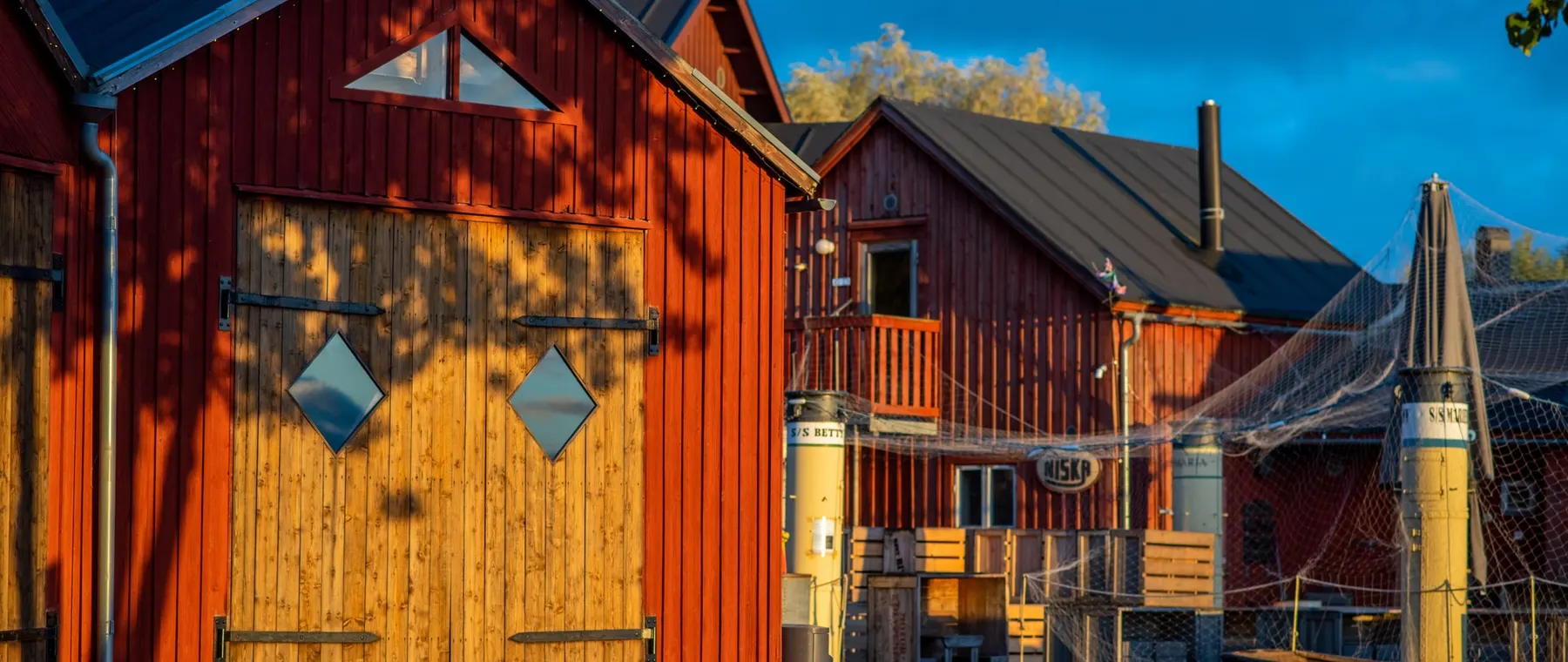
The Maritime Quarter is unusual because its interest is not confined to preserved artefacts. The official listing describes a cultural centre with workshops, traditional ship and boat construction, a smithy and other crafts. Several substantial wooden vessels have been built here, including the galleass Albanus, schooner Linden and sailing vessel Jehu. Timber sheds and waterfront workshops form part of the environment in which these vessels were conceived and constructed. A yacht owner can look at the place through the practical experience of maintaining a modern boat. The builder’s problems of selecting appropriate materials, transferring loads, controlling moisture and ensuring long-term access for repairs remain relevant even though construction methods have changed. The aesthetic pleasure of a varnished surface is only one part of the craft. Guests interested in design could arrange a guided visit or enquire about access to the museums describing boatbuilding and older marine engines. Verify which displays and workshops are open, especially outside the peak summer season; the tourist description does not guarantee that every historic boat or working craftsperson will be present.
Pommern and the commercial sailing era
On Mariehamn’s western shore, the preserved four-masted barque Pommern provides a particularly powerful point of comparison with the vessels used for private cruising today. Visit Åland identifies the ship as a principal landmark of the town and a rare survivor preserved in its historic condition. A modern sailing yacht is designed around a very different balance of crew numbers, control systems and domestic comfort. Spending time looking at the structure, rig and exposed working spaces of a commercial vessel can reveal the enormous changes in the relationship between people and machinery at sea. The visitor can consider what watchkeeping, maintenance, sail handling and life below deck meant when the movement of cargo depended on a large sailing crew. The maritime museum nearby adds further context to that visit. The ship ordinarily admits visitors between May and September, according to the official guide, while the museum is open throughout the year. A November visitor should therefore distinguish seeing Pommern from ashore from being able to board it. Confirm the museum’s current opening arrangements before setting out.
The town plan and the craftsmanship ashore
A walk across Mariehamn from one waterfront to the other reveals another strand of its history. The tourism authority records that architect George Theodore Chiewitz produced an early development plan in 1859, with broad streets and intersecting boulevards intended in part to limit the spread of fire. The approach to construction subsequently changed in 1871 because of the cost of stone, allowing timber houses on larger plots with leafy separation between them. Those decisions help explain why the town's architecture differs from that of many cramped old harbour cities. Visit Åland also highlights the contributions of Hilda Hongell and Lars Sonck. Hongell, born in Mariehamn in 1867, became Finland’s first female master builder. Her work offers an interesting reason to spend time looking at building details along the streets rather than focusing solely on waterfront restaurants. The Esplanaden and nearby Södragatan make a logical starting point for an architecture-focused outing. Treat residential properties as private homes and admire their exterior details from public spaces.
Making time for the Baltic autumn
There is a meaningful distinction between the summer boating season and a late-autumn stay in Åland. The official destination guide describes pleasant parks, craft shops, restaurants and walks that can be enjoyed in different seasons, but many visitor facilities have seasonal hours. Yacht operations must reflect the actual conditions: shorter daylight, colder air and water, the approach of winter and the possibility of severe weather make flexibility particularly important. A marina's published summer attractions do not guarantee November shoreside services. An owner considering a winter passage should request direct confirmation of the berth, harbour staffing, power, water and access arrangements, and work with the skipper on an appropriate safety margin. An autumn stay might be more attractive as a shore-based visit if the yacht’s seasonal schedule or local facilities make cruising impractical. In either case, take advantage of the town’s architectural fabric and indoor cultural attractions rather than expect the same boating programme as in July. Enjoying a place in its quieter season requires planning around what actually remains available.
Local crafts and thoughtful purchases
The Maritime Quarter’s craft workshops add a particularly distinctive dimension to a shore day. For a yacht owner, a useful conversation with a craftsperson can concern not only the appearance of an object but how it was made and whether its materials and finish are suitable for life near water. Visit Åland identifies workshops selling local handicrafts; confirm individual opening days, especially when planning a special purchase or commission. Rather than buy decorative objects merely because they carry a nautical motif, consider pieces whose function, durability and workmanship match the atmosphere of the yacht. The town’s central pedestrian precinct provides additional shopping and café choices. Late-November and early-December markets are described in the official autumn guide, although individual dates should be confirmed separately. Their local food and handicraft offerings can complement the quieter cruising experience. A yacht with limited storage will particularly benefit from purchasing deliberately, selecting objects that have a genuine connection to the place and can be transported securely.
An itinerary governed by the vessel, not a checklist
For a suitable summer stay, a two-day programme could begin with a confirmed berth and a visit to the Maritime Quarter, then devote a second morning to Pommern and the maritime museum before returning through the town’s principal streets. Owners may prefer to alternate waterfront excursions with lunch or rest aboard. Guests who are not keen on marine history could investigate the architectural walks, shops or green spaces instead. In November, first establish whether the intended marina and shoreside attractions are operating, then substitute indoor activities for seasonal outdoor visits. The water and land approaches are separate practical questions: a marina’s attractive setting does not establish its ability to receive the yacht, and a nearby museum does not necessarily have accessible routes from every berth. The Maritime Quarter publishes +358 40 528 3899 for bookings and its official tourism listing supplies further contact details. The harbour office hours advertised on the general listing should be reconfirmed for off-season arrival. Mariehamn’s particular reward is the chance to explore maritime culture from both sides of the town; secure arrangements for the yacht before choosing how to experience it.
Sources and photograph
Source documentation: https://book.visitaland.com/en/guest-harbour-maritime-quarter, https://visitaland.com/en/experience/history/aland-history/a-town-built-around-shipping/, https://visitaland.com/en/experience/history/architecture-in-mariehamn/, https://book.visitaland.com/en/maritime-quarter-mariehamn, https://visitaland.com/en/experience/sights-excursions/strolling-around-mariehamn/. Photograph: Sjökvarteret, Mariehamn, Åland, October 2020 — Rebecka-aland / Wikimedia Commons. Resized for web display under CC BY-SA 4.0.