Fragrance becomes part of a Marina Bay hotel visit
Mandarin Oriental, Singapore has announced a festive collaboration with British perfume house Penhaligon's, running from 23 November 2026 to 4 January 2027. Revealed on 19 November, it combines an installation in the hotel's lobby with afternoon tea, drinks and selected fragrance retail experiences. The concept takes its cues from the history of travelling trunks and the associations of fragrance with particular places and occasions.
The hotel occupies a prominent setting in Marina Bay. For visitors who arrive in Singapore as part of a longer itinerary, the programme provides a reason to spend time exploring its interiors and dining spaces independently of the usual programme of sightseeing. The events are seasonal additions to an established hotel rather than the opening of a new property.
The two businesses approach their work through very different materials. A fragrance is ordinarily presented in a bottle and encountered through scent; a hotel is experienced through its architecture, services and the passage of time within its rooms. Their collaboration explores how the references behind a series of perfumes can be expressed through objects encountered around the property and through the work of its culinary team.
A collection of trunks in the lobby
The central installation incorporates vintage travelling trunks and takes as its theme an earlier era of travel. Mandarin Oriental describes it as the only presentation of its kind within the Asia-Pacific region. The choice of luggage is interesting in a hotel, where the arrival of a guest and the handling of their belongings form an integral part of the experience.
A trunk differs from the lighter luggage familiar to many modern travellers in the degree to which its construction can become a decorative object. The form, finish, hinges and corners can all contribute to its character. Historically, the dimensions and methods of handling such objects were connected with the means of transport for which they were intended.
This is particularly relevant to readers with an interest in the history of yachting. Travel by water and the organisation of accommodation aboard vessels have both influenced the types of objects travellers carry with them. A piece of luggage intended for an extended voyage has a different set of priorities from a small case used to move frequently between hotels and airports.
The Singapore installation uses the objects to establish a theme within the hotel. It is not described as an exhibition of a particular collection of historically documented luggage, and the announcement does not identify the makers or dates of every trunk. Its significance lies in the visual references created by the arrangement and its relationship with the seasonal fragrance programme.
Afternoon tea as an interpretation of perfume
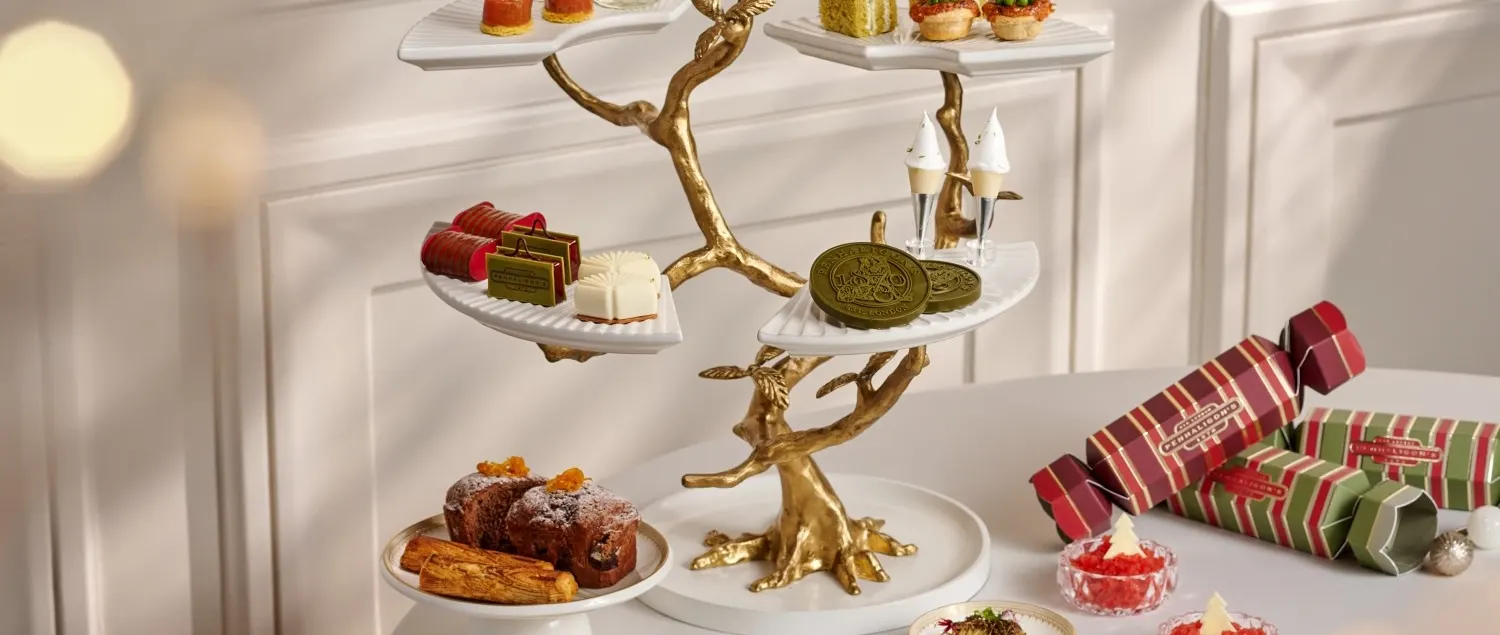
The programme's Holiday Trunk Teatime takes place in the Lobby Lounge. A number of the dishes draw on associations between Penhaligon's fragrances and familiar ingredients. The savoury selection includes a small dish of fried whitebait with tartare sauce and a jelly made with malt vinegar, a reference to British fish and chips.
The preparation illustrates the difference between reproducing the flavour of an established dish and translating it into a form appropriate to afternoon tea. Its smaller proportions allow it to be served in the context of several other dishes. The addition of vinegar in a different form alters the experience of encountering its acidity.
The sweet selection includes a chocolate and Earl Grey confection formed around the hotel's fan emblem. The use of bergamot refers to the citrus notes associated with Penhaligon's Luna. Here the connection between the perfume and the food is achieved through an ingredient with an established culinary application rather than through the literal use of the fragrance.
For a guest interested in the work of a perfumer, this is a useful distinction. Perfume materials and finished fragrances are not necessarily appropriate to consume. A culinary team needs to find food ingredients that evoke particular aspects of the composition while being suitable for use in its own discipline.
Contrasting textures in a small confection
Another item, named after the Fortuitous Finley fragrance, combines kunafa pastry, chocolate and salted pistachio. The preparation draws on the attraction of contrast between crisp and softer elements. It offers a different experience from that of a dish in which the ingredients have been blended into a single consistent texture.
The relationship between texture and aroma matters particularly in an afternoon tea, where the dishes are often encountered as a sequence. A guest can appreciate the distinctive character of one item before moving to another. The way each piece is served and presented becomes part of the experience alongside the qualities of its ingredients.
The official announcement highlights individual examples rather than giving a definitive description of every menu item or the options available for guests with dietary restrictions. The dishes described include fish, nuts and other potential allergens. Anyone with a dietary requirement should confirm the availability of appropriate alternatives directly with the hotel before booking.
For a visitor to Singapore, this menu can form one component of a much broader exploration of food. The city's culinary traditions are diverse and cannot be represented by a single hotel collaboration. The experience may be particularly rewarding when considered alongside visits to other establishments serving food associated with different communities and culinary styles.
From the language of perfumery to the bar
The hotel's MO BAR has developed two drinks referring to Penhaligon's perfume compositions. The whisky-based Dry Down takes its inspiration from A London Dandy, with the hotel identifying a woody character to the finish. A second drink named Last Note is based on gin and relates to the fragrance Juniper Sling.
A perfume's development over the period after it is applied provides a natural subject of comparison for a bartender. Initial impressions of a drink may change as different flavours become apparent, while the way in which it is served can also affect its aroma. The names selected by the hotel make a connection with the terminology used to discuss the changing character of fragrance.
The comparison is best understood as a design reference rather than an assertion that a cocktail and a perfume can be evaluated in identical ways. The drinks are intended to be consumed, whereas the perfume is not.
Guests who do not drink alcohol can ask about suitable alternative preparations. The press announcement describes the two signature drinks, but does not establish that non-alcoholic equivalents will be available throughout the campaign.
A fragrance collection encountered in a different setting
The collaboration also introduces seasonal retail displays at the Mandarin Oriental Cake Shop and the spa. These provide opportunities to examine selected Penhaligon's products within the context of the hotel's festive programme.
A traveller interested in purchasing fragrance can make use of the visit to explore the individual compositions rather than relying entirely on the themes of the installation. The experience of wearing a fragrance will depend partly on personal preferences and the conditions in which it is encountered. Its relationship with a particular room or food pairing cannot establish how it will develop on an individual's skin.
The hotel describes a gift accompanying qualifying purchases, but does not give the full conditions of the offer in its November announcement. Product availability, individual prices and the terms of any gift should be checked with the retail team.
Marina Bay as the setting for a seasonal escape
The property reopened after a significant transformation in 2023 and contains 510 guest rooms and suites. Its established hospitality offering includes ten dining spaces, a spa and an exclusive club lounge. The December programme is a temporary addition to those facilities, rather than an alteration to every service available during a stay.
For owners and charter guests visiting Singapore, the hotel can complement time on the water with an itinerary centred on the city's architecture, culinary life and independent cultural experiences. A visit to the lobby or lounge does not necessarily require booking accommodation; the arrangements for the individual seasonal experiences should be checked separately.
The festive collaboration's attraction lies in the way the designers and culinary team interpret a shared reference through materials that are experienced in different ways. The programme offers a reason to examine the relationship between fragrance, flavour and travel while enjoying a different perspective on the hotel during the year-end season.
Sources and lead image
Source documentation: https://press.mandarinoriental.com/singapore-festive-penhaligon/?lang=eng. Lead image: The Holiday Trunk Teatime, official Mandarin Oriental Singapore press photograph — Mandarin Oriental, Singapore; subject-specific photograph supplied with the official Media Centre release and downloadable editorial media kit.. Official issuer-supplied press photograph, reproduced for editorial coverage of the specific announcement and resized for web display.