A pastry chef's international role comes back to the guest table
Four Seasons Resort Orlando's Executive Pastry Chef Rabii Saber was selected as a tasting-panel judge for the Americas Selection of the Pastry World Cup, a competition scheduled for 25 July 2026 in New Orleans. The resort's official announcement describes his responsibility for assessing dessert craft in categories involving chocolate, sugar and ice cream. Because that competition date has passed, this is not a new appointment made in November; it is an opportunity to examine what the recognition says about the skills behind a luxury hotel's daily pastry programme. Travellers often admire a dessert without considering the many technical decisions that make a small, attractive creation successful.
Competitive pastry is about more than sculpture
Visitors to pastry competitions may be struck first by dramatic chocolate figures and intricate sugar work. These constructions can demonstrate extraordinary skill, but the judging criteria also place substantial weight on taste, balance, texture and the coherence of a team's presentation. A dessert that photographs well yet is unpleasant to eat has missed its most important purpose. The Orlando release describes a tasting panel assessing individual pecan tarts, plated frozen desserts and chocolate creations alongside artistic work. This distinction matters to diners because it explains why a chef recognised on a competitive stage may bring useful discipline to ordinary restaurant service.
Rabii Saber's background in the international contest
Saber's relationship with the competition extends beyond a single judging invitation. The resort notes that he joined the United States team for the 2017 international final in Lyon after a selection process, with the team finishing fourth among twenty-three entrants. As the chocolate specialist, he was responsible for work that included a high-scoring chocolate cake. That background adds context to his 2026 judging role, but it should not be used to imply that he personally won the overall championship. The distinction between team performance and an individual dessert result is important when reporting awards accurately. It also shows how expertise can develop through several forms of participation.
Chocolate rewards technical precision
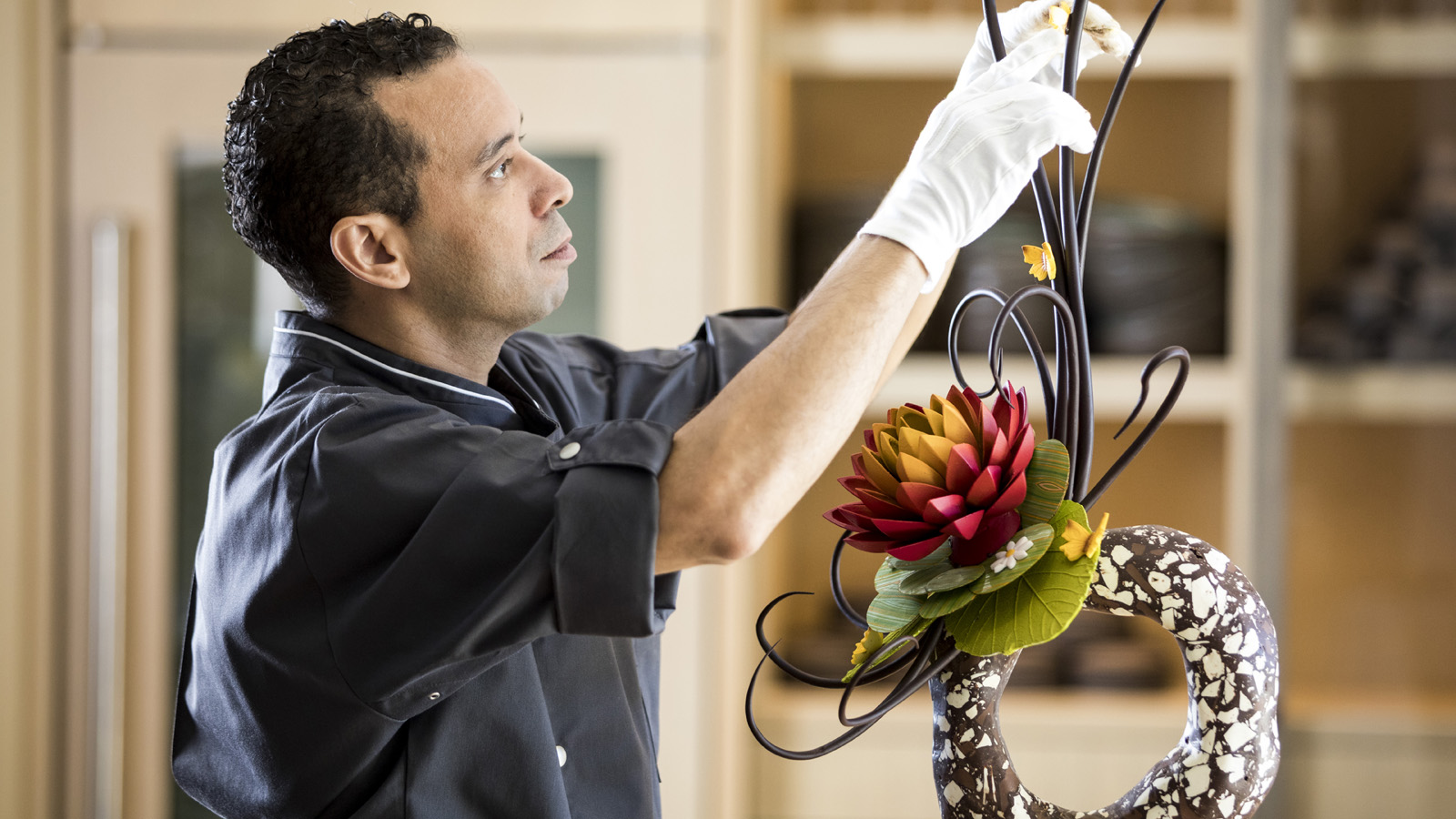
Chocolate work requires careful handling of temperature, crystallisation, moisture and structure. A beautiful glazed cake can fail if its interior texture is inconsistent, while a delicate sculpture may require repeated trials before it survives assembly and transport. Professional pastry chefs develop routines for controlling these variables rather than depending on chance. Saber's work as a chocolatier makes this a useful part of the story. An owner commissioning a special dessert for a private event can ask about storage and serving conditions, not merely choose a striking design. A chocolate masterpiece created for a cool room may behave differently on a warm yacht terrace.
Frozen desserts introduce another set of constraints
Ice cream and frozen plated preparations depend on temperature control, texture and timing in ways that differ from conventional baked pastry. A chef must decide how rapidly a component softens, whether it complements warm or crisp elements and how long it can remain on the plate before service. These questions become critical in hospitality venues where several courses must reach a large table together. The Americas Selection includes frozen work among its judging activities, giving an indication of the breadth expected from leading pastry professionals. Guests may appreciate this complexity when they receive a dessert that maintains its texture throughout an unhurried conversation.
The first taste remains decisive
A spectacular exterior can create anticipation, but flavour decides whether someone wants another bite. The resort describes judging criteria that encompass harmony, originality and the accuracy of flavour. That means a pastry specialist must know when to stop adding components. Too many strong notes can compete, while insufficient acidity or salt can make an otherwise technically perfect dessert feel flat. Diners can explore this balance by noticing whether chocolate, fruit, cream and pastry each play a clear role. A dessert should make sense on the palate rather than require an elaborate explanation to justify its construction. The same principle applies in a hotel café and at an international competition.
Mentorship extends a chef's influence beyond the kitchen
Saber is also associated with the Four Seasons and Valrhona Pastry Competition, described by the resort as a platform supporting development among pastry professionals. Competitions can be valuable when they encourage feedback and sharing of methods rather than fostering a single narrow style. Younger chefs benefit from seeing how experienced colleagues organise their work, respond to criticism and recover when an ambitious design fails. This form of mentorship affects hospitality over time. Guests may encounter desserts prepared by teams whose quality owes as much to training and supervision as to one celebrated executive chef. Recognition of an individual becomes meaningful when it helps raise standards throughout the operation.
A resort pastry programme has several audiences
Four Seasons Orlando serves guests in multiple restaurants, cafés and private events, each of which asks something different of a pastry team. A family visiting a coffee bar may want an excellent simple cake or gelato, while a wedding organiser might commission a large presentation designed to withstand a lengthy reception. The resort's release identifies Saber as responsible for desserts across the property's operations. This range helps explain why competition experience is relevant: it calls for creativity under conditions where consistency and practical service remain essential. A dessert must be technically sound at scale, not just when one perfect plate is made for a photograph.
From Lickety Split to formal restaurants
The hotel cites Lickety Split for gelato, pastries and baked specialities; Ravello for Italian desserts; and Capa Steakhouse for Spanish-influenced finishes such as churros and Basque-style cheesecake. These examples show how a single pastry department can adapt technique to different cuisines and guest expectations. A diner ordering a tiramisu will judge it differently from a person expecting a complex chocolate showpiece. The task is to respect each dish's identity while maintaining quality of ingredients and execution. A traveller planning a special meal should therefore select a venue according to the experience desired, rather than assume the most formal dining room will always serve the most satisfying dessert.
Desserts as part of family travel
Orlando is strongly associated with multigenerational holidays, and many families value accessible, enjoyable food as much as tasting-menu sophistication. A well-run pastry programme can appeal across generations through familiar flavours, attractive presentation and options for guests with different preferences. Yet dietary considerations should never be an afterthought. Nuts, dairy, gluten and other ingredients are common in pastry and can be significant allergens. Families should communicate requirements to the property and seek exact information for the chosen dish. A celebratory dessert is at its best when every guest feels comfortably included and no one must guess whether an item is safe for them.
Custom events reveal the operational side of craft
Saber's chocolate sculpture work is described as appearing at galas and weddings, where appearance must be combined with reliability. Event desserts have to be planned around venue temperature, transport, lighting, service timing and the number of people attending. These factors may be less romantic than the finished design, but they determine whether a creation survives until the moment of presentation. Owners organising a private party, whether at a resort or on board a vessel, can learn from this discipline. An elaborate showpiece should be discussed early with the chef, with a clear plan for delivery, storage and cutting or portioning when the time arrives.
Why an international judging invitation has commercial meaning
For a luxury property, having a chef selected to judge a major competition can strengthen confidence in the kitchen's technical leadership. But recognition alone cannot guarantee that every dessert served every night will be flawless. Consistency depends on training, ingredient quality, equipment maintenance and management of service pressure. Guests should regard the appointment as evidence of professional standing, while judging their own experience through the food and hospitality received. The most credible response from a resort is to translate the chef's knowledge into careful daily execution. A diner should not need to attend a special event to notice the effect of a strong pastry department.
The broader international pastry community
The Pastry World Cup draws attention because it brings technical traditions from several countries into a shared competitive setting. Techniques can travel widely after such events, influencing what restaurant guests see in the following years. Yet originality in pastry does not necessarily mean inventing entirely new ingredients. It can involve applying familiar methods with better control or bringing together textures in a more convincing way. Experienced judges need to distinguish genuine achievement from complexity for its own sake. The resort's announcement highlights these criteria, offering a glimpse of the standards that professionals use behind the scenes.
What the official record confirms
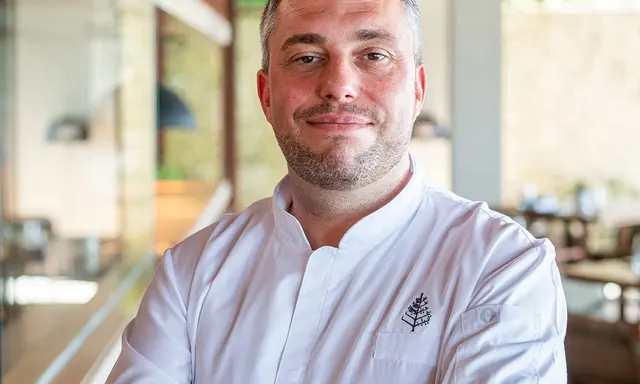
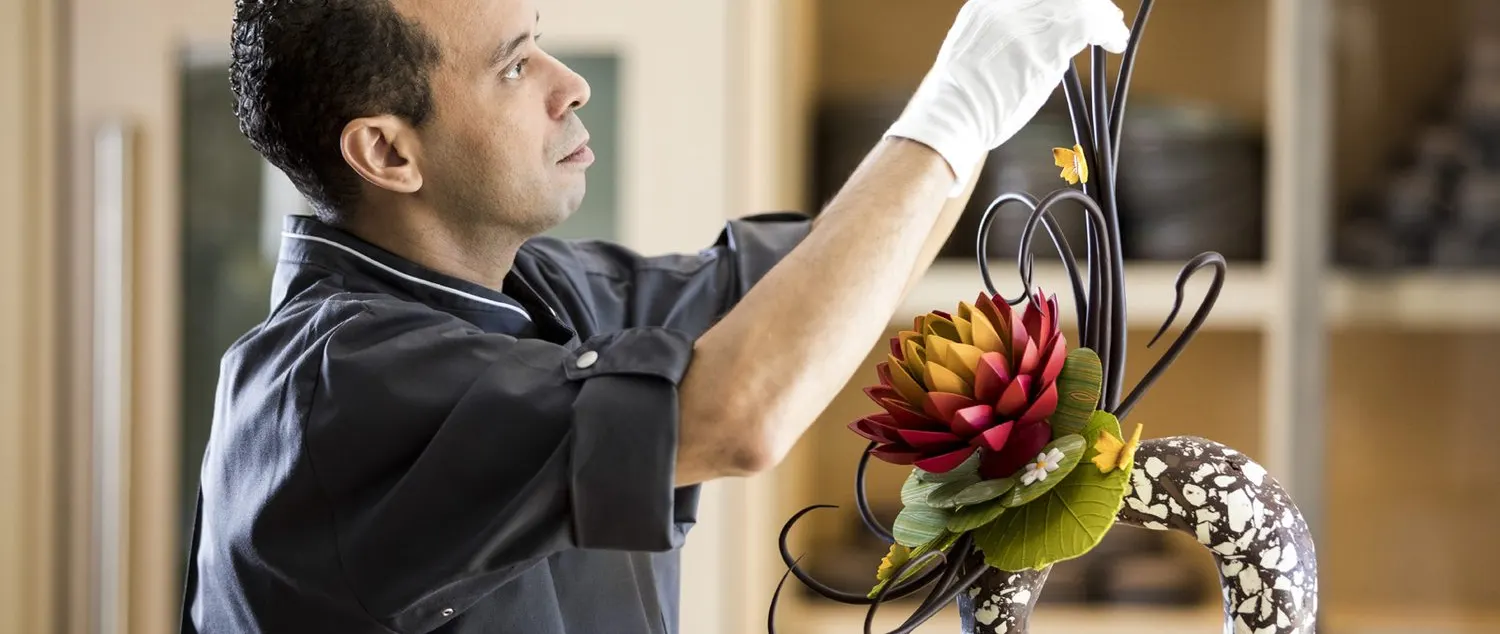
The source establishes Saber's position at the Orlando resort, his past participation in the 2017 competition, his selection for the July 2026 tasting panel and his responsibilities across several hotel dining venues. It does not independently establish the result of the later competition or guarantee the availability of any particular dessert today. The original press photograph depicts a relevant person, creation or hotel setting supplied by the property and should be described accordingly. The focus here is on how a documented professional appointment can illuminate the less visible craft of luxury hospitality rather than treating a past July date as breaking November news.
A useful way to look at the dessert menu
For discerning travellers, the practical lesson is to approach pastry with curiosity about technique and balance. A simple gelato, well-executed tart or carefully timed frozen dessert can reveal as much professional skill as an elaborate centrepiece. Four Seasons Orlando's pastry programme provides several settings in which to make those comparisons, while Saber's competitive and mentoring work gives additional context to the team's craft. Luxury dining becomes more interesting when guests ask why something tastes and feels the way it does, rather than evaluating it exclusively by rarity or price. That attitude can enrich restaurant experiences from Orlando to the world's great yacht destinations.
Sources and image credits
Reporting based on Sweet Success at Four Seasons Resort Orlando: Executive Pastry Chef Rabii Saber Appointed to Tasting Panel for the “Pastry World Cup” by Coupe du Monde de la Patisserie.
Lead photograph: Orlando's Pastry World Cup Success Highlights a Craft-Led Kitchen — official Four Seasons first-party press photograph. © Four Seasons Hotels and Resorts, original property press photograph Original official image source.