An island retreat with a very different definition of luxury
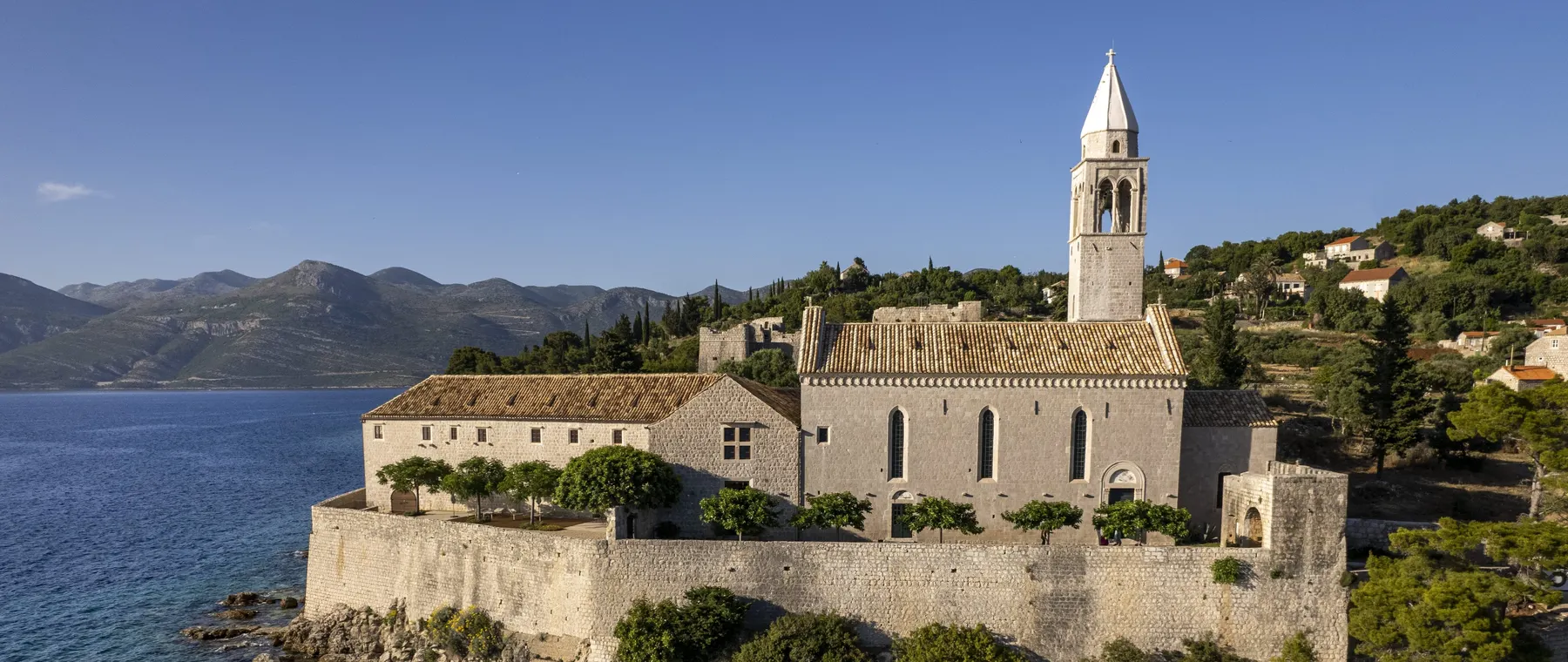
Luxury travel is often measured in the number of amenities a property can offer. On the Croatian island of Lopud, a restored fifteenth-century Franciscan monastery suggests a more compelling measure: time, privacy and a remarkable setting. LOPUD 1483 occupies historic stone buildings above the Adriatic in the Elaphiti Islands, close enough to Dubrovnik for a meaningful cultural excursion yet removed from the rhythm of a busy coastal resort.
The estate has joined the Mandarin Oriental Exceptional Homes collection, giving travellers another way to combine a private house with personalised hospitality. It is a natural consideration for a luxury-yacht party that wants several nights ashore without trading one crowded waterfront for another. The experience is built around an exclusive retreat, rather than hotel corridors or an itinerary designed for a succession of day visitors.
What the monastery actually offers
The property’s own website describes a private sanctuary inside restored fortification walls, where historical interiors, works of art and contemporary comfort coexist. Guests can choose to withdraw into quiet corners or gather for an occasion that takes full advantage of the architecture. The atmosphere is likely to be as important as the precise contents of a room: stone, garden light, terraces and the sea establish the character before a service menu is discussed.
Mandarin Oriental identifies the home as a five-bedroom property sleeping ten guests. The brand’s October 2026 announcement quoted weekly pricing starting at €105,000, an indicative figure rather than a guaranteed rate for any dates or group. Prospective guests should confirm the current tariff, inclusions, minimum stay and cancellation conditions directly, particularly when the booking is part of a larger yacht itinerary with more than one moving component.
The special setting of car-free Lopud
Lopud belongs to the Elaphiti archipelago just off the coast of Dubrovnik, with neighbouring Koločep and Šipan visible across the water. Mandarin Oriental describes the island as car-free and home to a small local population, qualities that help establish an unhurried pace. The lack of road traffic is more than a picturesque detail: it changes how a visitor thinks about luggage, shore transport, access arrangements and the first minutes after arrival.
The ideal transition is deliberate. Rather than racing from a marina to a suite, guests might arrive by a prearranged private transfer and allow time to appreciate the island’s shoreline and settlement. A yacht cruising the southern Dalmatian coast should coordinate its own anchoring and tender plan with applicable maritime rules; neither a rental announcement nor a villa website constitutes permission to berth a large vessel beside the estate.
Art, history and spaces worth slowing down for
LOPUD 1483 is not presented simply as a modern villa inserted into attractive scenery. Its identity comes from a former monastery, its fortifications and a restoration that has brought historic architecture into a contemporary private stay. The property’s official materials make art central to the experience, placing carefully considered works alongside the aged fabric of the building rather than treating the collection as an accessory.
For travellers who ordinarily pursue galleries in major cities, this can be an unusual opportunity to encounter art at a quieter pace. A curated visit may be worth arranging before arrival, particularly when guests have specific interests or would value a considered introduction to the building’s heritage. The editorial appeal is that the location provides a context for the art; it is neither an interchangeable white-walled display space nor a museum with a public visitor timetable.
Dining shaped by the Dalmatian coast
An important reason to select an exclusive-use property is the possibility of planning meals around the people actually staying there. Mandarin Oriental’s Exceptional Homes service model includes dedicated concierge support and private-chef arrangements, while the Lopud estate emphasises seasonal, local and Mediterranean influences. This gives a yacht party scope for a thoughtful contrast with dining at sea: a long garden lunch, a quiet gathering or a celebratory evening framed by the historic property.
A discerning host should establish dietary needs, food sensitivities and children’s preferences before a menu is imagined. Guests can ask about the origin and seasonality of ingredients, Croatian wines and alternatives for those who prefer vegetable-led cuisine. The most satisfying private dining rarely depends on theatrical presentation; it depends on a kitchen that knows who is at the table and when they would genuinely like to eat.
A companion to a yacht voyage, not a replacement for it
The appeal for yacht owners lies in using the house as a temporary extension of their cruising life. A vessel provides mobility, access to coves and a floating private base; the monastery offers different qualities: quiet bedrooms within centuries-old walls, a garden and a setting that can support an important family gathering. Moving between the two should feel intentional, with a sensible division between days on the water and days reserved for the estate.
This distinction matters particularly for multi-generational groups. Some guests may prefer a relaxed morning ashore, while others want to explore the archipelago under the yacht captain’s supervision. A coordinated plan avoids excessive boat transfers, duplicated service or the expectation that everyone will follow a single rigid programme. It also lets the property’s staff and the yacht crew make complementary arrangements without blurring their separate safety responsibilities.
Dubrovnik and the Elaphiti Islands beyond the gate
Dubrovnik provides a strong cultural counterpoint to an island stay, but its popularity calls for sensible timing. A private excursion can focus on the old city’s urban history, architecture and quieter corners without attempting to see everything in one crowded afternoon. A guest who wants a deeper encounter with the region may value a specialist guide more than a long list of stops assembled around the most photographed sights.
The Elaphiti Islands also reward smaller-scale exploration, with village harbours, sheltered scenery and stretches of coast that can be enjoyed at a leisurely pace. Exactly where a yacht may anchor or a tender may land depends on local charts, port controls, weather and the vessel’s characteristics. A prudent itinerary checks these factors rather than presenting every turquoise bay as a guaranteed private swimming stop.
Privacy requires careful logistics
Exclusive use is meaningful only when operations support the promise. Before arrival, the lead booker should settle guest numbers, room allocations, security preferences, service expectations and the timing of every transfer. If a helicopter, airport car or high-speed launch is involved, the operator should establish where each transfer is lawful and practical rather than assuming that proximity on a map makes a journey straightforward.
For a yacht-linked holiday, the captain and the estate’s concierge should agree on a simple contact protocol. They should know which party handles port formalities, who confirms weather contingencies, and how late changes to a dinner, landing or collection will be communicated. These details may sound prosaic, yet they are what allow a private retreat to feel genuinely effortless when guests arrive.
When to choose the monastery
A historic exclusive-use estate can be especially attractive for a milestone birthday, a family reunion or a small cultural retreat where people want to be together without the visibility of a large hotel. The setting should suit guests who appreciate history and a slower daily rhythm. It is less likely to please someone whose priority is immediate nightlife, constant shopping or a conventional resort full of entertainment facilities.
Seasonal considerations remain important. Adriatic summer dates carry a different atmosphere and demand from the shoulder season, while weather can complicate transfers even when the villa itself is comfortable. The booking should allow for the realities of a living island and for any maintenance or heritage-related access rules communicated by the property. A responsible travel adviser confirms such details instead of relying only on inviting images.
A considered addition to the luxury Adriatic map
Mandarin Oriental’s selection of LOPUD 1483 reflects a wider appetite for individual properties that offer a strong sense of place. What makes this particular home interesting is not simply the brand attached to its booking service. It is the rare combination of a small car-free island, a historic monastery, art, gardens and the option of having the estate to a single travelling party.
For luxury-yacht guests exploring Croatia, the house can provide an unusually coherent pause between voyages. The final decision should rest on verified availability, practical arrival arrangements and a shared understanding of the experience. With those elements in place, a stay on Lopud could be a quiet highlight of an Adriatic summer precisely because it asks so little of its surroundings.