A national park with a nautical welcome
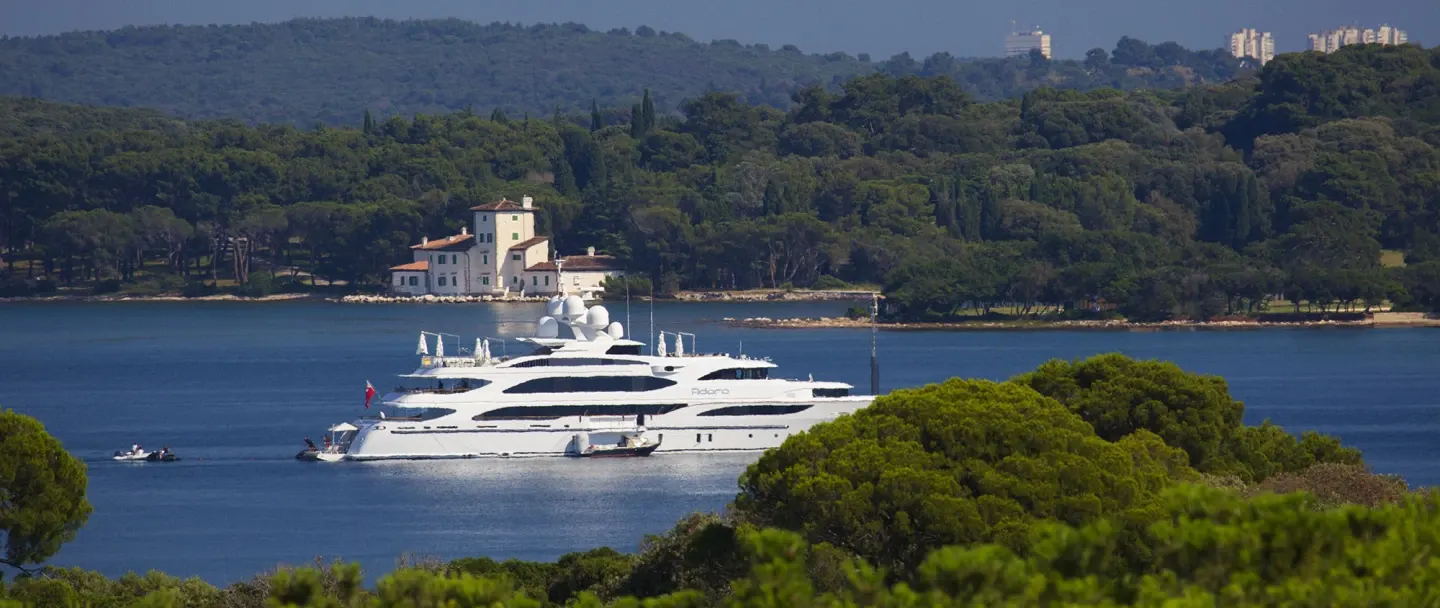
The Brijuni archipelago sits just off the Istrian coast of Croatia, close to Fažana and Pula, yet its protected islands feel distinct from the busier Adriatic cruising circuit. For luxury yacht guests, the attraction is unusually balanced: wooded shorelines, deep historical layers, relaxed Mediterranean food and the possibility of visiting a national park with a properly arranged vessel. The park's own nautical-tourism guidance expressly welcomes boaters while setting clear limits on how vessels may move and where they may stay. That combination makes Brijuni rewarding for a crew that plans carefully.
An arrival should be treated as a managed national-park visit, not as a casual island-hop between empty coves. The park states that passage through its waters is allowed for reaching the designated Veliki Brijun port or authorised anchorage zone, and its code of conduct limits vessel stationing and mooring to permitted locations. It is essential to confirm the current entrance process, charges, berth availability and marine instructions before approaching. Those rules are a central part of the experience, preserving what makes these islands desirable in the first place.
Veliki Brijun and the arrival by sea
Veliki Brijun is the main focus for nautical visitors. According to the park's official information, its port can receive vessels up to 55 metres, while arrangements for larger ships involve designated buoy or anchoring provisions in the Fažana Channel. That is not a blanket promise of a berth for every yacht, and a master must verify exact availability, dimensions, draft, weather and current port guidance directly with the responsible harbour authority. The port also advertises berth services and connections to water and electricity in its nautical section.
The practicalities should be settled before guests begin imagining a morning swim from an uninhabited island. The Pula Port Authority manages Brijuni Port and publishes the applicable charges, while the national park explains that entry fees for boaters are collected under its arrangement with the authority. Crews should consult the published 2026 schedule and navigation rules, prepare arrival documents and contact the harbour on the published VHF channel as directed. Smooth administration gives guests more time for the island itself.
Roman remains and an older coastline
Brijuni's story extends far beyond its modern reputation as a summer retreat. The national park highlights Verige Bay, where remains of a Roman villa rustica illustrate an earlier landscape of privilege, agriculture and coastal settlement. It is a compelling stop for travellers interested in how Mediterranean islands have been used, worked and admired over centuries. The setting is especially evocative because archaeology here is encountered amid the same sea, limestone and vegetation that shape the present-day arrival.
Elsewhere, the Byzantine castrum and St Mary's basilica add layers of later history. Rather than turn the island into a rush between ruins, a guided excursion can select a few sites and make the transitions part of the pleasure. Trails, access controls and preservation conditions should determine what is available on the day. The park's visitor rules require people to remain on approved paths and obey local directions, so historical curiosity must be exercised without climbing fragile remains or removing anything from an archaeological site.
Dinosaur traces beneath the elegance
One of Brijuni's most surprising attractions is geological rather than architectural. The park records numerous dinosaur footprints in the limestone, testimony to a prehistoric landscape dramatically different from the elegant island retreat guests see today. Visitor-accessible traces on Veliki Brijun offer a memorable connection with the Cretaceous period, while additional fossil sites exist on islands or in zones not open for casual visits. The park's official palaeontological material makes clear that protection of these finds is a continuing priority.
A guide can help guests distinguish genuine trace fossils from the surrounding limestone and explain why sites are sometimes restricted. This is particularly appealing for families travelling with older children or adults who appreciate natural history. The footprints are not interactive exhibits to be touched, copied or collected; they are fragile evidence of ancient life. A little context gives a short walk more depth than any amount of hurried photography, turning a leisurely island stop into a genuine discovery.
Gardens, wildlife and unhurried exploration
Veliki Brijun also offers a landscaped side, with a Mediterranean garden, a celebrated old olive tree and areas devoted to interpreting the island's natural and cultural heritage. The park lists a safari area among its visitor attractions, though it should be understood as a managed feature of the island rather than an encounter with untamed Adriatic wildlife. Guided tours, seasonal opening arrangements and independent visitor options may vary, making advance choices sensible for a mixed party.
Walking, cycling or using approved electric transport allows travellers to see more than the immediate waterfront without turning the day into an endurance exercise. The park's code requires visitors to use designated tracks, and the institution controls the organisation of tours and transfers in its area. A thoughtful programme might combine a historical stop, a garden visit and a long lunch, preserving plenty of time for quiet views across the channel. That measured rhythm suits Brijuni better than a frantic sightseeing checklist.
Istrian flavour at the water's edge
The region's food culture makes a natural partner to the island visit. Istria's Mediterranean table leans on local produce, olive oil and seafood, and the park itself presents cuisine as part of its attraction for nautical guests. The pleasure is in choosing a meal that belongs to its setting, perhaps after a morning walking among ruins and mature trees. Dining opportunities within the park should be checked against the current season, booking rules and operational hours rather than assumed available at any time.
Fažana and nearby Pula offer useful counterpoints for guests who want a fuller land programme before or after the national-park call. The short distance between shore and island can simplify transfers, but it does not eliminate the need to coordinate vessel movements and park entry. Crew and concierge teams can plan a visit that draws on local guides and hospitality without overcomplicating the yacht's own timetable. A good Istrian meal should feel like an extension of the destination, not a hurried interruption.
Respecting the protected island rules
National-park privileges bring specific responsibilities. Brijuni's conduct rules prohibit disturbance of animals and interference with archaeological, geological and palaeontological material. Visitors may use only marked paths and designated areas, and vessel movement is confined to the permitted routes and moorings. These requirements are not theoretical details buried in a regulation book; they should guide every tender transfer, shore excursion and decision about where the yacht may stop.
Guests also benefit from clear expectations before arrival. A sheltered bay visible from the deck is not necessarily a lawful anchorage, and a tempting strip of land may be inaccessible because of conservation or security restrictions. The master should retain authority to cancel or modify the visit in poor weather, while the concierge confirms park admissions and any tour requirements. Such forethought makes the stay both less stressful and more respectful of the archipelago's unusual mixture of public heritage and protected nature.
How to make Brijuni a lasting memory
For a private voyage, Brijuni works particularly well as a considered pause within an Istrian itinerary. Arrive with permission and harbour arrangements confirmed, devote the central part of the day to a small number of carefully selected sights, then return to the yacht without rushing the final afternoon. A longer stay may allow greater variety, subject to the port's rules and accommodation of the vessel. The real luxury is having the time to notice the contrast between old stone, green gardens and the shifting Adriatic light.
The park has enough history and natural variety to interest guests who might otherwise see protected islands as merely picturesque anchorages. Here the story reaches from dinosaurs to Roman villas and onward to modern conservation management. A yacht is a comfortable way to approach that story, provided it remains within the official nautical framework. Leave the island with its habitats and heritage undisturbed, and Brijuni becomes more than another attractive stop on the chart: it becomes a place remembered for its depth.