An original idea returns after forty-six years
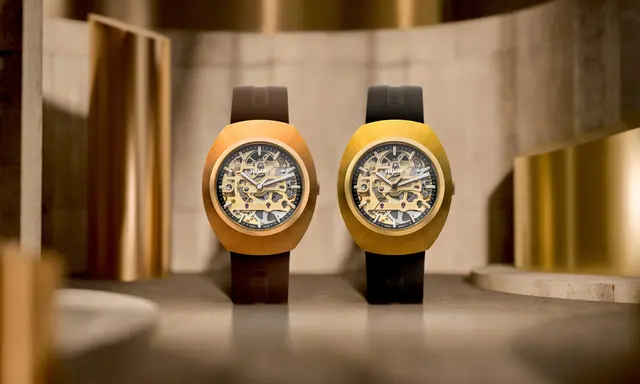
Hublot has introduced a pair of Classic Fusion Tributo watches that revisit the brand’s founding design from 1980. The original, created by Carlo Crocco through MDM Genève, challenged conventional expectations by combining a gold case with a black rubber strap. In its 21 October 2026 report, LVMH describes the new watches as a celebration of that unusual material pairing and the porthole-inspired form. They are offered in yellow gold and white gold, with mechanical changes beneath the familiar exterior.
The historical significance of the design is easy to underestimate today because rubber straps have become familiar on expensive watches. In 1980, however, juxtaposing precious metal and a relatively utilitarian material made a more provocative statement. The new Tributo references draw attention to that origin instead of attempting to disguise it. For collectors, the result is an opportunity to examine how a recognised design language can remain coherent through technical changes and altered tastes.
The porthole bezel and exposed screws remain
The original Hublot watch used a bezel inspired by a marine porthole, with twelve visible screws and an intentionally pared-back dial. The Classic Fusion Tributo retains those cues, making the relationship between old and new readily apparent. The bezel is not presented as an arbitrary decoration: its geometry is central to a design that has shaped the brand’s identity. On a contemporary wrist, it offers a relatively restrained counterpart to the larger, more visually elaborate watches for which Hublot is also known.
A strong design need not be complicated to be recognisable. Repeated details such as the circle of screws, the relationship between case and strap and the simplicity of the dial create a visual grammar that can survive a change of movement or material. The success of the new edition will depend on how these elements work together in person. Photographs emphasise the bezel, but case thickness, strap fit and legibility deserve equal consideration when assessing daily wear.
Yellow gold stays close to the original character
The yellow-gold version uses a black dial and retains an MDM signature at six o’clock, referencing the company through which Crocco originally created Hublot. The colour contrast is direct and familiar: warm precious metal against a dark display and black rubber strap. It is the more explicitly historical interpretation of the two new references. The manufacturer’s announcement establishes these visible features, although interested buyers should check the exact reference and any regional variations with an authorised retailer.
Gold can be described as luxurious without assuming that it suits every owner’s preferences or practical requirements. A polished precious-metal case may show evidence of regular use, while the rubber strap has an entirely different wear pattern. The visual appeal of the yellow-gold model lies partly in that deliberate tension. Collectors choosing a reference for frequent wear should balance its historical connection with comfort, service access and their own willingness to care for the materials.
White gold brings a quieter reading
The second Tributo uses white gold with a black onyx dial. LVMH describes it as the more understated interpretation, combining the historic form with a darker, more sartorial mood. Onyx changes the character of the watch because the visual impression of a material can be as important as the colour itself. The form remains recognisably Hublot, but the effect is different from the warmer yellow-gold reference. It is not a wholly separate design; it is a deliberately distinct expression of the same foundation.
Materials of this kind deserve careful inspection. The surface of a dark stone dial, the finish of the surrounding case and the treatment of the indices can change the way a watch looks in different lighting. A buyer should examine readability under ordinary conditions and learn what maintenance the manufacturer recommends. The understated impression reported by the Maison is a design judgement rather than a guarantee of universal taste. Some owners will prefer the strong historical contrast of yellow gold; others will find the white-gold version more compatible with their wardrobe.
An automatic calibre replaces the original quartz
The most substantial technical difference from the 1980 watch is the movement. Whereas the earlier model used quartz, the Classic Fusion Tributo has an automatic calibre developed by Hublot, with an approximate power reserve of sixty hours. A sapphire case back reveals the movement, including an oscillating weight shaped like the brand’s letter H. This change allows the contemporary edition to engage directly with mechanical-watch collecting while retaining the original external design concept.
Mechanical ownership differs from quartz ownership. An automatic watch is normally kept running through movement of the wrist or careful manual winding, and it may stop after enough time unworn. The quoted power reserve gives useful context but is not a promise that an individual watch will perform identically under every condition. Owners should understand the setting procedure, service intervals and warranty requirements. A modern movement adds interest, but the practical disciplines of caring for it remain important.
The rubber strap is still central to the design
The contrast between an expensive precious-metal case and a black rubber strap was at the heart of Crocco’s original challenge to watchmaking conventions. Hublot continues that juxtaposition in the Tributo. The strap should therefore be seen as part of the design identity, not a temporary economical alternative to leather or a gold bracelet. Its black colour frames the case and helps create the recognisable graphic outline of the watch when worn.
Rubber has practical attractions in comfort and ease of cleaning, but it is not maintenance-free. Exposure, age and regular wear can affect a strap, and replacement availability should be considered before purchasing a specialist reference. The quality and security of the fastening system also matter. Collectors should ask whether alternative straps are factory approved and whether changing them affects the historical character they value. This is a design where the original material contrast deserves preservation unless the owner has a clear reason to change it.
A founder’s charitable legacy is acknowledged
Hublot says it is donating CHF 100,000 to the Main Dans la Main Foundation, established by Carlo Crocco in 1998 to support humanitarian and educational work for vulnerable children and communities. The charitable component connects the anniversary edition with the founder’s activities beyond watchmaking. It is a distinct part of the official launch story and should be reported accurately, without treating the donation as a promise that every purchase makes an additional contribution.
The foundation reference broadens the historical picture of the brand, but the watch should still be evaluated on its own material, design and mechanical qualities. A collector may appreciate the gesture while making an independent decision about whether the object suits their needs. Hublot’s Art of Fusion approach can be examined through the watch itself: gold, rubber, a porthole form and a contemporary automatic mechanism form one coherent narrative. The charitable connection adds context rather than replacing those tangible attributes.
The Tributo is a design study worth revisiting
The October 2026 unveiling is not merely a colour change to an existing watch. It uses yellow and white gold to revisit an original statement about combining different materials, and it replaces a quartz movement with modern mechanical watchmaking. The two variants invite comparison because the yellow-gold model foregrounds the past, while the white-gold onyx version pursues a quieter appearance. Neither should be presented as a guaranteed investment or described with an unverified edition number.
An informed buyer should confirm precise specifications, dimensions, reference numbers, retail terms and current availability through Hublot. A fitting is especially valuable because the apparent simplicity of a watch can conceal differences in thickness, strap curvature and how the case rests on the wrist. The Tributo’s larger message is about continuity: a risky-looking material combination from 1980 became a lasting design principle, and the manufacturer has now chosen to revisit it with a modern movement while keeping the original idea visible.