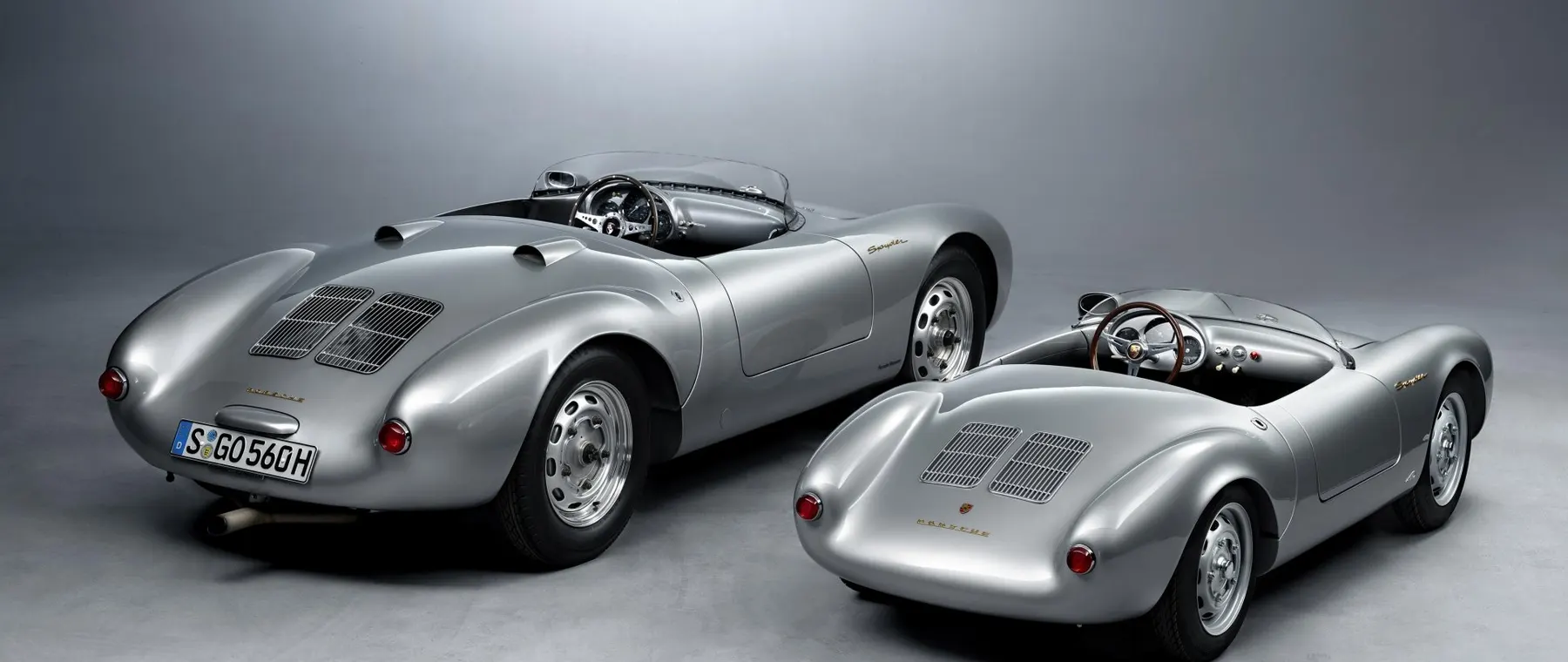
The original Porsche 550 Spyder has become the kind of car most people encounter through photographs, museums and auction headlines rather than on the road. Its rarity is part of the mythology. Hedley Studios has taken that mythology and shrunk it—literally—into a new electric collectible that is part car, part design object and part beautifully over-engineered toy.
Called the Porsche 550 J, the project is officially licensed and limited to 250 handcrafted examples. It is around 80 per cent of the size of the original and seats two, preserving the low, compact shape that made the 1950s racing car so distinctive.
Familiar proportions at an unfamiliar scale
Reducing the car changes how it is perceived. The silhouette is immediately recognisable, but the smaller dimensions make it feel closer to a physical model brought to life than a conventional replica.
Porsche opened its archives to Hedley Studios during development, giving the team access to historical reference material. That matters because the project depends on recognisability; if the proportions drift too far, the entire idea loses its point.
Electric power keeps the object playful
A 48-volt electric drivetrain replaces the original racing engine. Standard output is modest, with an RS Package offering more power and a top speed of about 80 km/h, although the vehicle is not road legal.
That limitation almost clarifies the concept. The 550 J is not pretending to be a modern sports car; it is designed for private estates, collections and the simple pleasure of operating something unusual.
Specification becomes part of the collecting ritual
Buyers can choose silver, heritage-inspired colours and motorsport liveries, with a broader Bespoke programme available for further personalisation. Each car is built by hand at Hedley Studios in Bicester.
For collectors, that process can be as important as performance. Choosing colours, details and finishes turns the acquisition into a small commission rather than a simple purchase.
Where car culture meets yacht-toy culture
The 550 J makes particular sense in the world around yachts, private estates and serious collections because it does not need to justify itself through practicality. Its attraction comes from being unnecessary in exactly the right way.
It sits somewhere between automotive history and functional sculpture. That ambiguity may be its strongest quality: the owner is not buying a substitute for a 550 Spyder, but a new object built from the memory of one.