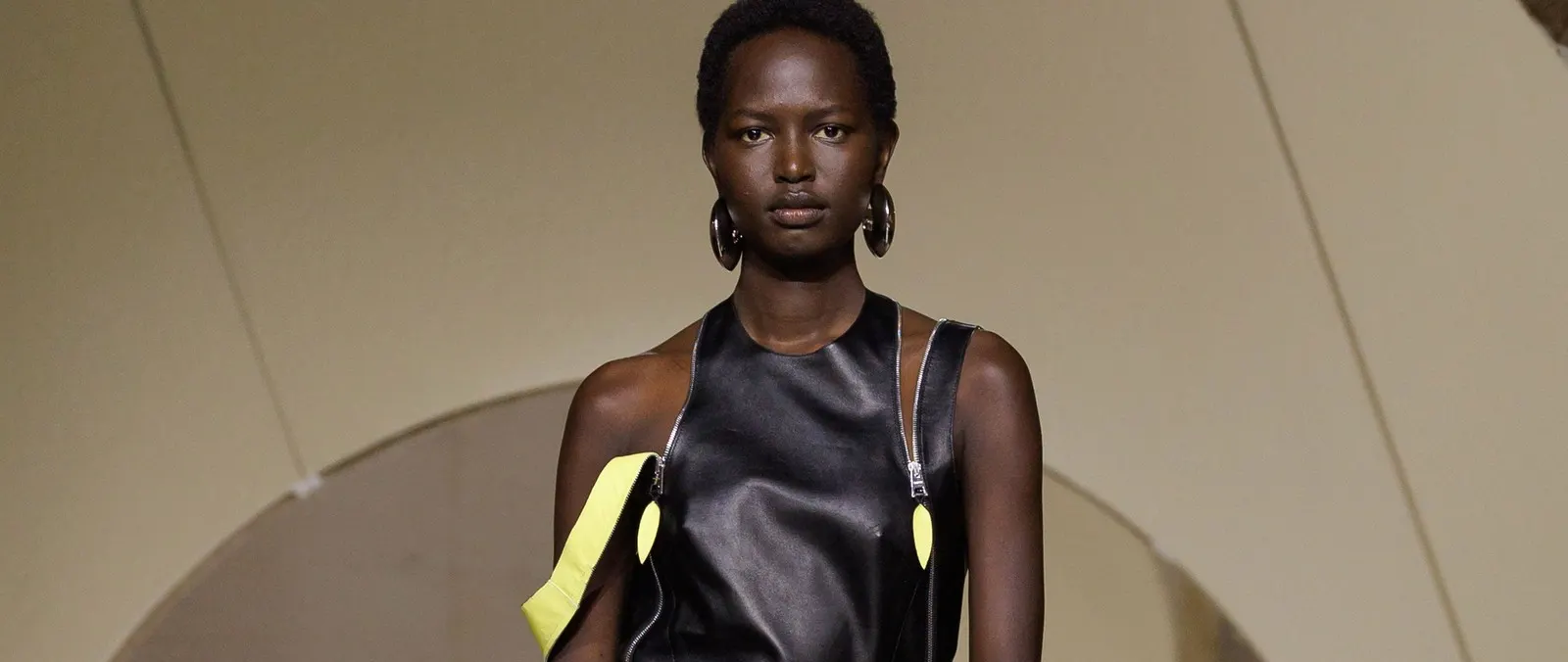
The cut comes before embellishment
Sarah Burton presented Givenchy’s spring 2027 ready-to-wear collection in Paris with the idea of balancing a turbulent wider world through the clarity of construction. Speaking about the collection, Burton stressed engineered cutting and clean lines. The garments therefore invite attention not only to colour or styling but to the shapes created when fabric meets the body.
This is a meaningful distinction for a house with a long tradition of couture-inflected design. A sharp silhouette can communicate force without ornate decoration, while a carefully resolved drape can soften an otherwise architectural piece. Modern ready-to-wear has to translate that discipline into clothes that customers can live in rather than garments that work only for a few minutes under runway lighting.
Engineering a silhouette
Precision in clothing is built from numerous decisions that may be invisible at first glance. Grain, seam placement, internal support and the relationship between lining and outer fabric influence the way a jacket or dress moves. An engineered look can appear effortless because the technical work has already resolved potential tensions in the pattern.
That makes close inspection valuable when evaluating designer clothes. Look at how a shoulder sits, whether a waistline remains comfortable while seated and how a hem behaves when walking. Photographs capture the concept but rarely answer these practical questions. The greatest proof of skilled cutting is often how naturally a technically complicated garment wears.
Balancing discipline with expression
A collection founded on a clean cut need not be severe. Structure can be paired with softer materials, and restraint can create space for a single unexpected detail to make an impact. Burton’s emphasis on clarity suggests a wardrobe in which the silhouette is the main narrative device, with styling operating in support rather than as a distraction.
For customers drawn to expressive fashion, such clothes offer a different proposition from collections dominated by print or highly recognisable accessories. The garment’s design may be subtle at a distance but sophisticated at close quarters. That subtlety also creates a challenge: value must be assessed through material quality and construction, not by the presence of an instantly recognisable motif.
What collectors should examine
When considering exceptional ready-to-wear, buyers should ask how a piece is designed to be altered and cared for. Some engineered garments lose their intended balance if seams are moved without an understanding of their internal structure. Specialist alterations, storage suited to the fabric and clear cleaning instructions can protect the work built into the original design.
Long-term usefulness is another sensible measure. A tailored coat that can remain relevant for several seasons might merit more considered investment than a statement piece that is difficult to wear outside a single occasion. Neither category is inherently superior, but the buyer should understand the intended role of the garment in their wardrobe before purchase.
Givenchy and Burton’s design philosophy
Givenchy’s legacy includes an emphasis on elegant line and the close relationship between fashion, craft and the wearer. Burton brings extensive experience in highly constructed clothing to that heritage. Her spring 2027 presentation is a public expression of how she is developing those ideas under the Givenchy name.
For the luxury fashion audience, the interesting question is how technical sophistication can serve real-life dressing without losing creative ambition. Vogue’s contemporaneous runway review provides the primary account of Burton’s stated approach, while the brand’s finished product information will be needed for precise garment details. The collection argues that careful construction remains a form of visual innovation in its own right.