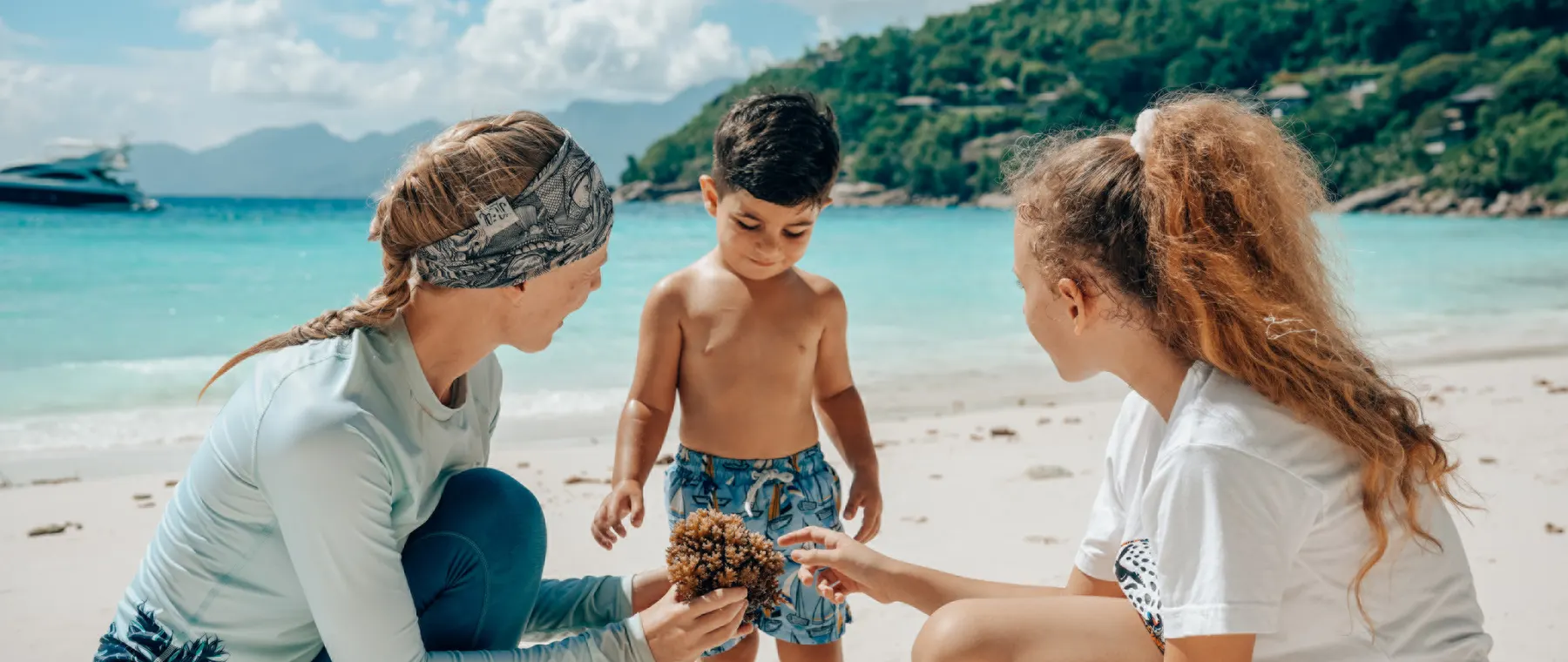
Four Seasons Resort Seychelles has expanded its marine programme around Petite Anse with new snorkelling and conservation experiences led by resident marine biologists. The aim is to combine underwater exploration with a clearer understanding of how the local reef ecosystem works. This additional layer helps the experience feel considered rather than purely decorative.
Dr Katrina Himpson and Mohamed Ali lead the programme, bringing marine-science expertise into activities that are accessible to both beginners and more confident snorkellers. The sheltered bay gives the resort a natural classroom directly in front of the property. This additional layer helps the experience feel considered rather than purely decorative.
The house reef makes access easy
Petite Anse allows guests to begin exploring marine life without a long boat transfer. Beginners can take their first snorkelling strokes close to shore while experienced swimmers can move farther across the reef. This additional layer helps the experience feel considered rather than purely decorative.
This easy access is particularly valuable for families and mixed-ability groups. Marine discovery can happen in short sessions rather than requiring a full-day excursion. This additional layer helps the experience feel considered rather than purely decorative.
Biologists add scientific context
Resident specialists explain species, reef health and the relationships between different parts of the ecosystem. That turns a snorkel into something more informative than simply spotting fish. This additional layer helps the experience feel considered rather than purely decorative.
Guests can ask questions in real time and understand what they are seeing. This direct interpretation often creates a stronger connection to conservation than signage or lectures alone. This additional layer helps the experience feel considered rather than purely decorative.
Conservation becomes participatory
Hands-on activities allow guests to contribute to or learn about ongoing protection work around the bay. The programme is designed to link enjoyment of the reef with responsibility for its long-term condition. This additional layer helps the experience feel considered rather than purely decorative.
This is an increasingly important part of luxury marine tourism. Access to sensitive environments carries more value when guests also understand the pressures those environments face. This additional layer helps the experience feel considered rather than purely decorative.
A strong fit for yacht travellers
For LYG readers, the programme is especially relevant because it sits directly at the intersection of leisure, marine access and conservation. It can complement time spent cruising the Seychelles by adding guided scientific context. This additional layer helps the experience feel considered rather than purely decorative.
The experience also shows how a resort can use its location responsibly. The reef is not simply scenery; it becomes part of the guest experience and part of the property’s conservation story. This additional layer helps the experience feel considered rather than purely decorative.