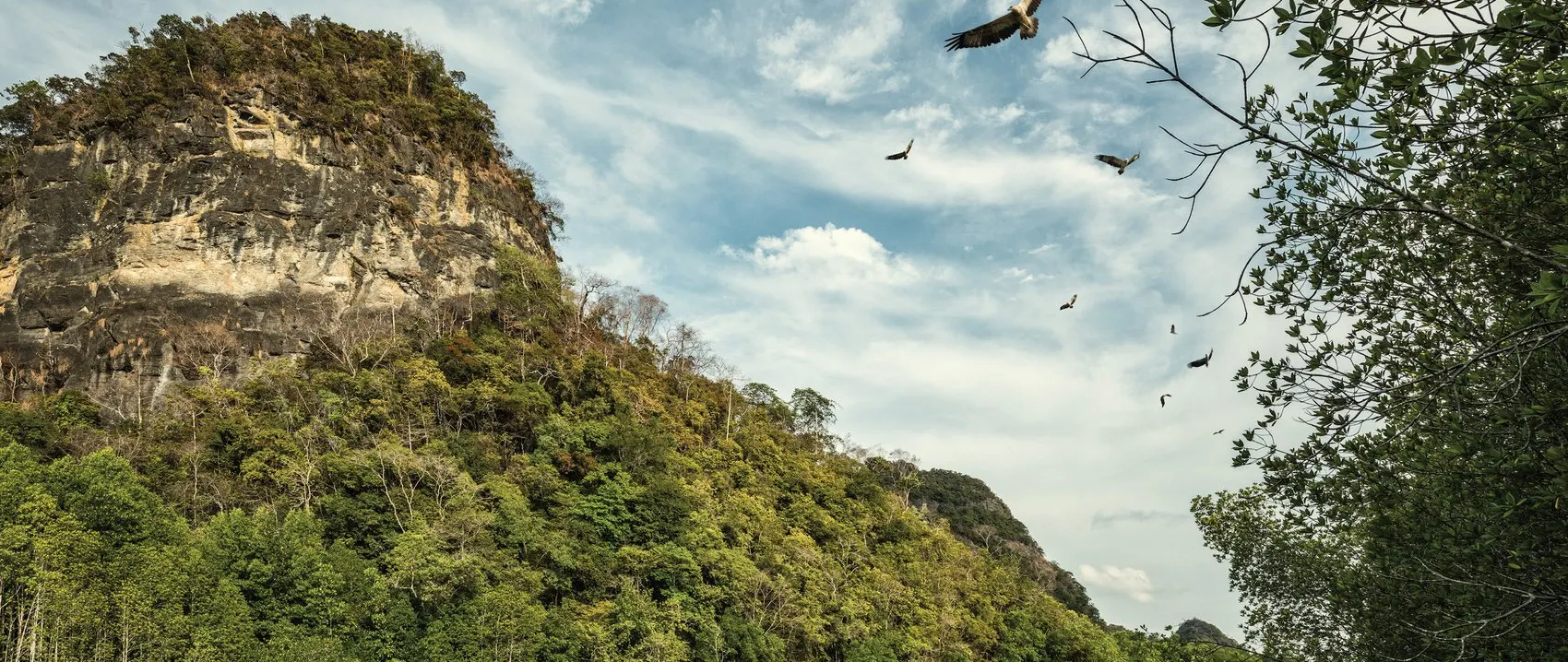
A different way to discover a celebrated island
Four Seasons Resort Langkawi has outlined a collection of guest experiences focused on the natural landscapes of the Langkawi UNESCO Global Geopark. The resort's 25 November 2026 statement turns attention away from beach-only holiday imagery and towards mangrove waterways, limestone formations, guided wildlife observation and gentle outdoor activities. The announcement is a description of experiences available through the property, not a claim that an entirely new geopark has opened.
For Luxury Yacht Guide readers, the relevance is a distinctive shore-side dimension to the Andaman Sea region. A yacht-based journey and a resort-guided outing are not the same activity, and the release does not provide yacht berthing or anchoring permissions within protected habitats. The appeal lies in discovering why this stretch of coastline deserves attention, while preserving the distinction between its delicate ecosystems and ordinary leisure-boating waters.
The UNESCO designation has a history
The resort describes Langkawi as part of the first UNESCO Global Geopark in Southeast Asia. That broad statement is consistent with UNESCO's own Langkawi Global Geopark profile, which identifies the Malaysian archipelago's remarkable geological heritage and landscapes. Some local rock formations date back more than 550 million years, a scale of time that offers a different perspective from the rapid changes of modern holiday development.
The designation should be understood as recognition of geological heritage, education and community engagement rather than a guarantee that every visitor experience is environmentally benign. Guests are entering places shaped by natural processes and contemporary local stewardship. The best interpretation of a guided geopark programme is an invitation to learn about the setting and the people protecting it, rather than merely to collect photographs of unusual rocks.
Mangroves and limestone share the scenery
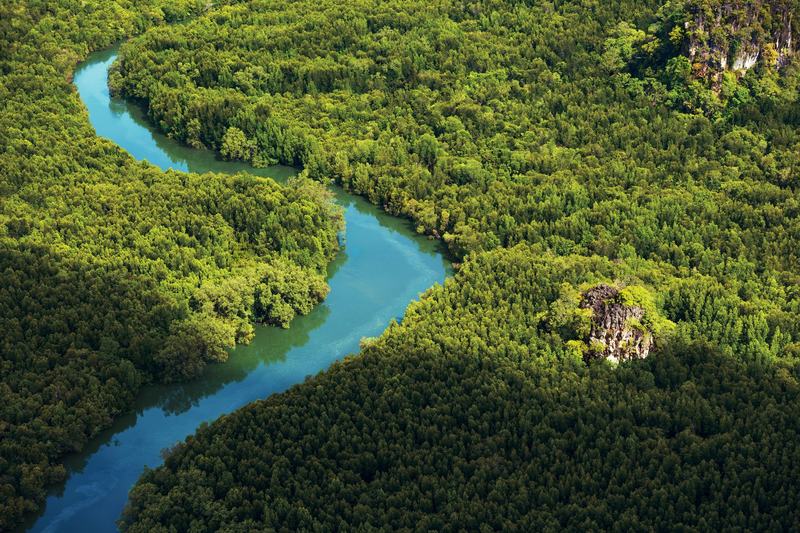
Winding Langkawi mangrove waterways, official Four Seasons Resorts photographic archive supplied with its November 2026 Geopark release; photographic capture date not asserted. © Four Seasons Hotels and Resorts.
A distinctive element of Langkawi is the relationship between green mangrove forests and steep limestone forms. Four Seasons says its surroundings include narrow waterways threaded through these habitats, allowing excursions to move between sheltered channels and broad views of the karst landscape. The resort's photographs help establish the setting, while the written statement describes what a guest may encounter from an organised boat or kayak.
Mangroves are not simply decorative vegetation around a resort. Their root systems and associated habitats support intricate coastal ecosystems, and the resort's naturalist-led programming places those relationships at the centre of interpretation. Learning how shoreline habitats function is arguably more valuable than rushing past them. The release does not quantify local restoration or conservation outcomes, so this article does not invent such figures.
Naturalist-guided boat safaris
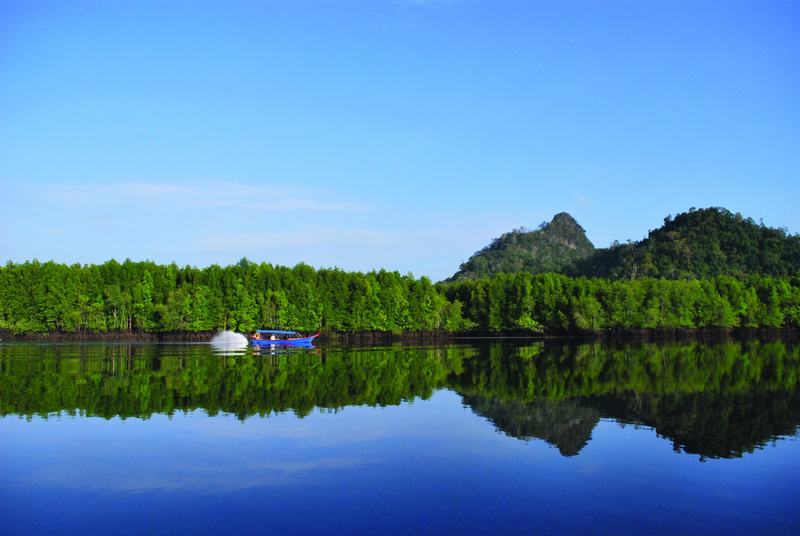
Four Seasons photograph of a guided boat in a Langkawi mangrove channel from the official press-media pack. © Four Seasons Hotels and Resorts. Not a guarantee of animal sightings or any particular guided route.
Among the featured experiences is a boat safari led by a Four Seasons naturalist through mangrove and limestone waterways. The guide's stated role is to help guests notice wildlife and understand the coastal habitat, rather than simply carry passengers between scenic points. It is a particularly relevant contrast for travellers accustomed to viewing the shoreline only from the deck of a larger boat.
The operator's material mentions macaques, eagles and mudskippers as part of the possible nature experience, not as animals that appear on command. Wildlife observation depends on conditions and chance, and the safety of people and animals should be more important than a guaranteed sighting. The resort does not provide a complete public route map or a universal departure timetable in the announcement.
Kayaking offers a slower encounter
The same release describes kayak trips through the mangroves, with quieter tributaries and the intricate pattern of roots becoming more apparent at a slower pace. The experience changes the scale of the landscape: features passed quickly from a motorboat may be appreciated more closely from a small human-powered craft. Four Seasons presents this as a guided option, not an invitation to navigate any protected channel independently.
For guests, the practical questions are likely to involve ability, weather, tidal conditions and the suitability of a given excursion. The announcement does not establish that every route is appropriate for every age or physical condition. It is better to confirm arrangements with a local operator than to assume that the tranquil photographs describe all possible conditions across the geopark's waterways.
Dawn on the water and breakfast in the landscape
Four Seasons also highlights a sunrise experience, allowing guests to watch morning light reveal the limestone and mangrove scenery before enjoying a breakfast picnic. The idea is intentionally different from a resort breakfast taken behind glass. It places the meal within a wider programme of observing the coastline as daylight and wildlife activity change around the visitor.
The exact weather on a particular morning is not part of the announcement, and neither sunrise scenery nor wildlife sightings can be guaranteed. The experiential promise is a carefully timed outing, not a measurable performance outcome. The presence of a naturalist and a structured itinerary may be useful for guests who want to learn what they are seeing rather than simply seek a quiet backdrop.
A sandbank becomes a wellness setting
The resort says guests can take part in small-group sunrise yoga on sandbanks, using the local setting for gentle movement and meditation. Unlike a spa treatment in a dedicated room, this option deliberately places participants in an exposed natural environment. Its appeal rests on atmosphere and attention, with the surrounding landscape remaining part of the experience.
Wellness language needs care. The release describes opportunities for calm and reflection, but it does not present controlled clinical studies or establish specific medical benefits. A well-run outdoor session can be personally rewarding without requiring unsupported health promises. Guests should also understand practical matters such as timing, available space and arrangements for reaching and leaving the sandbank.
The on-site Geopark Discovery Centre
Not every meaningful geopark experience needs to involve boarding a boat. Four Seasons directs attention to its on-site Geopark Discovery Centre, which uses educational displays and presentations to explain the area's geological formations and ecosystems. The centre is described as suitable for visitors of different ages, making it a logical starting point for a family planning a series of excursions.
That educational role is more substantial than a conventional resort activity list. Knowing the differences between a mangrove habitat, an ancient rock formation and a freshwater lake can change the way visitors interpret an outing. The resort's information does not claim that the centre replaces official geopark interpretation or guided conservation programmes. It is another means of making the wider landscape understandable.
Guided walks bring attention back to the resort grounds
The property's programme includes guided walks devoted to native plants and local wildlife, with monitor lizards and hornbills among the creatures mentioned. Four Seasons also refers to weekly nature talks covering the mangroves, resident monkeys and eagles. These activities recognise that a resort is not isolated from the surrounding ecology, even when its guest experience feels highly curated.
Visitors who choose a land-based walk may encounter different details from those on a boat safari. The key difference is not superiority but perspective: a slow walk can focus on plants, habitat edges and the everyday signs of animal life. The resort has not published a census of species observed during its activities, so individual sightings should not be converted into definitive wildlife inventories.
Why the island's rock history matters
UNESCO's official geopark description identifies Cambrian rocks older than 550 million years and highlights several different geological and ecological zones around the archipelago. That context helps explain why a limestone cliff, forested ridge or coastal island can have a meaning beyond its appearance in a photograph. Geological heritage is not an optional decorative layer; it is fundamental to the identity of the destination.
The release from Four Seasons compresses that immense history into accessible guest experiences. A short trip cannot convey every chapter of the region's geological development, but informed interpretation can suggest where further learning is possible. Readers who want deeper detail can consult UNESCO and Malaysian geopark authorities directly rather than relying solely on promotional descriptions of a holiday.
A varied setting rather than one uniform attraction
UNESCO names different sites within the Langkawi geopark, including Kilim Karst Geoforest Park, Machinchang Cambrian Geoforest Park and Dayang Bunting Marble Geoforest Park. Each has distinctive geological and ecological characteristics. The resort's November statement discusses its local mangrove and limestone surroundings but does not assert that every named UNESCO site is included in every guest itinerary.
This distinction matters for accurate travel planning. A visitor may wish to compare a gentle wildlife excursion with a longer geological or cultural visit, but distances, operator permissions and actual schedules must be checked separately. Presenting the entire archipelago as one interchangeable excursion would oversimplify both the experience and the heritage for which Langkawi has received international recognition.
The relationship between luxury and environmental care
A high-end resort can make difficult landscapes more accessible through guiding, transport and interpretation. That benefit must be considered alongside the fragility of the ecosystems involved. Four Seasons describes nature-led experiences, but its statement does not supply an audited environmental-impact assessment for each activity. A responsible editorial account should therefore describe the programme accurately without turning it into an unverified sustainability certification.
For guests, the useful questions concern group size, appropriate behaviour around wildlife and which local authorities or guides set the rules. It is entirely possible to appreciate beautiful coastlines without approaching animals too closely or treating sensitive environments as private playgrounds. Such considerations reflect thoughtful travel practice rather than a claim about unreported compliance issues at the resort.
The connection to the luxury-yachting audience
Langkawi lies in a region that attracts leisure travellers interested in the sea, island landscapes and coastal exploration. Owners and charter guests on 12-to-23.99-metre yachts may consider a resort stay or a professionally guided land-and-water excursion as part of a wider holiday. This is a lifestyle connection, not a report of a particular yacht, charter booking or confirmed marina-to-resort transfer.
The resort's guest activities use dedicated organised excursions and do not constitute instructions for private yacht navigation inside mangroves or protected waterways. This distinction protects both readers and the environment. Before planning yacht-related logistics, travellers need to verify local marine access, permissions, weather and available services with qualified local operators instead of extrapolating from a resort's nature photographs.
Official photography and the meaning of a dated image
The original Four Seasons November 2026 press package contains first-party photographs of Langkawi's natural landscape and guest activities, including a boat in a mangrove channel, aerial views of waterways and a kayak experience. These pictures relate directly to the subject of the resort statement and provide evidence of how the programme is presented by its operator. They are not artificially generated illustrations or images taken from another newsroom.
The press archive's publication in November 2026 does not independently establish the precise date every photograph was taken. Captions should therefore identify the documented activity and its Four Seasons source, not present each scene as a photograph captured during the week of release. Photo rights remain with Four Seasons Hotels and Resorts and the original creators, with use here confined to this specific editorial report.
What visitors should confirm before booking
The announcement outlines broad activities rather than a detailed public schedule showing every session, capacity, price and cancellation condition. Guests should confirm which experiences are available on their intended dates, whether qualified guides are included, and what happens when conditions make an outing unsuitable. The same applies to any additional transport or dietary needs associated with a sunrise picnic.
A tailored luxury trip benefits from being specific rather than generic. One party may prefer the Geopark Discovery Centre and a short walk; another may prioritise a boat safari or kayak trip. The resort's programme provides possible components, while the practical itinerary depends on confirmed arrangements. Nothing in the published statement warrants inventing package prices, daily operating hours or a guaranteed sequence of sightings.
A destination that cannot be reduced to its beaches
One of the strongest elements of the Four Seasons announcement is its effort to redirect attention from Langkawi's familiar beach image to the intricate spaces behind the shoreline. Mangroves, limestone cliffs, forest, waterways and ancient geology provide a more layered reason to explore. The experiences described have different degrees of activity and offer choices for travellers who enjoy both observation and participation.
This is also a reminder that attractive destinations require interpretation. The relationship between people, nature and local management becomes clearer when guests understand what makes a place distinctive. A UNESCO designation establishes a recognised heritage context, while the hotel translates selected parts of that context into a resort experience. Those are related but separate roles.
What the November 2026 announcement establishes
The dated release confirms that Four Seasons Resort Langkawi is actively promoting a set of curated geopark experiences, including guided mangrove boating, kayaking, sunrise activities, yoga, a discovery centre and wildlife-focused walks. UNESCO's independent profile supports the destination's heritage status and geological age. These verified points are sufficient for a current travel-and-lifestyle article, without requiring invented openings, attendance totals or environmental outcomes.
For Luxury Yacht Guide readers, the value is a better understanding of what lies beyond the usual image of the Andaman coast. The resort has identified ways to experience a recognised natural landscape, and official UNESCO information helps explain its significance. The result is a grounded invitation to consider carefully guided exploration as part of a luxury journey, rather than a claim that the geopark has suddenly been discovered or transformed.
Official source and photo credits
Reporting: Four Seasons Resort Langkawi official 2026 Geopark programme; independent destination context UNESCO Langkawi Global Geopark. Original subject-specific photographs from the official Four Seasons Word press package, with all rights retained by © Four Seasons Hotels and Resorts and original photographers.