A different kind of high-season destination
Four Seasons Hotel Bangkok at Chao Phraya River is inviting travellers to approach the Thai capital as a winter destination built around riverside living, cultural exploration and a gentler seasonal rhythm. The hotel published its latest travel feature on 25 November 2026, pointing to January and February as particularly appealing months for visitors who prefer sunny days, less rainfall and relatively comfortable mornings. The concept is not a new hotel opening or a claim that Bangkok has suddenly become a beach resort. It is an invitation to discover an established property in a city that offers a distinctive alternative to Thailand's islands. The hotel highlights experiences in its creative neighbourhoods, food and drink, and activities that introduce guests to familiar Thai crafts. For Luxury Yacht Guide readers, this is especially relevant to people who combine time aboard with longer international journeys. A few days in Bangkok can introduce another kind of luxury: comfortable accommodation beside a working urban waterway and access to a city whose architecture, markets and restaurants reward unhurried exploration.
Understanding winter in Bangkok
The seasons in Bangkok differ substantially from those in northern Europe. The hotel describes January and February as relatively pleasant, with lower humidity, reduced rainfall and cooler mornings compared with other parts of the year. That does not mean the weather is cold, predictable or identical every day. Travellers should still prepare for tropical temperatures, strong sunshine and occasional rain. Comfortable footwear, sun protection and flexible plans are more valuable than assuming that a luxury hotel can control the conditions outside. A winter visit may appeal to guests who want to walk through different neighbourhoods during the day and return to the riverside in the evening. Visitors should also consider the period when their preferred cultural institutions and restaurants will be open. Festivals, local holidays and large events can affect transport and availability. Seasonal guidance is useful, but a successful itinerary should allow the traveller to adapt rather than follow a rigid schedule.
The Chao Phraya as an urban setting
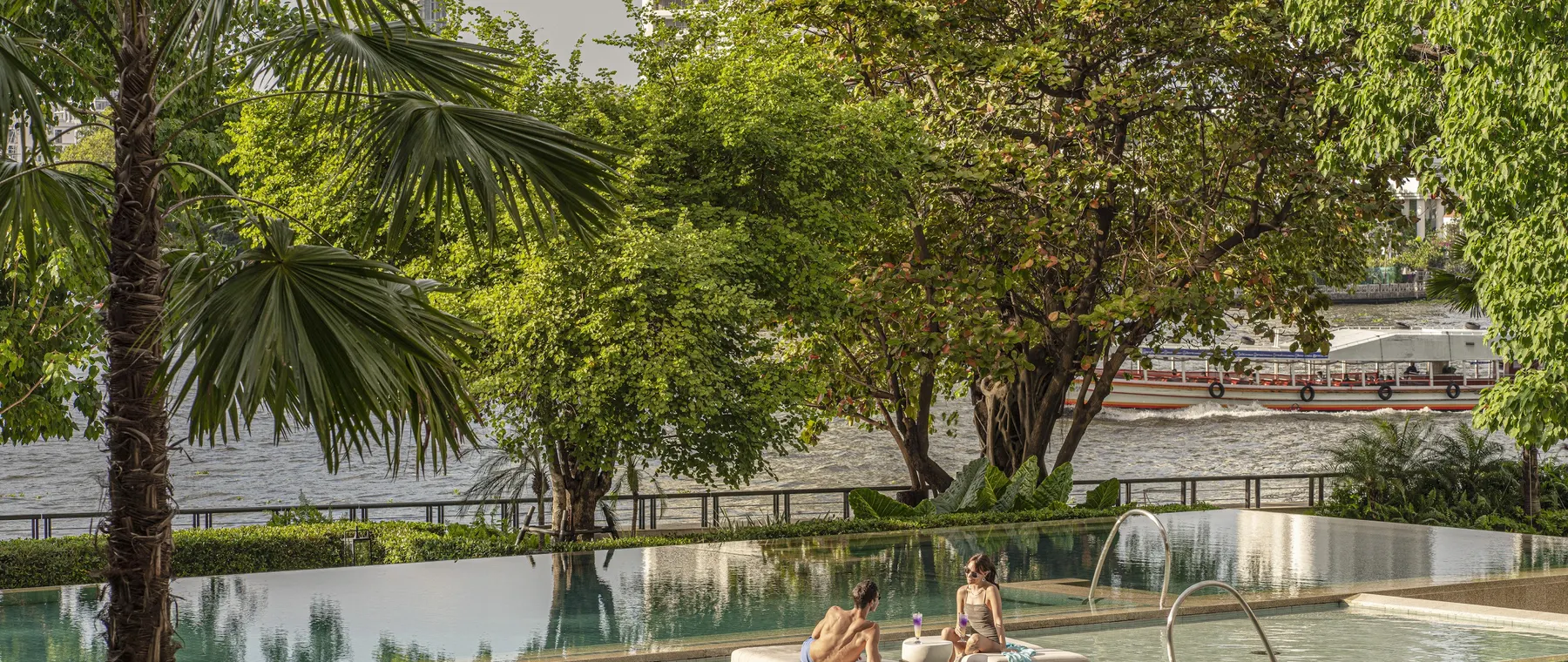
Bangkok's Chao Phraya River is part of the city's transport, trade and everyday life. It is not simply a picturesque backdrop for a hotel terrace. Passenger boats, ferries and other vessels share the water, while the river's banks connect historic districts with newer developments. Four Seasons Bangkok takes its identity in part from this setting, offering a place to observe the city's movement from a more relaxed environment. Guests may enjoy a river view, but the precise outlook depends on the accommodation they reserve. A photograph of the hotel's waterfront does not guarantee that every room has the same view. Travellers interested in boat excursions should confirm departure points, licensed operators and safety arrangements. The river is a busy urban waterway, and visitors should not assume that a privately owned sea-going yacht can navigate to and berth at the hotel. A sensible itinerary treats river transport and offshore yacht travel as distinct activities with their own rules.
Luxury without leaving the city
The hotel's November feature presents an alternative to the familiar idea of escaping to a remote island for winter. There is value in being able to combine a comfortable hotel environment with access to galleries, shops, restaurants and urban cultural life. Travellers who spend much of the year aboard yachts may appreciate the possibility of walking through a neighbourhood rather than arranging every movement by tender or car. A city hotel can also provide convenient meeting space for business or family gatherings. Yet visitors should think carefully about how much time they want to spend exploring and how much they want to reserve for rest. A city programme can become exhausting if every day is filled with appointments. The best luxury travel often depends on limiting activities to those that genuinely interest the guest. Bangkok offers enough variety that a short stay benefits from selectivity rather than attempting to see the entire city.
Learning a traditional craft
Among the activities highlighted by the hotel are introductions to jasmine garland making and Thai calligraphy, as well as an exploration of Thailand's growing speciality-coffee culture. These are not merely decorative additions to a room package. A traditional craft can give a visitor an opportunity to appreciate the patience and practical skill involved in producing something by hand. Jasmine garlands have cultural significance in Thailand, and a guest should approach the activity respectfully rather than treat it as a generic souvenir workshop. Calligraphy similarly involves technique and an understanding of written forms. The value comes from learning in a suitable setting, asking questions and recognising the skill of the person demonstrating the work. The original programme lists complimentary hotel activities, but guests should confirm schedules and available places. An experience can be engaging without requiring a high price, and it may become one of the most memorable parts of a carefully planned holiday.
Coffee culture as a window into the city
Speciality coffee is an example of a modern urban interest that can connect visitors with local entrepreneurs and contemporary design. The Four Seasons programme mentions opportunities to learn about Thailand's coffee culture, an area that may surprise travellers who associate the country primarily with traditional tea or street food. A guided tasting can introduce differences in preparation, roasting and flavour while also providing a relaxed social environment. Guests should be curious about the people and businesses involved rather than assuming that every cup of coffee is a luxury product. Independent cafés in different parts of the city may offer very different experiences. For someone accustomed to the hospitality aboard a private yacht, discovering a good local café can be an unexpectedly satisfying change of pace. It gives the traveller a reason to spend time in a neighbourhood and observe how residents use the city. Those moments can make a destination feel more personal than an itinerary built exclusively around famous landmarks.
Dining on and beyond the riverfront
Bangkok is known for a diverse food culture, from everyday markets to ambitious contemporary restaurants. The Four Seasons property forms part of that hospitality landscape, but a guest need not dine only inside the hotel to enjoy the city. A useful plan may combine one carefully reserved dinner with more informal meals and opportunities to try local dishes. Travellers should consider hygiene, dietary requirements and the practical timing of restaurant visits. A sophisticated dining venue may have a strict reservation policy, while a busy local establishment may operate differently. The hotel can provide recommendations, but guests should make choices based on personal interests rather than assume that expensive food is necessarily the most authentic. A city with such a varied dining scene rewards curiosity and respect. Sharing a meal can also be a way to understand a place, particularly when hosts explain regional ingredients and cooking techniques without presenting them as an exotic novelty.
Architecture, design and the river
The Chao Phraya area offers a mixture of historic structures, commercial activity and newer development. This contrasts with the closed environment of a private resort and can appeal to people interested in architecture and urban history. A visitor may enjoy viewing temples, traditional buildings and contemporary cultural spaces, provided they respect local customs and any dress requirements at religious sites. The hotel's own design contributes to the experience, but it does not represent every aspect of Bangkok's visual culture. Travellers who enjoy yacht design may be particularly attentive to how buildings connect indoor areas with heat, shade and outdoor movement. Those same design questions arise in marine accommodation, although their technical solutions differ. A comfortable riverfront hotel and a well-designed yacht both require an understanding of climate, circulation and service. The pleasure lies in observing how different environments solve those challenges.
The limits of the resort comparison
Four Seasons describes its Bangkok property as bringing some of the qualities of a resort into an urban setting. That is a useful way to suggest its atmosphere, but it should not be read as a claim that Bangkok offers beach access or the same activities as a coastal island hotel. The Chao Phraya is a working river, not a swimming lagoon. A guest looking specifically for open-water sailing, diving or beach activities should plan those separately in suitable destinations. By contrast, a traveller whose priorities are culture, restaurants and comfortable accommodation may find the city especially compelling. The appropriate comparison is between different kinds of experience rather than a ranking in which one is universally better. Some visitors will enjoy a week by the sea followed by several nights in Bangkok, while others will prefer a city-based journey from the beginning. The hotel announcement is valuable because it encourages travellers to look beyond a single image of Thailand.
Planning a visit from a yacht itinerary
Travellers who have been cruising in Southeast Asia may consider Bangkok as part of a wider trip, but the logistical details should be treated carefully. A privately owned yacht needs a suitable maritime location and permissions, and a road or other transfer may be required to reach the city. Guests should not infer from a hotel photograph that the property has facilities for berthing sea-going yachts. Maritime entry requirements, insurance and operating rules vary according to vessel type, flag and intended route. A yacht management company or local agent can help establish appropriate arrangements. For a family flying to meet a yacht elsewhere in Thailand, a stop in Bangkok may also be an appealing way to recover from travel and discover the city before continuing. The order of travel should be designed around real transport connections, not an assumption that every luxury destination is immediately accessible by boat.
The importance of time and privacy
A busy city can still provide opportunities for quiet if travellers design their days thoughtfully. A riverside room or comfortable hotel lounge may offer space for reading, work or private conversation after several hours outside. Guests who value privacy should inquire about the layout and category of accommodation they are reserving rather than assume that the most expensive option is automatically the most appropriate. Families with children may have different needs from couples or business travellers. Connecting rooms, sound insulation, accessible facilities and the location of common areas can all matter. The hotel may offer ways to arrange private dining or special experiences, but availability and cost should be confirmed individually. The strongest form of luxury is often dependable service that allows guests to use their time as they wish. A thoughtful visit to Bangkok can balance exploration with the freedom to remain at the hotel when rest is more appealing.
Avoiding an overplanned itinerary
Bangkok is a city in which transport conditions can change during the day, and an itinerary that looks straightforward on a map may take longer than expected. Travellers should allow adequate time between appointments and consider whether a particular museum or dining reservation is worth crossing the city at peak periods. River transport may be useful for some journeys, but service frequency and routes must be checked. People who prefer to move with a professional driver can still benefit from planning the order of activities. A full schedule of tourist stops can leave little time to enjoy the place. For someone returning regularly, it may be better to explore one neighbourhood deeply on each visit. The Four Seasons feature's emphasis on local crafts and coffee culture is compatible with that slower approach. A few well-chosen experiences can create a stronger memory than a hurried list of famous sites.
What to verify before booking
The hotel's 25 November 2026 article is a travel invitation, not a live reservation system. Guests should confirm room availability, current rates and the schedule of complimentary activities directly. Some sessions may have limited capacity or operate on selected days. Travellers who want an individual guide, private dining experience or special cultural visit should establish the arrangements well in advance. Any health or accessibility requirements should be discussed privately with appropriate staff. Weather and local events may change what is practical during the stay. Families planning travel over the Christmas and New Year period should also consider airline demand and the availability of connecting transport. A premium hotel can help coordinate details, but it cannot guarantee uninterrupted movement around a major city. The goal is to create an informed itinerary with enough flexibility to remain enjoyable when ordinary plans change.
A city destination for a winter of discovery
The official November announcement makes a clear case for Bangkok as an appealing winter choice, particularly in January and February when weather conditions are often comparatively comfortable. The strength of the concept lies in the combination of urban culture and a calmer riverside base. Guests can learn about traditional crafts, explore modern speciality coffee and enjoy dining while remaining connected to a city with a rich cultural life. For Luxury Yacht Guide readers, this is a useful addition to the broader geography of luxury travel. Not every rewarding journey needs to centre on a marina or offshore passage. A city hotel can provide the setting for culture, hospitality and reflection during the months when a yacht may be elsewhere. A successful visit will depend on respecting the difference between the river and the open sea, choosing experiences carefully and giving oneself time to appreciate the surroundings.
Original hotel source and photo credit
The seasonal weather guidance, riverside setting, jasmine garland making, Thai calligraphy and coffee activities are described in Four Seasons Hotel Bangkok at Chao Phraya River's official release of 25 November 2026. The lead image is the original official Bangkok hotel press photograph supplied through Four Seasons' own media library. It illustrates the property's existing riverside environment, not a private yacht berth or a guaranteed view from every room. Image credit: Four Seasons Hotels and Resorts, official Bangkok hotel photography. Copyright and all other rights remain with the originating photographer or hotel group.