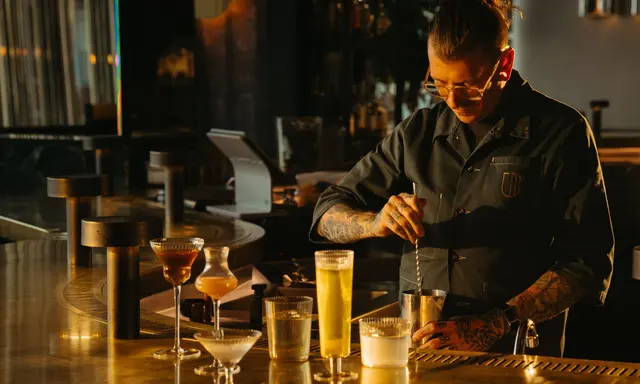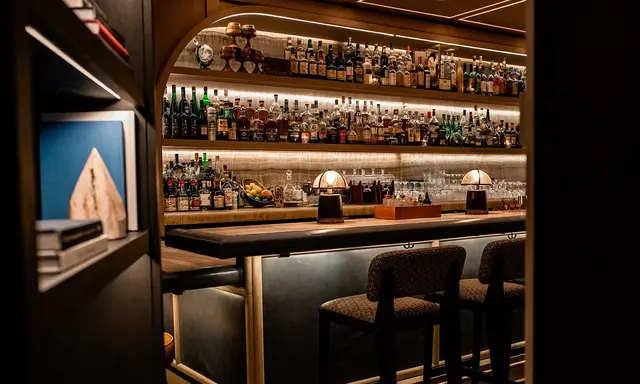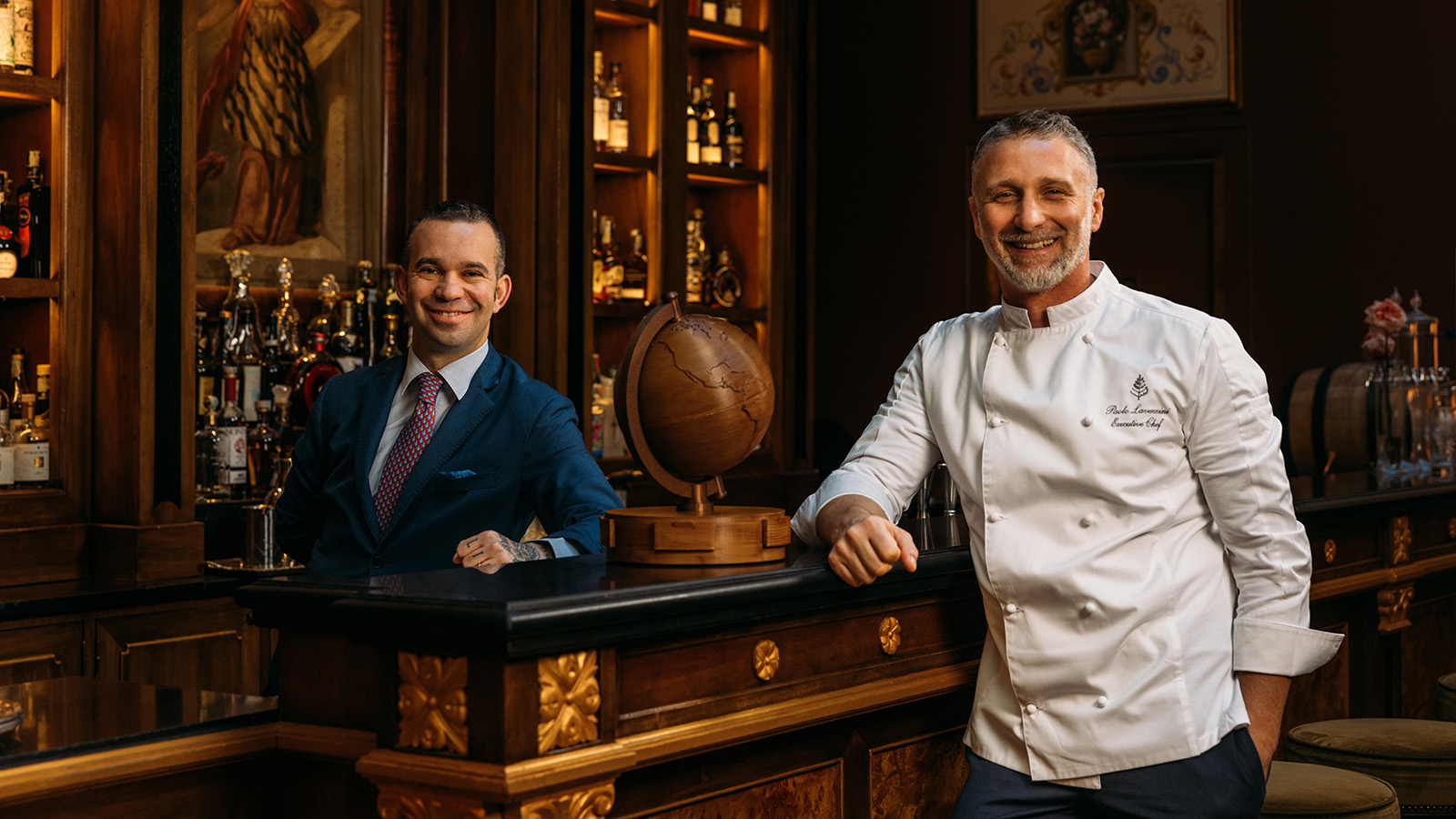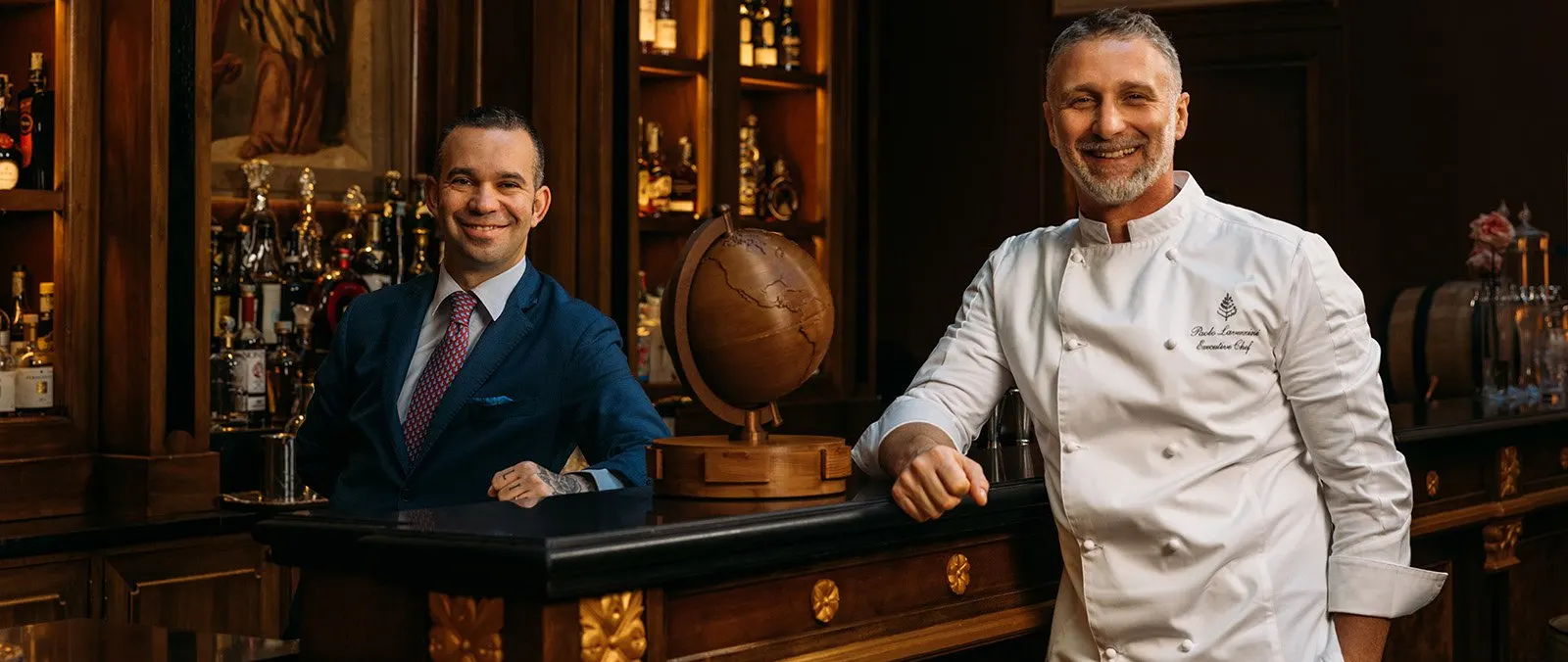
Atrium Bar at Four Seasons Hotel Firenze has developed a drinks collection inspired not by familiar cocktail categories, but by dishes and experiences that have shaped the life of Executive Chef Paolo Lavezzini. Known as The Tasting Globe, the programme was announced on 20 February 2026 and translates memories of food from Italy, France, the United States, Asia and Brazil into a series of beverages. Assistant Bar Manager Edoardo Sandri leads the creative project, with the menu presented through an interactive globe featuring hidden compartments that reveal ingredients. The concept is an example of contemporary hospitality using storytelling, design and culinary technique together. It also includes explicitly alcohol-free creations, allowing guests to explore the idea without assuming that every part of a bar experience must involve alcohol.
A concept founded on memory
The starting point is the chef's experience of particular dishes rather than a list of fashionable ingredients. A familiar flavour can evoke a journey, a family meal or a professional encounter, even when the original dish is not reproduced literally. Four Seasons describes the aim as translating a food's identity and emotional associations into another form. This is an artistic proposition, not a claim that all guests will have the same memories or responses. Its value lies in giving the bartender a coherent creative question: how might the qualities of a dish be communicated through aroma, texture and taste when presented in a glass? The answer depends on interpretation and technique rather than a simple substitution of solid food for liquid.
The interactive globe gives the menu a physical form
The Tasting Globe is presented through a globe-shaped object containing secret drawers associated with five geographical destinations. Guests discover ingredients through those compartments, making selection part of the experience. This use of physical design is interesting at a time when many restaurants rely entirely on printed or digital menus. A tactile element can encourage curiosity and conversation, while providing a visual connection between the drinks and their geographical references. Yet the prop should support the food and drink rather than dominate it. A well-designed menu remains accessible and understandable to guests who prefer straightforward descriptions. Staff should still provide clear information about ingredients, allergies and alcohol content independent of any theatrical presentation.
Italy begins with anolini in brodo
The Italian part of the menu includes a creation named after anolini in brodo, the small filled pasta served in broth associated with Emilia-Romagna. The hotel describes a drink that reflects the comfort and savoury depth of broth alongside a suggestion of Parmigiano Reggiano. Translating such a dish into a beverage raises an obvious challenge: the warmth and texture of pasta cannot be reproduced simply by mixing liquid ingredients. The bar team instead aims to communicate a flavour memory. That approach may be intriguing for travellers interested in the relationship between cooking and mixology. It is also unusual enough that guests should seek an explanation before ordering, rather than assume the drink will taste exactly like the dish its name evokes.
Spaghetti fritti offers a playful Italian counterpoint
Another Italian reference is Spaghetti Fritti, inspired by the familiar pairing of pasta and tomato. The menu description suggests a bright, crisp interpretation rather than the literal serving of fried spaghetti in a glass. Such a concept can seem deliberately provocative, but its underlying logic is not unfamiliar. Chefs often use recognised combinations of acidity, umami and texture to build new dishes from old references. A bartender can work with similar ideas using aromatic infusions, garnishes or other components. The official release does not provide the complete recipe, so a preview should not invent techniques or claim to know the final balance. The interest is in how a traditional comfort flavour has been reimagined.
France enters through Crêpe Suzette
The French section begins with Crêpe Suzette, a dessert traditionally associated with citrus, sweetness and caramelised flavours. Atrium Bar's interpretation highlights that familiar aromatic relationship in a contemporary drink. Dessert-inspired cocktails can easily become overly sweet, making balance an important question. The concept does not require the drink to imitate every ingredient or preparation step of the original recipe; it may be more effective to convey the central combination of citrus and caramel. For a visitor interested in French pastry and dining history, the reference can provide a point of entry into the menu. It is an invitation to notice shared flavour structures across different culinary forms.
Brittany's coast informs a mineral expression
The second French idea, Huître Bretonne, takes the coastal character of Brittany's oysters as its reference. Four Seasons describes saline tones and mineral clarity rather than a straightforward reproduction of an oyster dish. This is especially relevant to travellers who appreciate coastal food culture, because the sea can be evoked through aromas and seasoning as well as through seafood itself. Yet descriptions such as minerality are sensory conventions, not precise chemical measurements of a drink's relationship to seawater. Guests with shellfish allergies should ask about actual ingredients, since a name inspired by oysters does not by itself establish whether any oyster product is present. Accurate disclosure matters more than storytelling.
American comfort food provides two contrasts
The menu turns to the United States through two very different references. Buffalo Wings takes inspiration from the familiar combination of heat, tang and sweetness, while Bagel & Lox draws on the smoky, creamy and slightly pickled notes of a New York breakfast. Neither concept is a conventional expectation for a luxury cocktail list, which is precisely why their presence deserves attention. Translating savoury American dishes into drinks asks guests to think about flavour outside traditional categories. Success would depend on whether the drink remains pleasant and coherent in its own right, not simply on the cleverness of its name. The hotel release offers a concept and descriptive notes, but no independent tasting assessment.
Asia offers an alcohol-free approach
The programme includes two drinks identified by Four Seasons as alcohol-free creations. Yuja is inspired by Korean citrus traditions, using the freshness and aromatic character associated with yuzu and related fruit preparations. Strawberry Timur Sorbet introduces berry flavours and the citrus-pepper qualities of Timur berry. These options matter because they treat non-alcoholic drinks as creative work rather than obligatory substitutes for people who do not drink. The sensory possibilities of fruit, herbs, spices and texture are substantial without alcohol. Guests should still confirm the precise ingredients if they have allergies or restrictions. A sophisticated bar should offer its hospitality and attention to every guest, regardless of beverage choice.
Brazil completes the journey
The Brazilian section references Brigadeiro, the rich chocolate sweet closely associated with celebrations, and Moqueca, a coastal preparation with regional variations. The hotel describes a silky, indulgent approach for Brigadeiro, while Moqueca inspires smoky, tropical and acidic notes. These choices illustrate the distance the project is willing to travel: a dessert and a savoury seafood-associated dish become subjects for a beverage menu. Such transformations may stimulate curiosity about the original foods. Visitors who find the drinks interesting can explore Brazilian culinary traditions beyond the hotel, recognising that a handful of references cannot represent a country's full diversity. A themed collection is an introduction, not a comprehensive food guide.
Paolo Lavezzini and Edoardo Sandri's collaboration
The project is presented as a conversation between Executive Chef Paolo Lavezzini and Assistant Bar Manager Edoardo Sandri, who serves as the creative lead for the drinks. That division of roles is central to the concept. The chef contributes memories and culinary references; the bar team interprets them through beverage techniques. It is a model that can produce more interesting results than simply asking the kitchen to supply a garnish for a cocktail. Collaborations work best when each participant brings specialist knowledge and is willing to adapt it. The Tasting Globe's stated purpose is to turn culinary ideas into a sequence of experiences rather than produce faithful liquid copies of recipes.
The hotel provides a Florentine setting
Four Seasons Hotel Firenze is located in Florence, a city strongly associated with artistic heritage and the craft traditions of Tuscany. The Atrium Bar operates within a property whose atmosphere offers a different experience from a contemporary standalone cocktail venue. The connection is relevant because the menu's physical presentation and narrative ambition echo the city's wider interest in design and material culture. That does not mean a bar menu is equivalent to a historical artwork. It simply recognises that hospitality can draw inspiration from the surrounding cultural environment. Travellers may find the Tasting Globe more engaging as one part of a broader visit involving galleries, architecture and local cuisine.
A price is not a guarantee of taste
The official announcement states that the menu's cocktail prices start at EUR 24. That is a useful planning figure, but it does not establish the exact price of each drink or account for changing service charges and current availability. Visitors should ask for the latest menu and consider their own preferences before ordering. A drink inspired by a favourite food can be intriguing without necessarily matching everyone's taste. The pleasure of discovery depends on the willingness to try something unfamiliar, but no guest should feel obliged to purchase a particular item to participate in the concept. The interactive menu can be appreciated as design as well as a set of beverages.
Responsible hospitality and personal choice
Several of the published drinks are described as cocktails involving alcohol, while others are explicitly alcohol-free. Luxury lifestyle coverage should make that distinction clear without turning an inventive drinks menu into an invitation to excess. Alcohol carries health and safety risks regardless of craftsmanship or presentation. Guests who drive or have personal reasons to avoid it can choose alternatives, and a bar's quality is partly reflected in how respectfully such preferences are accommodated. Visitors with food allergies should also consider the unusual savoury references and ask for precise ingredient lists. Storytelling must never replace the information necessary for informed consent and safe service.
Why it belongs in a yacht lifestyle magazine
Owners and guests of luxury yachts between 12 and 24 metres may share interests in gastronomy, design and distinctive places to visit ashore. Florence's Tasting Globe does not announce a yacht-related service, but it offers insight into another field where precision, hospitality and custom experience matter. Its design-centred approach may interest travellers who appreciate thoughtful yacht interiors or art collecting. The maritime references in the drinks, such as Brittany's oysters and Brazilian coastal cooking, are culinary rather than nautical services. The relevance lies in international lifestyle interests, not in inventing a direct link to vessels or ports.
An ongoing concept with a defined origin
The Tasting Globe was announced in February 2026, and its menu should be identified as an established concept rather than misleadingly called a November launch. Four Seasons describes its origins in chef Paolo Lavezzini's journeys and Edoardo Sandri's creative translation of those memories into drinks. The five geographical references and the interactive globe establish a distinctive identity for the bar. Prospective visitors should confirm that the specific menu remains in service and ask about current pricing before travelling. For luxury lifestyle readers, the idea is memorable because it uses hospitality to explore how taste and memory can move across culinary boundaries without pretending that one carefully crafted beverage captures a whole culture.
Sources and image credits: Four Seasons Hotel Firenze original 20 February 2026 press release, The Tasting Globe: From Chef's Creations to Liquid Expressions at Atrium Bar, with first-party photographs from the official downloadable image gallery. Menu descriptions, personnel and starting price are attributed to Four Seasons; cultural, sensory and responsible-hospitality analysis is original Luxury Yacht Guide reporting.
Sources and image credits
Reporting based on Four Seasons official original 20 February 2026 press release concerning Atrium Bar Firenze Turns Culinary Memories Into a Tasting Globe.
Lead photograph: Atrium Bar Firenze Turns Culinary Memories Into a Tasting Globe — official source press photograph. Image: Four Seasons Hotels and Resorts, original official editorial press image from source property; illustrative photograph credited to the hotel. Original official image source.