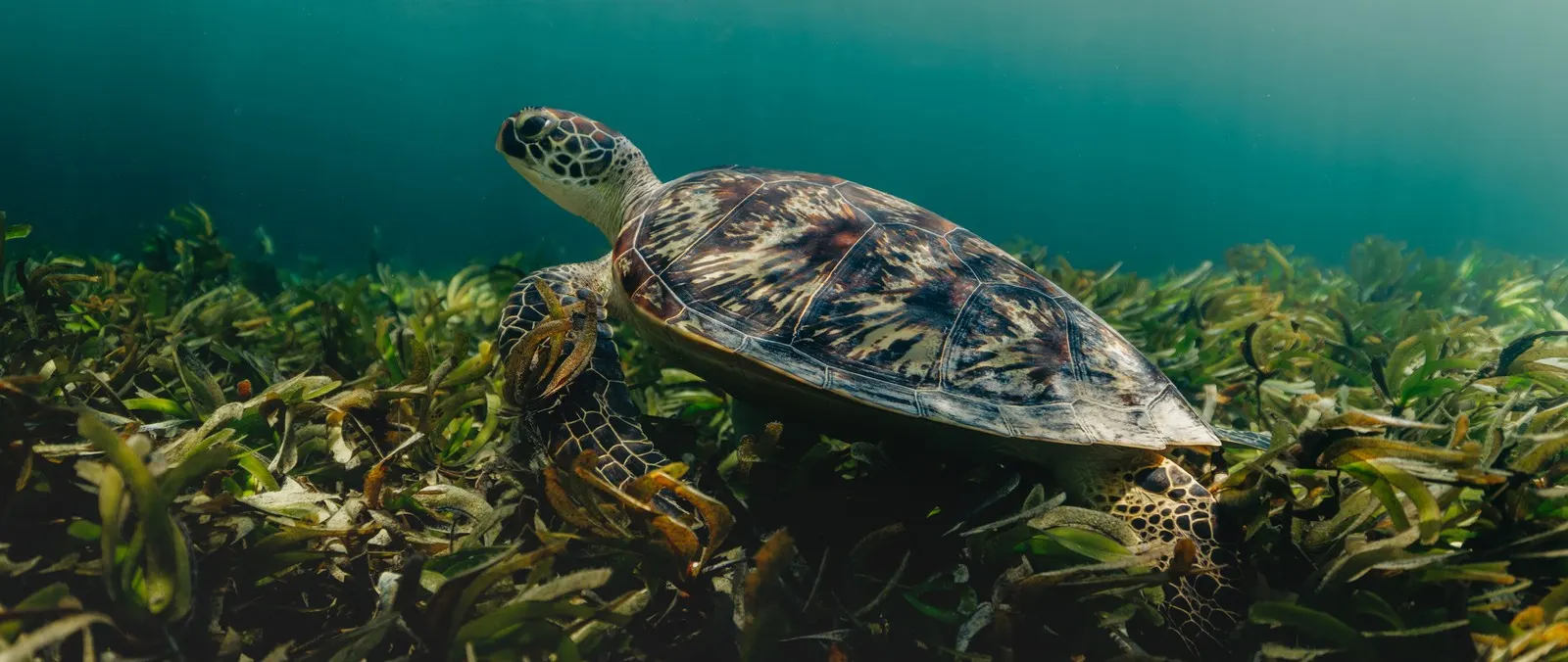
Desroches Island enters one of its most important natural seasons between October and March, when critically endangered hawksbill turtles return to nest along fourteen kilometres of beach. Four Seasons is using that cycle to invite guests into supervised conservation work rather than treating turtle activity as a spectacle observed from a distance.
The Seychelles supports one of the world's significant remaining hawksbill nesting populations, while green turtles are also present around Desroches throughout the year. Different seasonal cycles mean guests can learn about courtship, nesting, tracks, incubation and hatchlings at different times instead of expecting one guaranteed encounter.
What changes for the guest
During Turtle Patrol, guests can accompany the marine team as beaches are checked for nests and signs of activity. When conditions allow, conservationists may record measurements, tag a turtle, count eggs and mark nest locations with GPS while the animal is in the natural trance-like state associated with laying.
That work produces data that can be used over many seasons rather than simply creating a memorable photograph for visitors. Each nest is recorded and monitored, and eggs may be relocated only when natural risks such as seawater infiltration make intervention necessary.
The experience is built around place
Outside the main hawksbill season, the resort also offers Turtle Tracks and Traces, helping guests read the marks left by green turtles that have nested overnight. Learning to identify tracks and unsuccessful nesting attempts can be surprisingly engaging because the beach becomes a record of activity that happened while most guests were asleep.
Later in the cycle, the team assesses nests after hatchlings have emerged, recording the number of successful eggs and other information that contributes to long-term management. Guests may occasionally witness hatchlings reaching the sea, but the programme is designed around conservation needs rather than staging an encounter on demand.
Why it fits the LYG lifestyle brief
For LYG readers, Desroches is particularly relevant because it combines an isolated island resort with a marine environment that would also appeal to yacht owners. Understanding turtle nesting zones can influence how visitors use beaches, tenders, lighting and nearby anchorages during sensitive periods.
The programme demonstrates how a luxury property can make conservation visible without turning wildlife into entertainment. Guests still enjoy beaches, diving and island life, but they are given enough information to understand why some areas or behaviours need greater care.
What to know before booking
Timing matters if turtles are a major reason for travelling. Hawksbill nesting runs mainly from October to March, while green turtle courtship and other activities follow different seasonal windows, so the resort should confirm what is realistically likely during a specific stay.
Visitors should also arrive prepared for uncertainty. Weather, tides and wildlife do not follow hotel schedules, and the most responsible conservation experiences accept that a patrol may end without seeing a turtle, while still providing insight into the monitoring work and the island's wider marine ecosystem. That uncertainty is part of the value because it keeps the wildlife encounter honest and conservation-led rather than staged for visitors.