Revisiting an architectural approach to furniture
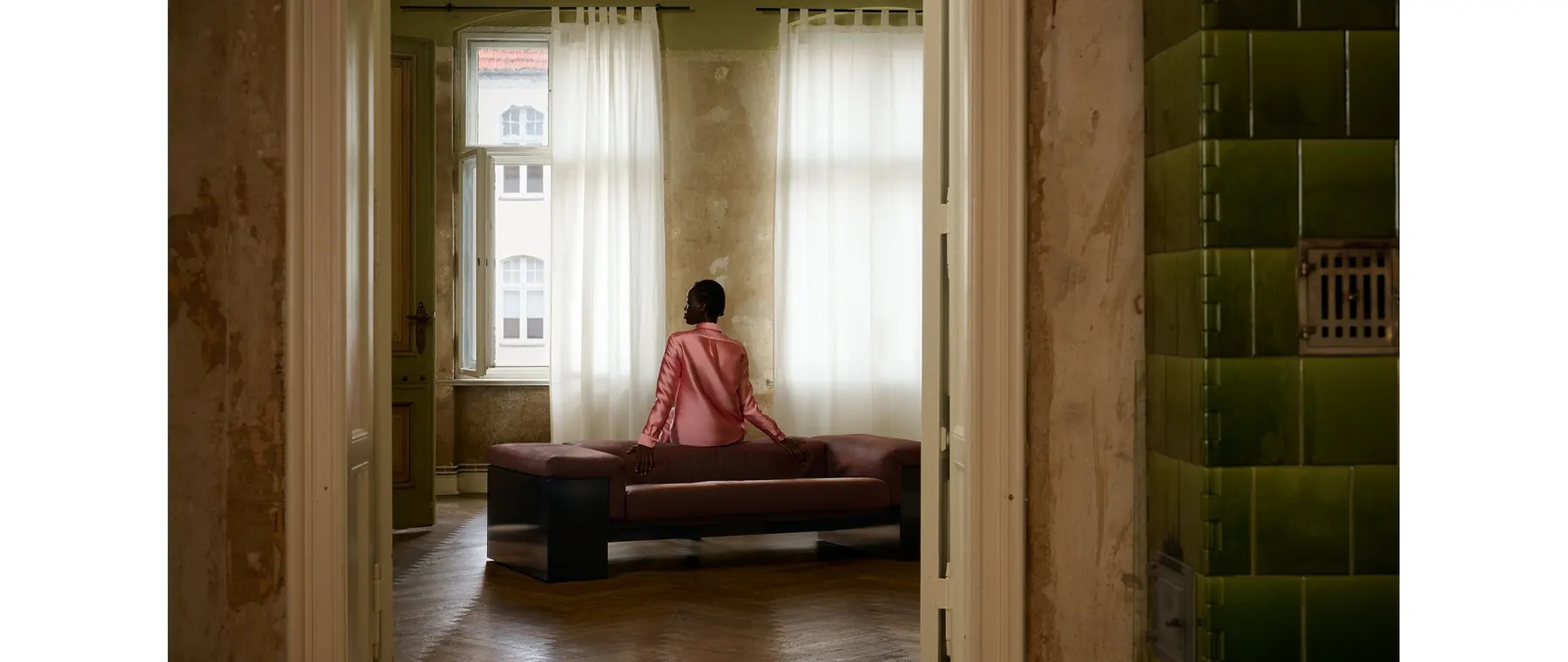
Knoll announced on 22 October 2026 that it is bringing back the Brigadier collection, a furniture design created in 1978 by Italian architect Cini Boeri. The revived collection comprises two sizes of sofa, accommodating two or three people, and a lounge chair. Its highly structured external form contrasts with the generous upholstered interior, and the latest interpretation incorporates adjusted proportions and new finishes, including a Midnight Blue lacquer. The original design was developed nearly half a century ago, but its emphasis on the relationship between a piece of furniture and the larger room remains particularly interesting for owners of carefully designed residences and yachts.
The reintroduction is not described as an exact reproduction of an individual vintage example. Knoll has retained the identity of the collection while revisiting its material options and proportions. A buyer interested in the history of twentieth-century design should distinguish the contemporary manufacture from furniture produced during the earlier period. Both may have an appeal, but their provenance, condition and potential suitability for an individual space are different.
The fixed frame and the softness within
Brigadier's distinctive character arises in part from its external structure. Its architectural lines give the furniture an immediately recognisable outline, while seating and cushions provide a contrasting softness within that boundary. The appearance is substantially different from that of a sofa in which the upholstery itself defines the whole exterior. The frame has an independent visual presence that can influence the character of the space around it.
Boeri's design is interesting because the impression of strength created by the external geometry does not require the place occupied by the sitter to feel equally formal. The proportions of the seating and the relationship between the padded elements and their surrounding surfaces are central to the way the object is experienced. It is useful to examine it from several positions, including the side and rear, rather than judge it exclusively from the viewpoint normally used to photograph a sofa.
In a contemporary residence, a sofa with a clearly resolved exterior can be considered as an object that helps organise the room. Where it sits away from a wall, its rear surface forms part of the view through the space. The architectural character of the piece can consequently become important to the relationship between two adjacent seating or circulation areas.
A designer working across interiors, buildings and objects
Boeri's career extended from architecture into furniture and lighting, with a particular interest in how people inhabit space and how objects can respond to their needs. In the 1970s she was involved in designing Knoll showrooms in Europe and the United States while running her architecture practice in Milan. In 2011 she received the lifetime achievement Compasso d'Oro. A documentary about her work by Maddalena Bregani, La casa di Cini Boeri, appeared in 2025.
Her involvement in the design of showrooms gives an especially interesting context to the development of a furniture collection. The individual piece does not need to be regarded as a sculpture isolated from its surroundings. An architectural designer can consider the distances people move through a room, the way they gather and the changing views created by its contents. Furniture then has a role in defining the architecture as people actually experience it.
For owners planning a new yacht interior, this approach offers a useful emphasis. An image of a saloon without people may show the treatment of its surfaces but reveal little about how easily a guest can reach a seat or how comfortably several people can gather. The intended use should remain part of the design conversation throughout the development of the interior.
Lacquer and the relationship with surrounding light
Knoll identifies lacquer as an important element of the reintroduced collection and specifically introduces the Midnight Blue finish. A dark coloured surface with a reflective finish can behave quite differently from a matte fabric of a similar colour. Its appearance varies with the pattern of light and the objects around it. The surface may appear relatively subdued in one position and considerably more animated from another.
This is especially relevant in a room with a changing source of daylight. A yacht saloon may receive light from several directions as the vessel changes its orientation or travels between locations. The effect within the interior can be notably different from that created by a fixed lighting arrangement in a showroom. Before selecting finishes, it is useful to examine representative samples under lighting conditions that resemble those expected in actual use.
Lacquer may also present particular maintenance considerations depending on its specification and the location in which it is used. The presence of lacquer in a residential furniture range does not establish the suitability of that furniture for a marine application. The responsible yacht designer should determine whether the relevant finishes and construction can meet the requirements applicable to the proposed installation.
Upholstery as a means of changing the design’s character
The company offers a wide selection of upholstery options for the revived collection. This gives a client some scope to alter the relationship between its fixed frame and the softer seating surfaces. A fine textile with a restrained texture may preserve a relatively graphic contrast between those parts, whereas a more expressive textile can introduce an additional visual element.
The success of the selection depends on the qualities of the actual material. A fabric sample can communicate the direction of its weave, the character of its colour and its tactile properties more effectively than a small photograph. The designer should also consider the way the fabric appears across the relatively large area of a cushion. A pattern that is attractive in a small sample may have a different effect when repeated across several adjacent surfaces.
Durability and the maintenance requirements of the upholstery should be discussed with the manufacturer. Someone choosing fabric for furniture in a private study may make different decisions from a household using the same basic form in a frequently occupied reception room. A yacht interior imposes additional considerations associated with exposure, cleaning and applicable fire-performance requirements. These need to be verified for the specific materials, not inferred from the reputation of a residential furniture collection.
The two sofas and the independent lounge chair
The collection offers two sofa configurations rather than an unlimited modular installation. The lounge chair provides a separate interpretation of the same design language. This arrangement permits a room to be organised through repeated forms of different sizes and orientations. The chair might be placed opposite the sofa or turned towards an independent area of interest, depending on the intended use.
The appropriate configuration cannot be determined without considering the dimensions of the actual space. The distance needed for a guest to approach or leave the seat, the position of a table and the location of existing doors or passageways all influence the feasibility of the arrangement. A room planning exercise should include the people occupying the furniture rather than represent each item solely as a static footprint.
The lumbar support, seating height and other dimensional characteristics should also be considered according to the preferences and needs of individual users. A recognisable design is not automatically comfortable for every person. The availability of several related pieces provides alternatives, but the actual manufacturer's specifications and an opportunity to examine the furniture remain important before purchase.
Applying an architectural idea to a yacht saloon
A yacht between twelve and twenty-four metres may offer a relatively intimate saloon in which the organisation of seating has a considerable effect on the overall experience. The low profile identified by Knoll offers a useful design principle for rooms where a sightline towards the windows is important. Furniture whose height and shape have been carefully considered can allow the surrounding architecture and view to remain visible from several positions.
However, residential furniture should not be placed on board simply because it suits the visual concept. The weight and position of a piece can affect the vessel, and its fixing or restraint must be appropriate to operating conditions. The possibility of safely bringing it through the vessel's access openings also deserves consideration. Fabric and structural materials may require specific documentation and approval. The Brigadier announcement does not claim that the collection is marine certified.
A designer may instead use the underlying relationship between frame, seating and space as inspiration for purpose-built marine furniture. Such a commission can respond independently to the yacht's dimensions and the owner's requirements while respecting the authorship of the original design. It is an opportunity to study Boeri's contribution without assuming that a product intended for a shore-based setting is necessarily the appropriate solution for a vessel.
A contemporary edition with an identifiable history
Knoll presents the revival as an addition to its current offering. Pricing, dimensions, upholstery availability and delivery terms depend on the selected configuration and sales region and should be verified through its authorised channels. The October announcement does not identify the edition as a fixed limited production run.
For a collector of furniture, the value of the release is the opportunity to encounter an identifiable design by Boeri in contemporary manufacture. The visual relationship between the structured outer form and its upholstered interior provides a particularly instructive example of the way furniture can act as a component of architecture while remaining an object principally intended for people to use. Its most compelling qualities are likely to emerge when the piece is considered within the actual room it will occupy, rather than solely as an image of a familiar twentieth-century design.
Sources and photograph
Source documentation: https://www.prnewswire.com/news-releases/an-architectural-icon-knoll-reintroduces-cini-boeris-brigadier-sofa-302916082.html. Photograph: Knoll Brigadier Sofa Collection — official press photograph — Knoll — official Brigadier collection press photograph distributed with its 22 October 2026 announcement through PR Newswire.. Official issuer-supplied press photograph, reproduced for editorial coverage of the specific announcement and resized for web display.