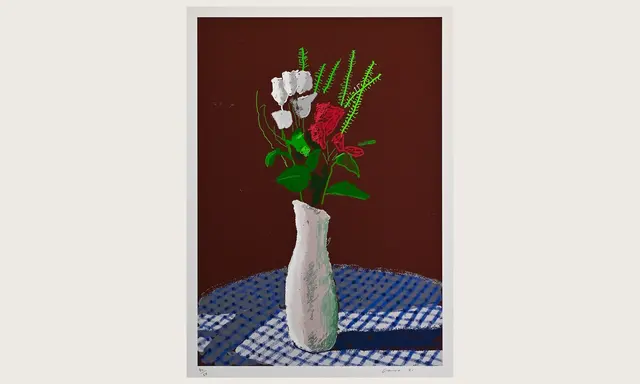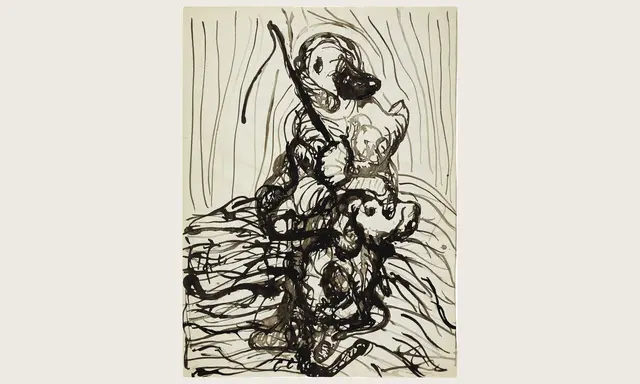
A close view of Sanyu’s work on paper
Christie’s has presented SANYU: Where the Line Begins as an online sale devoted to drawings by the Chinese-born artist Sanyu, with works formerly from the collection of Federico Cappellin. The auction house identifies Cappellin as a close friend of the artist in his later years, giving the group a distinctive personal history as well as an art-historical focus.
Christie’s describes the ensemble as largely dating from the 1920s and 1930s, the decades in which Sanyu developed his approach to line while working in Paris. That chronological emphasis is important: the sheets illuminate the process behind a recognisable mature style rather than simply offering more affordable versions of major paintings. Drawings can reveal an artist’s decisions with unusual directness.
The relationship between East and West
Sanyu’s drawings developed within a Paris art environment in which experiments with simplified form and expressive line were central. At the same time, his work draws on a sensibility informed by Chinese calligraphic traditions. Those influences are not opposing categories to be counted on a scorecard. Their coexistence helped produce a vocabulary in which a few lines could communicate rhythm, gesture and the character of a subject.
The Christie’s selection invites close attention to ink and pencil as independent media. An apparently spare composition may require considerable precision because it leaves little room for correction or distraction. Collectors used to richly coloured oils may discover that the balance of a drawing depends just as much on the placement of empty space as on what is depicted. That demands patient looking rather than a quick comparison of signatures.
A provenance with direct personal links
Christie’s says the works were acquired directly from the artist between 1960 and 1966, giving the group a documented route into Cappellin’s collection. For works on paper, this background can be especially meaningful because small sheets often pass through private hands without the publicity that attends major paintings. An identifiable friendship and collection history can help situate them within an artist’s life.
Provenance is still a matter for documentary verification. Auction catalogue descriptions, original correspondence, inventory records and paper annotations may all contribute evidence. A purchaser should request the information available for the specific sheet under consideration instead of assuming that every object in a named collection has the same supporting documents. Sound due diligence is part of respecting the artwork’s historical importance.
Caring for drawings after acquisition
Paper is responsive to light, humidity and handling. Long-term display generally calls for appropriate glazing, archival mounts and a location away from strong direct sunlight. The precise environmental requirements vary with materials and condition. A conservator can recommend a display rotation when a collector owns several works that cannot safely remain on walls throughout the year.
Viewing drawings in person can reveal pressure, texture and marks that are difficult to judge in a digital image. At the same time, online catalogues make it possible to compare many sheets side by side and refine questions before arranging an inspection. Buyers should review condition reports carefully and verify sheet dimensions, whether images include margins, and how inscriptions have been identified.
Why this archive matters for collectors
An auction devoted to one artist’s drawings creates an opportunity to examine relationships among works rather than assessing each in isolation. Sanyu’s connection to the Parisian avant-garde of Montparnasse adds historical depth, while the Cappellin provenance makes the selection more personal. Together they show how a collection can preserve fragments of an artistic life that might otherwise become dispersed.
The auction listing should be consulted for exact dates, lot availability and results, since the published catalogue can remain online after bidding ends. For a thoughtful collector, the central value of this group is not merely an association with a celebrated name. It is the chance to understand how Sanyu’s line evolved, and how a set of drawings can deepen an appreciation of cross-cultural modernism.