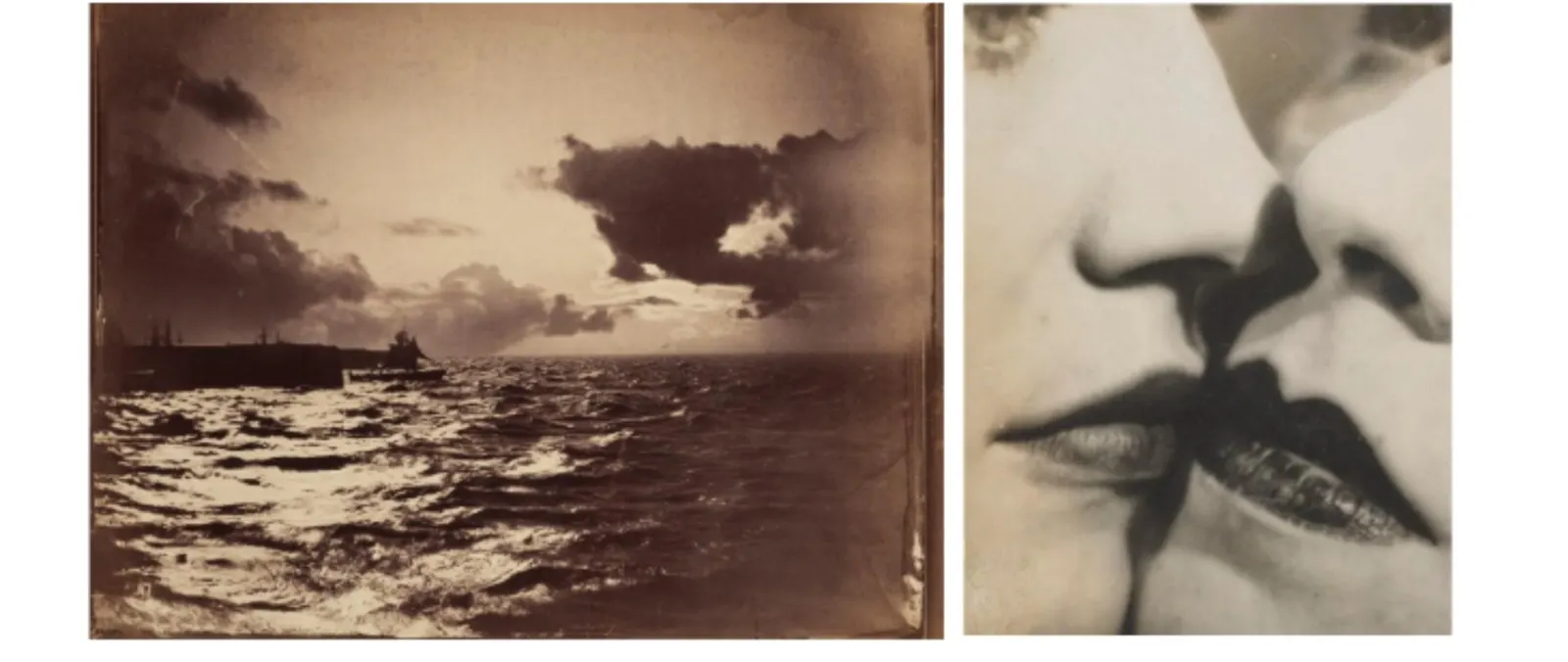
Christie’s will bring more than 350 photographs from the Roger Therond Collection to Paris in November, offering one of the most substantial private photography collections to reach the market in recent years. The works will be divided across live sales on November 13 and 14 and an online auction running from November 6 to 17, following a public exhibition at Christie’s Paris.
Therond was best known as the long-serving editor of Paris Match, but his private passion was photography in its earliest, most experimental and most poetic forms. Over decades he assembled a collection that moved from nineteenth-century pioneers to Surrealists and major twentieth-century image-makers, often buying before many of those names were fully established as museum canon.
The collection starts at the birth of photography
Early material includes work by Gustave Le Gray, Édouard Baldus, Nadar and other figures who helped define photography during the nineteenth century. These photographs were made at a time when the medium was still being understood simultaneously as scientific instrument, travel document and artistic language.
Therond was especially drawn to photographs that captured lost worlds, unusual travel and the texture of early processes. That makes the collection valuable not only for the names it contains but for the way it traces the development of photography from technical experiment into an independent art form.
Gustave Le Gray provides some of the strongest early highlights
Christie’s will offer more than a dozen works by Le Gray, including Marine, bateau quittant le port, estimated at €500,000 to €700,000. The collection also includes a remarkable group of photographs made in Egypt and other examples that demonstrate the technical ambition and atmospheric power associated with Le Gray’s best work.
His seascapes remain among the most admired images of early photography because they solved practical exposure problems while creating compositions of exceptional drama. Therond’s Mediterranean background also gave these marine photographs a personal resonance beyond their importance to photographic history.
Surrealism and modern Paris expand the story
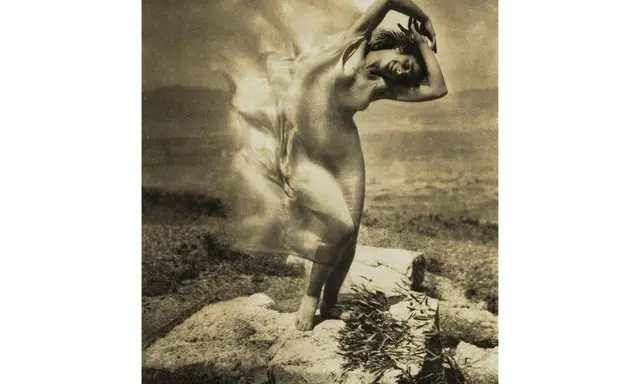
The twentieth-century section includes Man Ray, Dora Maar, Brassaï, Henri Cartier-Bresson, Helmut Newton and Guy Bourdin. Some of these photographers were also personal friends of Therond, giving parts of the collection a direct relationship with the creative circles around Paris Match and the wider Paris art world.
Man Ray’s Le Baiser, estimated at €250,000 to €350,000, is among the best-known images in the group. Works by Dora Maar add a more enigmatic Surrealist dimension, while photographs by Cartier-Bresson and others connect the collection with documentary observation and modern photojournalism.
The collection reflects a collector who trusted instinct early
Therond bought many nineteenth-century photographs at a time when historic photography remained undervalued compared with painting and sculpture. That willingness to treat fragile prints as major works helped place him among a generation of collectors who changed how museums and markets thought about the medium.
His approach was not simply academic. He responded to atmosphere, texture, strangeness and the emotional charge of an image, allowing the collection to move between documentary material, portraiture, travel photography and works that verge on abstraction.
Paris Photo gives the sale added relevance
The auction arrives as Paris celebrates the bicentenary of photography and Paris Photo brings international collectors to the city. That timing creates an unusually concentrated audience of specialists who can see the Therond material in the context of both historic photography and contemporary practice.
For collectors, the sale offers a chance to acquire works with strong provenance and a coherent intellectual history. More importantly, it presents photography not as a secondary collecting category but as a field with its own masterpieces, technical revolutions and long-established connoisseurship.