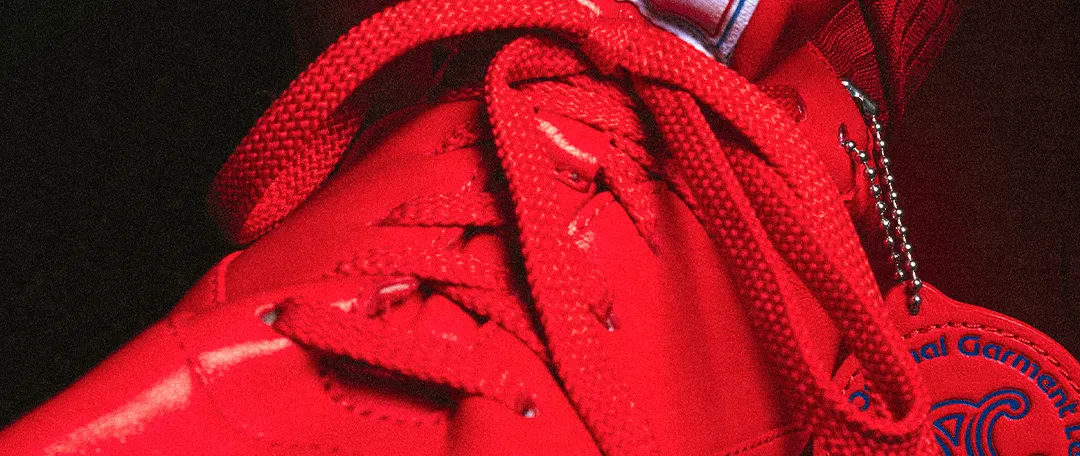
Celine and Reebok have joined forces on an updated Freestyle Lo, revisiting a sneaker first created for women's fitness in 1982. The collaboration retains the recognizable low-profile silhouette while reworking its place in a contemporary wardrobe, drawing a line between athletic heritage and the quieter codes of Parisian fashion.
A fitness shoe with an unusually long cultural life
Reebok introduced the Freestyle in 1982, at a moment when women's exercise clothing was becoming an increasingly visible part of popular culture. The low-cut Freestyle Lo subsequently found an audience far beyond fitness studios, becoming part of casual urban dressing. That shift from sports equipment to streetwear gives the partnership a meaningful source to draw on.
Rather than attempting to invent an entirely new athletic shape, Celine brings its own fashion vocabulary to a silhouette whose proportions are already familiar. The resulting project is a collaboration between two distinct design histories, not a claim that the Freestyle was always a luxury fashion product.
One shape, eight variations
The announced release uses one principal design across eight colourways, enabling different interpretations without multiplying the number of underlying shoe forms. This is important because many collaborations rely on visually dramatic redesigns that obscure the qualities that made the original recognizable. A consistent silhouette can be easier to combine with a broader wardrobe.
Colour choices will influence whether the shoes read as restrained daywear or as a more obvious statement. The product description emphasizes use with denim, simple separates and sharper tailored looks, reflecting an interest in versatility over a single prescribed outfit. Buyers should still examine the material finish and fitting instructions for their chosen version.
Parisian styling meets American sports heritage
Celine's contribution is positioned around Parisian street style and an understated attitude, while Reebok supplies the form and heritage of a familiar women's training shoe. The meeting of these references illustrates how a design can acquire new meanings without forgetting its original purpose. That is more interesting than treating a luxury label as an automatic improvement.
The shoe is intended for everyday wear, but it should not be assumed to meet the requirements of competitive fitness training merely because it descended from athletic footwear. A heritage shape may suit walking and styling differently from contemporary performance models that use specialized cushioning and support.
What collectors should consider
Collaborative footwear can appeal to fashion enthusiasts who follow a particular house as well as to people with a longstanding connection to the original brand. Condition, packaging and exact version can matter for collectors, but much of the appeal may be in wearing the design rather than storing it. Personal fit and material care remain essential.
The official retail announcement identifies the 1982 reference, eight-colour programme and styling approach. It does not establish universal pricing, availability in every market or an individual release allocation. Readers considering a purchase should confirm those particulars through a recognized retailer.
Official sources: www.timeinternational.co.id.