Looking beyond the paint colour
A timber floor often provides the strongest continuous material presence in a residential interior. It can connect rooms with very different furniture and decoration, and its character may remain visible long after the other elements of a room have changed. On 17 November 2026, flooring specialist Bona published its second annual Floorcast, an industry outlook for 2027 that combines a survey of American homeowners with the observations of its flooring specialists. The findings identify a movement towards warmer natural tones, widespread interest in preserving existing floors and an emphasis on informed maintenance.
The significance of the report is not that every owner should now replace a grey floor with pale oak. Its more interesting implication is that people can approach the materials beneath their feet as part of a long-term design decision. A thoughtfully maintained floor can make an established home feel comfortable and coherent without requiring the introduction of many new objects.
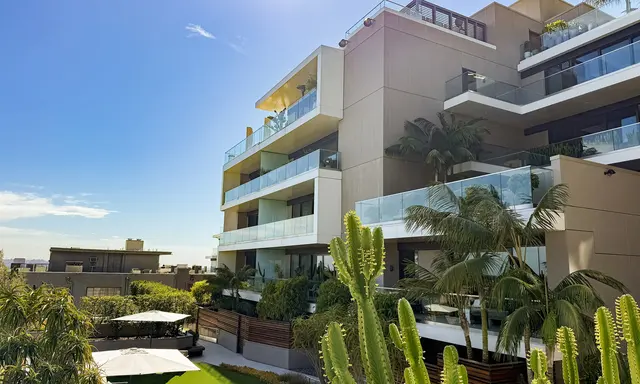
For Luxury Yacht Guide readers, the subject has particular relevance to apartments overlooking a harbour, second homes and carefully furnished residences. A successful interior in any of these settings needs to remain practical during ordinary use. Beautiful materials have greater value when their appearance, maintenance requirements and the way the home is occupied have been considered together.
Bona is a commercial supplier of flooring products and services, so its interpretation of the trends should be understood in that context. The survey provides an indication of attitudes among its defined group of respondents, not an independent forecast of every segment of the property market.
What the research actually tells us
Bona commissioned research from Opinium involving 1,000 American homeowners who had wood flooring in at least one room. The interviews were conducted from 15 to 21 October 2026. This is an important distinction: the respondents were people with existing experience of wood flooring, rather than a sample of all households across all countries.
The company's announcement reports that 60 per cent of those surveyed continued to regard wood flooring as a priority. Among respondents belonging to Generation Z, the figure was 82 per cent, compared with the 69 per cent reported for that age group in the preceding year's survey. The announcement does not detail the size of that particular age subgroup or provide confidence intervals, so the comparison should be treated as an indication of interest rather than proof of an equivalent change across the population.
Perhaps the most relevant result for an owner considering an alteration to an established property is that 76 per cent of respondents would prefer to restore a sound existing timber floor instead of replacing it. That question assumes the absence of significant damage, a qualification that matters in interpreting the finding. A floor that can be restored economically presents a very different proposition from one affected by structural problems, serious moisture damage or previous alterations that have left little usable material.
The findings do not determine which option will be least expensive in a particular house. The condition of the original floor, the scope of the proposed work and the costs of an alternative installation must be considered separately. The survey does show why restoration deserves a place in the conversation before replacement is specified.
Warmer colours and the appeal of visible grain
Bona's specialists expect lighter and warmer timber colours to remain prominent in 2027, with white oak continuing to attract interest. Birch and beech are also identified as potential areas of growing interest, while wide planks and satin surface finishes appear in the company's outlook. These suggestions are design observations rather than measurements of the market share of each wood species.
Choosing a floor colour is more complicated than deciding whether to follow a currently fashionable palette. A relatively pale surface can look quite different in a room that receives strong afternoon sunlight and in one with a predominantly shaded outlook. The same finish may produce different effects on different timber constructions, and the colour of adjoining walls, curtains, rugs and furniture also changes how it is perceived.
For a coastal home, a less conspicuous floor can allow the landscape visible through the windows to remain the principal focus. Alternatively, a stronger grain pattern may bring character to a compact apartment with relatively restrained furniture. The choice should reflect the qualities of the actual room rather than a general assumption that a lighter floor is always better.
A sample viewed in the intended space during the day and under evening lighting can be particularly useful. It also allows the prospective owner to examine the relationship between the floor and other materials that will remain after the work is completed. If the existing flooring is to be restored, a specialist can help establish what appearance is realistically attainable on a representative area. There may be variations in the wood and its history that cannot be reproduced accurately in a photograph or showroom sample.
A renovation that respects what is already there
Restoring an existing floor can be an attractive design choice when the material remains suitable for continued use. The original boards may relate well to the proportions and architectural history of the property. Retaining them can also avoid the disruption associated with removing flooring and adjusting adjacent components to accommodate a new installation.
The scope of restoration varies considerably. Some floors require relatively limited work to their finish, while others may need more extensive repairs or specialist assessment. The distinction between a solid timber board and an engineered product can be important because the construction influences which treatments are feasible. Previous work may also have reduced the amount of material available for further treatment. The appearance of the surface alone does not necessarily reveal the condition beneath it.
In a holiday home near the water, the surrounding environment and the way rooms are used should also form part of the assessment. Conditions can vary substantially between a property occupied throughout the year and one closed for long periods. A floor covering selected for a sheltered indoor residence should not be assumed to be suitable for a yacht simply because the owner likes its appearance.
Before commissioning work, an owner should obtain a clear description of the proposal from a suitably experienced specialist. It is useful to distinguish the areas being repaired, the finish to be applied and the arrangements for protecting adjoining rooms and furniture. The time during which certain spaces will be unavailable may matter particularly in a second residence scheduled to reopen at the beginning of a holiday season.
A good result is one that allows the floor to perform its intended role in the home. Complete visual uniformity is not necessarily the objective when working with older material whose variations contribute to the character of the building.
Why useful maintenance advice still matters
The survey also considered changes in the sources of advice used by homeowners. Bona reports that flooring professionals were the most trusted source for half of respondents, compared with 12 per cent for artificial intelligence tools. Among the 44 per cent of homeowners who said they used artificial intelligence for home maintenance, 40 per cent indicated that the resulting advice had not worked as expected, and 12 per cent reported damage.
These are self-reported survey responses among the defined sample, not independently verified assessments of individual damage incidents. They nevertheless draw attention to a relevant problem. A general recommendation about cleaning or maintaining wood may be unsuitable for a particular coating, floor construction or previous treatment. Even advice that is technically sound for one material may be inappropriate for another.
Where an owner has invested in a high-quality floor, establishing its exact specification and obtaining reliable care instructions can be more useful than repeatedly seeking general guidance. The installer or manufacturer should be able to identify appropriate products and any restrictions that apply to the surface. Retaining those instructions can be particularly valuable when a property is maintained by several people or when a house is transferred to another owner.
The report also identifies willingness to spend more on particular desirable characteristics of cleaning products, including performance and protection of the floor. That finding is relevant to a considered purchasing approach, but does not establish that any more expensive branded product necessarily performs better. Identifying a suitable product and using it according to the applicable instructions is more important than interpreting price as a measure of compatibility.
A home that feels good to live in
Indoor air quality is another topic addressed in the November report. Bona says 87 per cent of its respondents were willing to take at least one action relating to the health or indoor-air implications of installing or refinishing floors. The company also reports that 83 per cent would ask a flooring professional which products they intended to use. Such responses indicate an interest in understanding what goes into a renovation, but they do not establish the actual emissions or health characteristics of any individual flooring system.
A prospective customer can ask for the technical information and applicable emissions documentation relating to the products specified for the work. The particular application process, ventilation arrangements and conditions for returning a room to normal use should also be understood. A supplier's general environmental positioning is not a substitute for documentation on the materials that will actually be installed.
There is a broader attraction in the direction identified by the 2027 Floorcast. An interior can be luxurious because it is welcoming, well proportioned and made from materials that reward everyday use, rather than because everything in it is new. A beautiful floor that remains sound may be worth preserving even if it does not conform precisely to a current colour trend.
Bona has offered a useful view of the attitudes of homeowners already familiar with timber floors. Its report is not a guarantee of future design fashions, a property valuation or a specification for restoration. For readers planning work on an established home, its most practical contribution is the encouragement to examine the condition and character of existing materials before committing to their replacement. That approach can allow quality craftsmanship and well-chosen furnishings to remain part of an individual interior for many more years.
Sources and lead image
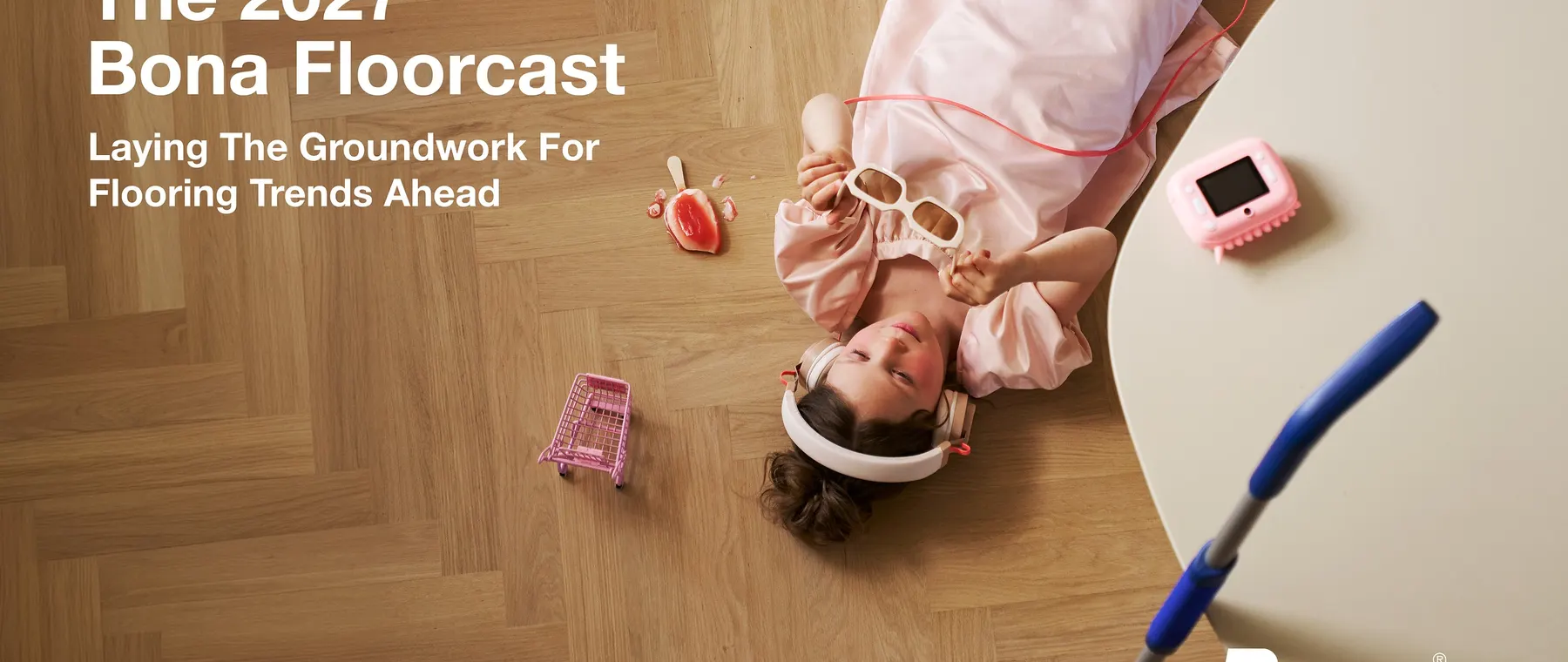
Source documentation: https://www.prnewswire.com/news-releases/from-ai-to-the-return-of-natural-wood-bona-reveals-whats-ahead-for-floors-in-2027-302942614.html. Lead image: Official cover of the 2027 Bona Floorcast report, showing an illustrative wood-floor interior — Bona US, official photographic report-cover artwork supplied with the 17 November 2026 press announcement; not an independent photograph of a completed refurbishment.. Official issuer-supplied press photograph, reproduced for editorial coverage of the specific announcement and resized for web display.