An invitation to discover unfamiliar artists
A collection of art can begin with a single picture that a person wants to see every day. It need not begin with a trip to an auction house, a substantial budget or an elaborate understanding of the commercial art market. On 16 November 2026, Anthropologie announced the fourth edition of its collaboration with YoungArts, identifying five emerging artists whose commissioned designs are now being offered as made-to-order prints through the retailer's website. Each artist is also receiving a $10,000 unrestricted grant.
The programme brings together the artists and the retailer's home design team. Through remote workshops, the participants explored the work involved in developing a piece for a commercial collection, from design decisions to the buying process. The result comprises one commissioned design from each participant. It is important to distinguish the original commissions from the printed products offered to customers; the announcement does not establish that each retail print is a unique original artwork.
The collection provides a useful route into contemporary visual practice for people whose interest in art is primarily personal. A yacht owner furnishing an apartment ashore, a couple making changes to an established home or a young collector considering their first deliberate purchase may all find something in the initiative. Its appeal lies in discovering the work of people whose names may not yet be familiar, rather than acquiring an object solely because an established market has attached a particular value to it.
Painting through movement and rhythm
Daniel J. Watts approaches the painted surface through a relationship with dance. The artist, whose practice encompasses tap and movement associated with the African diaspora, uses his feet to create abstract works directly on canvas. The retailer's description of the process highlights the connection between a physical action, a rhythm and the traces that remain after the performance.
This way of making a picture invites a viewer to consider how the finished work came about. The eye may be drawn to one mark or one colour, but the arrangement of marks can also suggest a sequence of movements that took place earlier. The painting is not merely a record of a dance; it is a visual work with its own balance and structure. Someone encountering an image from this practice in a domestic setting may discover that their understanding of it changes after learning about the method.
Movement and texture offer a useful alternative to a picture selected solely to coordinate with the colours of a sofa. They can create a more personal reason for placing a work in a particular room. That does not mean that the relationship with the other materials in the space is unimportant. Size and placement can influence how effectively the image is experienced.
The distinction between a painting and a printed interpretation of it is particularly relevant when considering the surface of a work produced through physical motion. A reproduction can communicate aspects of its composition and colour, but it does not necessarily reproduce the raised material, scale or other physical properties of the original. The individual product information should guide expectations.
Memory, cloth and the experience of everyday life
Atlanta-based Demetri Burke is another recipient. His work examines identity and personal memory through a visual language that draws on experiences from his past and present. A visitor encountering his work for the first time may find it rewarding to consider the relationship between the individual depicted or suggested by an image and the broader atmosphere created by its colours and forms. The announcement describes his practice without attempting to prescribe a single reading of the commissioned picture.
Isabel Oliva, working in Miami, brings drawing, painted elements and woven structures into a practice rooted in textiles. Weaving has an especially interesting place between the worlds of art and domestic design. It is an ancient means of creating useful objects while also providing a way to organise colour, pattern and physical structure. The boundaries between textile art and other kinds of visual composition are not always clear, and that ambiguity can be part of the pleasure of looking at the work.
A print translating such a composition into another medium presents a particular challenge. It may preserve visual relationships that are immediately apparent in the original, while the experience of the woven material itself will be different. The buyer should therefore be clear about the object being offered rather than infer that a picture based on textile practice will itself be a textile.
For readers with an appreciation of craftsmanship, the collection offers an opportunity to discover a contemporary approach to traditional materials. It may also prompt a wider exploration of artists who work directly with fibres and woven structures, including artists whose original works could be experienced in an exhibition setting.
Two different relationships with the photographic image
Sarah Wagner Miller works with painting and photography, drawing attention to people, places and intimate moments connected with her own life. The retailer's announcement describes landscapes and figures whose significance derives in part from their personal context. A familiar scene may have considerable emotional resonance even when the viewer does not know the full history of the place or individual represented within it.
Spencer Vazquez works with memory and image-making from a different perspective. The New York artist's practice involves different cameras and methods of transferring or capturing images, alongside the images encountered through digital devices. The announcement identifies pinhole photography, screen scans and work in moving images among the approaches he has explored.
The inclusion of these two artists demonstrates the breadth of possibilities associated with photography. It may form part of a process of observing a place or preserve a moment that has particular significance for the artist. It can also become raw material for another kind of composition. The technology used to make the initial image need not determine the final form of the work.
For someone gradually developing a collection of pictures, the difference between these approaches may be more interesting than the distinction between two superficially similar colour palettes. The most satisfying way to choose an image may be to consider how much there is to discover in it over time. A work encountered each morning in a home can become familiar without becoming uninteresting, especially if the viewer continues to notice different details or relationships.
Making a gallery wall feel personal
The new collection is being sold through Anthropologie as individual made-to-order prints. A homeowner considering one of the pieces can begin with the actual conditions in which it will be displayed. An image seen alone on a website may have a very different presence when placed among other works. The dimensions of the wall, the available light, the distance from which the picture will usually be viewed and the relative sizes of the other objects are all relevant.
A gallery wall can be successful without an entirely uniform theme. A connection between two objects may be established through their composition, medium or an association with the people who made them. A group of images chosen solely to match the furnishings may feel less interesting than a gradually assembled selection reflecting the owner's interests. The decision to add one work at a time may also make it easier to understand what the next addition should contribute.
Where a picture is intended for a yacht, practical considerations differ from those of an ordinary living room. Light exposure, moisture, movement and secure mounting matter, and the frame and support should be appropriate for the actual vessel. The retailer's announcement concerns residential art products, not marine-certified installations. The visual appeal of a particular print should not be taken as evidence that it is suitable for an exposed marine location.
The November release does not quote individual prices, dimensions, paper specifications or edition sizes. Prospective customers should refer to the information for each print and establish delivery and any framing costs before making a decision. The five designs may be marketed as accessible art, but their actual cost and physical characteristics need to be assessed individually.
Supporting a creative career through more than a purchase
YoungArts is a nonprofit arts organisation whose activities include recognition, professional development and support for artists working across disciplines. Anthropologie's collaboration adds a commercial learning opportunity to the financial grants. An unrestricted award may be valuable because the recipient can allocate the money according to the needs of their practice rather than a predetermined list of acceptable purchases.
The distinction between supporting an artist through a formal grant and buying a retail reproduction is worth retaining. The company confirms the grant amount for each of the five recipients and says it has commissioned one design from each artist. It does not specify royalty arrangements or the proportion of an individual sale received by the artist. Customers should not assume that every purchase creates an additional payment of a particular size.
Anthropologie also describes a holiday-period opportunity for customers to round up purchases in its North American shops to support YoungArts. That is a separate initiative from the sale of the prints. People interested in the organisation can examine its activities and decide whether they wish to support them directly.
The new collection illustrates how an engagement with contemporary art can be incorporated into everyday life. Readers do not need to consider themselves serious collectors to take an interest in a creative practice, and they need not acquire an original work to find pleasure in an image. The most useful starting point is curiosity about the people making the work and the ideas behind it. For a home that already contains carefully chosen furniture and materials, one thoughtfully selected picture may make it feel considerably more individual.
Sources and lead image
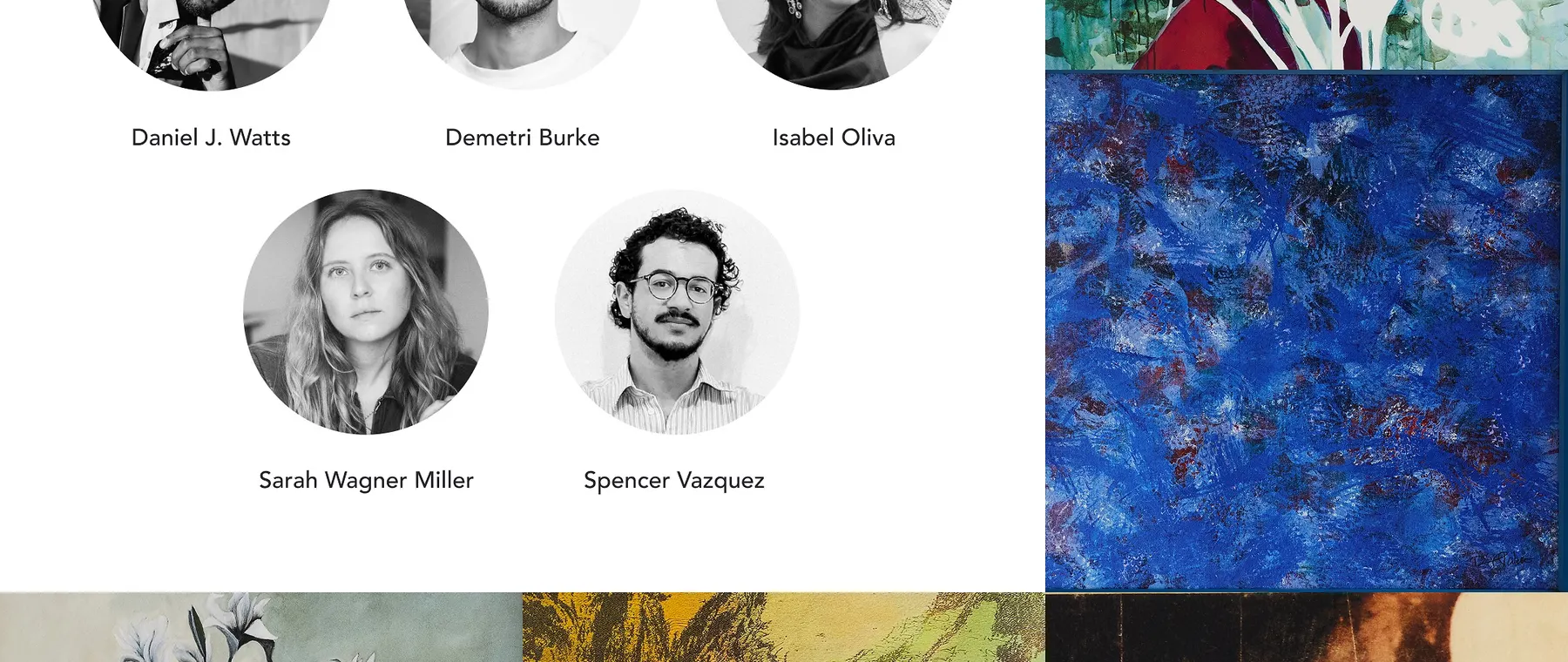
Source documentation: https://www.prnewswire.com/news-releases/anthropologie-announces-2026-youngarts-leading-with-creativity-award-recipients-and-exclusive-gallery-wall-art-collection-302939054.html. Lead image: Official Anthropologie and YoungArts announcement collage showing the five recipients and their work — Anthropologie and YoungArts, official photographic promotional collage accompanying the 16 November 2026 release.. Official issuer-supplied press photograph, reproduced for editorial coverage of the specific announcement and resized for web display.