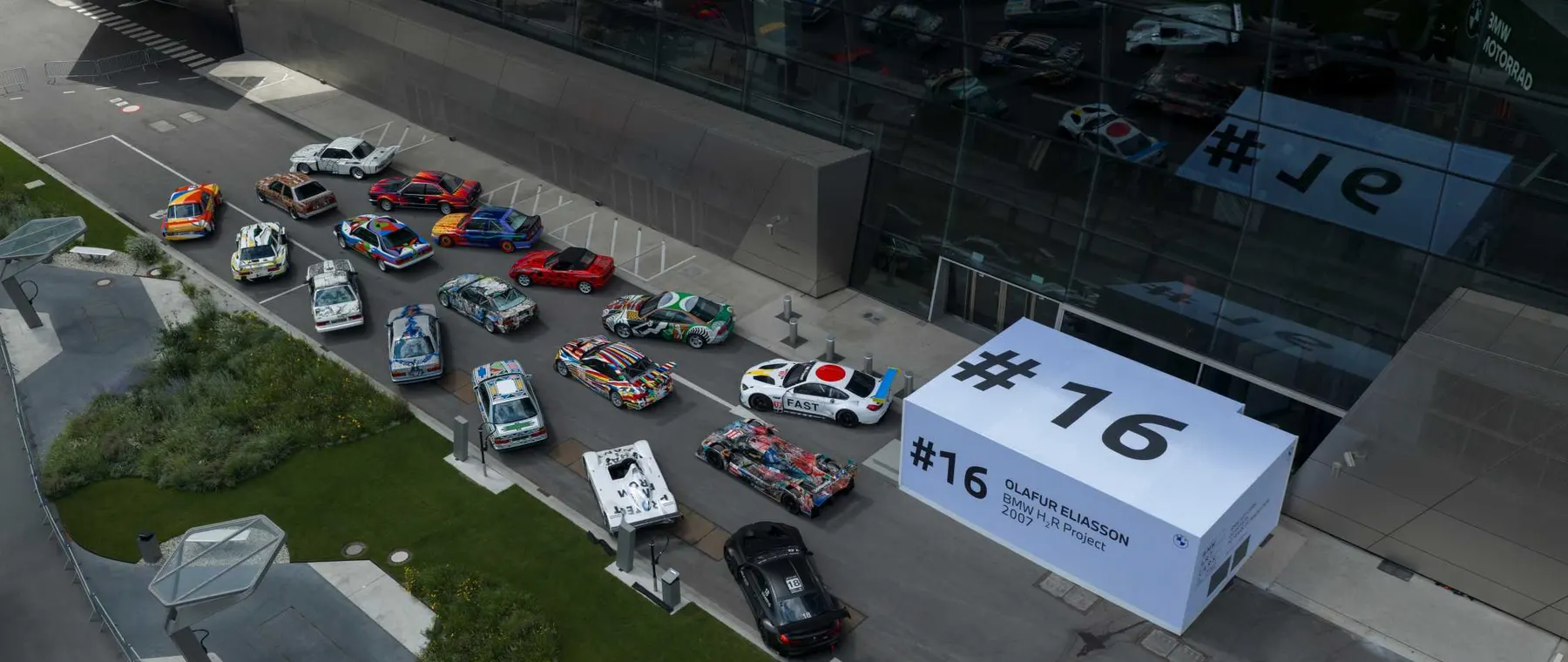
Fifty years of rolling art
BMW brought all 20 of its Art Cars together at BMW Welt in Munich for the collection’s 50th anniversary. More than 120,000 visitors attended the exhibition between late July and the end of August 2026.
The gathering ranged from Alexander Calder’s 1975 BMW through to Julie Mehretu’s 2024 work. Seeing the full sequence together made the changing relationship between contemporary art and automotive design unusually clear.
The Art Car programme has always treated the vehicle as a moving canvas rather than simply a design exercise. Each artist has been given enough freedom for the result to retain an identity beyond the BMW badge.
Cars beyond transport
That freedom is why the project has lasted longer than many brand collaborations. The strongest cars reflect the artist’s own language rather than looking like decorated production models.
For car enthusiasts, the collection also records changes in racing, body shape and technology over five decades. Art and engineering evolve side by side even when the artists are not directly addressing those changes.
For art audiences, the cars make contemporary work accessible in a format that does not require specialist knowledge. The object is familiar even when the artistic treatment is challenging.
The collection goes digital
BMW is now extending access through digital content and its in-car display systems. Selected Art Cars can appear within BMW Panoramic iDrive, bringing the archive into current production vehicles.
That digital move changes the relationship again, turning historic artworks into a configurable part of a modern cabin. It is a small feature, but it links the collection’s past with current BMW design.
Why the idea still works
For LYG readers interested in cars, art and collecting, the Art Cars remain one of the more credible long-running collaborations between a manufacturer and artists. The project has cultural value beyond conventional sponsorship.
The Munich attendance suggests the idea still has wide appeal after 50 years. Good collaborations endure when both the art and the machine are allowed to retain their own character.