A new interpretation of open-top luxury
Aston Martin has presented the Valhalla Spider, a mid-engined, plug-in hybrid supercar that brings open-air driving to the technology and design language developed for the Valhalla Coupé. The British manufacturer announced the vehicle on 28 October 2026, with deliveries scheduled to begin in the third quarter of 2027. Its headline figures are extraordinary: a combined 1,079 PS and 1,100 Nm from a powertrain incorporating a bespoke 4.0-litre twin-turbocharged V8 engine and three electric motors. Aston Martin quotes a maximum speed of 350 km/h, whether the roof is fitted or removed. These are manufacturer-declared specifications for a model whose customer deliveries are still in the future, not independently measured results from a long-term ownership test. For Luxury Yacht Guide readers, the Spider occupies a familiar part of the wider luxury ownership world: high-performance motoring chosen for its engineering character, craftsmanship and the pleasure of a distinctive experience. It also raises practical questions about daily usability, garage access and the difference between an impressive specification and the way an owner will actually enjoy a car.
Why the Spider is different from the Coupé
A mid-engined open-top car has design demands that are not identical to those of a fixed-roof model. Removing a permanent roof requires attention to structural integrity, airflow, occupant comfort and the available space for storing a temporary covering. Aston Martin says the Valhalla Spider uses a removable and stowable black fabric roof as standard, with changes to surrounding aerodynamic structures and electronic stability settings. The objective is to preserve much of the Coupé's performance while enabling a more immediate connection between the driver and the environment. The manufacturer has also worked on details of the airflow around the cabin. Such measures can influence how an open car feels at speed, but subjective comfort varies between drivers and depends on weather, traffic and personal preferences. A buyer should investigate how the roof is fitted, how much time the procedure requires and whether it is practical during an unexpected shower. The ability to drive without a roof is appealing only when the rest of the car remains convenient to use.
A combination of combustion and electric power
The Valhalla Spider is a plug-in hybrid, rather than a purely electric sports car or a conventional petrol model with no electric drive. Aston Martin describes a flat-plane-crank twin-turbo V8 developing 828 PS and three electric motors contributing a combined 251 PS. The company quotes 1,079 PS for the integrated system. Those figures reflect a specific engineering configuration, but buyers should not assume that peak output is available indefinitely under every temperature and battery condition. Hybrid performance depends on coordinated operation of the combustion engine, electric motors, energy storage and thermal systems. The company will provide the appropriate detailed documentation for operating and servicing the production vehicle. For owners, the distinction matters because a hybrid's experience may change according to charge state and driving mode. It is not sufficient to choose such a car solely on the basis of its largest advertised power figure. The real question is whether its response, sound, handling and daily operating requirements match the owner's expectations.
Aerodynamics that work with or without the roof
Aston Martin reports active aerodynamic changes and calibration work intended to preserve the Spider's track-capable balance. It describes downforce exceeding 600 kg in the relevant high-performance configuration. Aerodynamic loads are not constant at every speed, so a quoted figure should not be treated as a downforce measurement during ordinary city driving. The engineering challenge is to manage airflow across and around the open cabin while maintaining stability and cooling. The manufacturer says it has revised the snorkel profile and made it 35 mm taller for the open-top variant. Such details show how apparently small design changes can serve several purposes at once. They may help feed the engine, influence how air passes over the occupants and preserve the car's visual identity. A customer looking closely at the Spider should consider the technical design as an integrated whole rather than a collection of decorative vents. In a car intended for both road and track, airflow is part of the driving system.
The fabric roof and the question of storage
The removable roof is an important ownership consideration because open-top cars are frequently enjoyed in conditions where weather can change quickly. Aston Martin's release describes a fabric arrangement that can be removed and stowed, with space provided in sill compartments. The company also refers to approximately 15 litres of storage volume in the relevant sill areas for this purpose. Buyers should inspect the actual roof-handling procedure when demonstration vehicles become available. They should ask whether one person can manage the operation comfortably, where the material is kept when wet and whether there are restrictions on speed or use. A removable roof that looks elegant in a press presentation may be less convenient for an owner who regularly drives between a city home and a coastal property. That does not diminish the appeal of the design, but it makes an honest comparison with other convertibles essential. Convenience and performance both contribute to a satisfying luxury product.
Driving pleasure beyond the figures
A car with more than a thousand horsepower creates expectations of extreme acceleration, yet many journeys involve ordinary roads, lower speed limits and varying surfaces. The Valhalla Spider's defining experience may therefore be the way its steering, power delivery and suspension respond during more modest driving. The manufacturer emphasises road and track capability, which implies substantial engineering attention to balancing body control, comfort and driver confidence. A prospective owner should wait for a representative test drive or properly supervised demonstration before deciding that the car meets those expectations. Public-road rules remain the same for any high-performance vehicle, however sophisticated its controls. An experienced driver may value precise feedback more than a headline top-speed figure. The challenge for Aston Martin will be to deliver an engaging car that remains manageable and satisfying in real conditions, rather than one whose strongest attributes can be explored only on a circuit.
Links with Aston Martin's motorsport expertise
Aston Martin credits work with Aston Martin Performance Technologies, the consulting arm associated with its Formula One operation, as part of the Valhalla Spider's development. Motorsports research can inform the use of advanced materials, computational analysis and control systems, although production cars must also meet durability, comfort and legal requirements very different from those of a racing vehicle. It would be inaccurate to describe the Spider as a Formula One car with number plates. Its engineering is designed for customers who expect a high degree of refinement alongside performance. Owners may appreciate the technical connection, but they should evaluate the actual systems installed in the road car. The sophistication of aerodynamics and electronic calibration can increase the need for authorised service and skilled technicians. A close relationship with motorsport is a credible part of the car's character, not a substitute for confirming the reliability of production hardware over normal ownership.
The design of a contemporary open cockpit
Open-top performance cars require careful decisions about seat positioning, visibility, wind protection and passenger comfort. The Valhalla Spider's low-slung form and mid-engine layout create a visually dramatic profile, but those features may influence access and everyday convenience. Owners should inspect the ease of getting into the car, the position of essential controls and the view around other road users. A dramatic seating position can feel exciting during a short demonstration while presenting different challenges when the vehicle is used regularly. Weather protection and cabin noise also matter, especially when travelling for several hours. The manufacturer has made specific revisions to manage airflow in the Spider, but buyers should establish whether the cabin suits their individual needs. The appropriate comparison is not only with other supercars but also with the owner's intended use. A car kept as a collection piece may have different priorities from one driven weekly between home, office and marina.
Bespoke specification as an ownership decision
Aston Martin's luxury positioning allows buyers to consider how materials, trim and colour choices reflect personal preferences. Such decisions can make a limited-volume high-performance vehicle feel more individual, yet they also deserve long-term thought. A striking exterior colour may look memorable in a studio photograph but behave differently in bright Mediterranean sunlight or under artificial lighting in a garage. Interior materials need to withstand heat, contact and ordinary wear. Customers should examine physical samples wherever possible, rather than relying exclusively on digital configuration screens. If the car is to be kept for many years, the ability to preserve and repair bespoke elements may become important. Specialist colours, finishes and components can be more demanding to replace than regular catalogue items. The pleasure of personalisation is real, but it comes with an interest in future maintenance and documentation. A considered specification should suit the owner's taste rather than a short-lived fashion.
Hybrid performance creates servicing obligations
The Valhalla Spider's combination of a high-output combustion engine, multiple electric motors and advanced electronic systems creates a more complex service environment than a simple mechanical sports car. That does not establish that it will be unreliable; it means owners should understand the manufacturer's procedures. High-voltage isolation, battery management, cooling and software maintenance require appropriately trained people and equipment. Service schedules, warranty conditions and the location of authorised support centres should be discussed before ordering. Anyone intending to keep a car at a remote second home should confirm how technical assistance can be provided locally. Storage conditions also matter, especially if the vehicle is unused for long periods. A professionally managed collection should maintain batteries and tyres as specified by the manufacturer. The car's performance potential is most valuable when the underlying systems remain dependable and properly maintained. Responsible ownership includes building those costs into a realistic annual budget.
A supercar and a superyacht are not the same object
There is a natural overlap between people who enjoy bespoke cars and those who own luxury yachts, but the two experiences make different demands. A 15-metre yacht involves marina fees, mechanical maintenance, insurance, crew arrangements and exposure to a marine environment. A high-performance car needs suitable roads, secure storage, maintenance and appropriate training for its driver. Neither should be chosen merely as an accessory to the other. Nevertheless, owners may enjoy spending time between a marina, an inland home and a collection of distinctive vehicles. In such a lifestyle, planning can make the experience more satisfying. A car with very low ground clearance may need special attention at parking ramps near a marina, while an open-top cockpit will be exposed to sea air if regularly parked by the waterfront. Protecting both yacht and car requires realistic storage and service practices, not simply careful cleaning before a photograph.
Delivery dates and market expectations
Aston Martin's stated third-quarter 2027 delivery schedule gives interested customers a target but not confirmation that a specific car is already available for collection. A potential buyer should discuss allocation, production specification and payment stages with an authorised Aston Martin representative. Any claims about future resale value or collector premiums are speculative unless supported by real market transactions. The prestige of a new model does not guarantee financial appreciation. Buyers should instead consider the value they derive from owning and driving it, the likely running costs and the service support needed in their preferred location. In some cases, a customer may want a car suitable for frequent use; in others, the priority may be a highly individual collector's vehicle. Understanding those intentions can help avoid an expensive purchase that is rarely enjoyed. The official specifications provide a technical basis for interest, while the actual ownership decision should remain personal and carefully informed.
How to assess the finished Spider
When production examples are available, the most useful evaluation will involve more than inspecting the exterior. Customers should ask to understand the fabric roof operation, visibility, ergonomics and practical storage. A supervised demonstration can reveal whether the driving modes and power delivery suit the buyer. It is sensible to review the car's dimensions against intended garages and parking arrangements, including approach angles and the space needed to open the doors. The high-performance hybrid powertrain brings specific charging and maintenance questions that should be resolved in writing. Owners should also discuss tyres, seasonal use, insurance conditions and access to authorised servicing. A technical vehicle can be enjoyable without requiring its full performance to be used on public roads. The objective is to identify whether the completed car delivers the refinement and character expected of a flagship Aston Martin, not to chase an unattainable maximum-speed figure on ordinary journeys.
The significance of the 2026 announcement
The Valhalla Spider extends Aston Martin's mid-engined hybrid programme with a removable-roof model that retains substantial declared performance. Its announced combination of 1,079 PS, 350 km/h maximum speed and active aerodynamics makes it a technologically ambitious open-top supercar. But the most important distinction is temporal: the October 2026 unveiling is a manufacturer announcement, while deliveries are planned for 2027. The car has not yet been assessed here through independent long-term ownership. For Luxury Yacht Guide readers, the Spider is a compelling example of how engineering and luxury personalisation are being combined in modern motoring. The appeal will ultimately depend on how the production car drives, how practical it is to maintain and whether its distinctive design continues to reward the owner after the initial excitement has faded. The first step is to treat the official launch as a source of verifiable facts rather than a substitute for a complete buying assessment.
Manufacturer source and official imagery
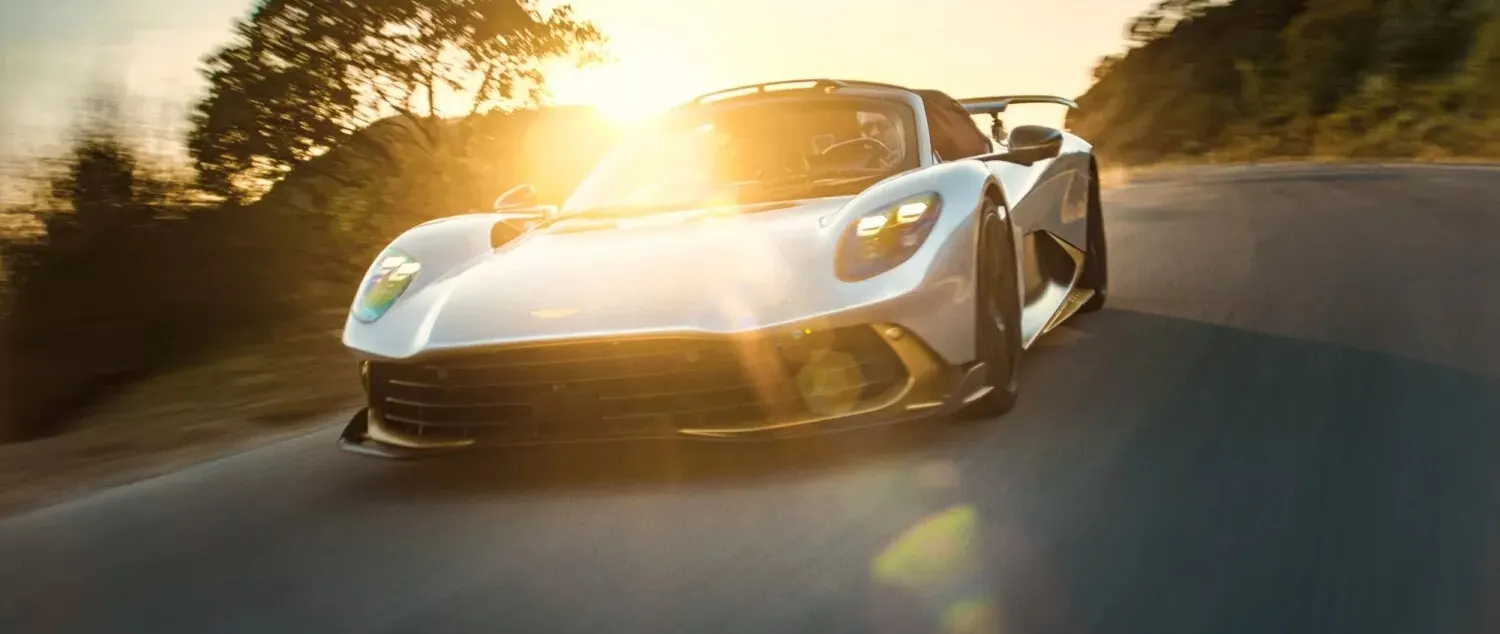
The model announcement, 1,079 PS hybrid powertrain, 350 km/h declared maximum, active aerodynamics, removable fabric roof and proposed Q3 2027 deliveries are documented in Aston Martin's official 28 October 2026 Valhalla Spider press release. The lead image is the manufacturer's own official Valhalla Spider press photograph, showing the newly announced model and not a customer-delivered car. Image credit: Aston Martin Lagonda, original media-centre publicity photograph. Copyright and all other rights remain with the manufacturer or its photographer; use is confined to independent editorial reporting of this specific announcement.