A new capability behind finished yacht fittings
Teak Isle Manufacturing has installed a five-axis waterjet cutting system at its Florida operation, expanding its ability to produce precisely shaped marine components from advanced materials. The company presented the capability at IBEX 2026, alongside examples made from AquaSteel phenolic composite. This is a supplier investment that may affect boatbuilder options, not a newly released yacht model.
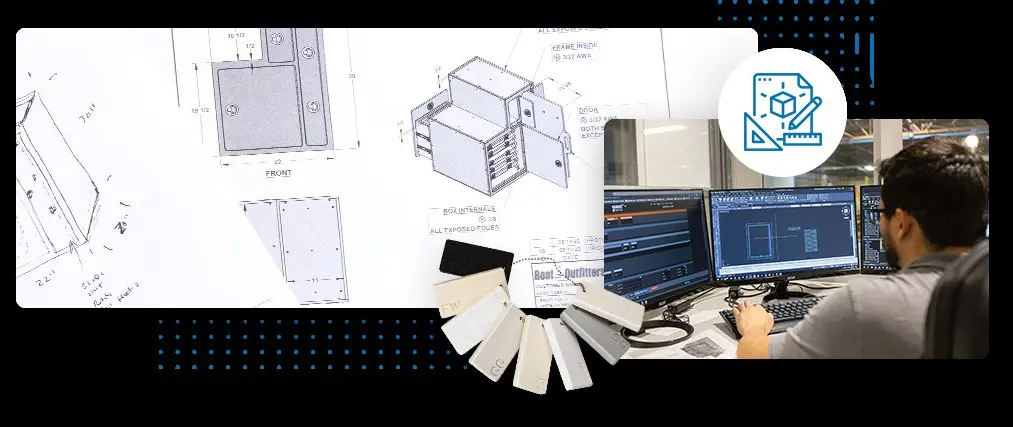
A luxury yacht's cabinetry, access panels and dashboard housings are often designed around awkward surfaces rather than standard right angles. That places demands on fabricators who must balance accurate fit, strength and a high-quality finish. Adding more flexible cutting equipment can widen the range of parts a yard can source from a specialist manufacturer.
What five-axis waterjet cutting changes
A waterjet uses a high-pressure flow of water, usually with abrasive media, to remove material without the heat associated with some conventional cutting methods. A five-axis machine can direct the cutting head to produce angled faces, compound profiles and bevels. Teak Isle says this allows complex geometries in phenolic composites and other materials that can be difficult to process using traditional equipment.
Avoiding excessive heat can help preserve certain material characteristics, but a clean cut is not automatically sufficient for an installed component. Final bonding, edges, fastener spacing and any exposure to moisture still need proper engineering. The claimed dimensional accuracy also depends on the material, tooling and actual quality-control procedure.
AquaSteel and its applications
Teak Isle highlights AquaSteel, a phenolic composite intended for demanding environments where durability, strength and resistance to corrosion are priorities. The company's range also covers cabinetry, tackle centres, access panels and other custom marine assemblies. The new system is already being used on advanced-material components, according to its IBEX announcement.
For owners commissioning work on a 12–23.99-metre yacht, the implication is improved access to complex custom fittings rather than a claim of unlimited structural substitution. Replacing a metal or wooden part with a composite requires a clear specification for its load, environmental exposure and fastening method. Classification or builder approval may be necessary.
Value to a careful refit programme
A tidy replacement access panel or an accurately fitted support can reduce the compromises associated with adapting an off-the-shelf item. Waterjet technology can make bespoke details economically more feasible in some projects, particularly when digital design files are available. Yet measurements still need to be verified on the actual vessel, where construction tolerances and earlier alterations matter.
The Teak Isle announcement is a useful reminder that yacht quality depends partly on specialist manufacturing far from the marina. Its practical impact will become visible in the components delivered to customers, their finish and their performance in the marine environment. Boatbuilders comparing different materials should also ask the supplier about batch traceability and inspection records for parts cut on the new system. Those practical details are crucial when a replacement must fit precisely.