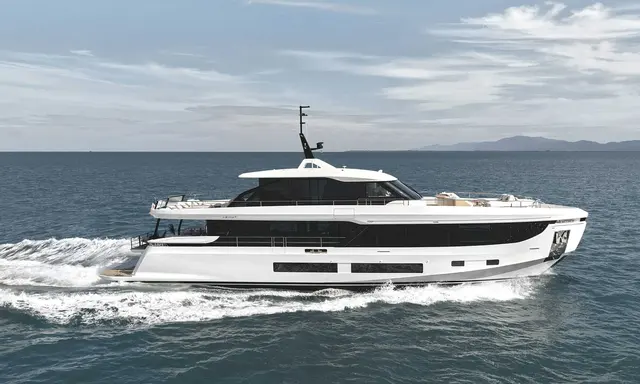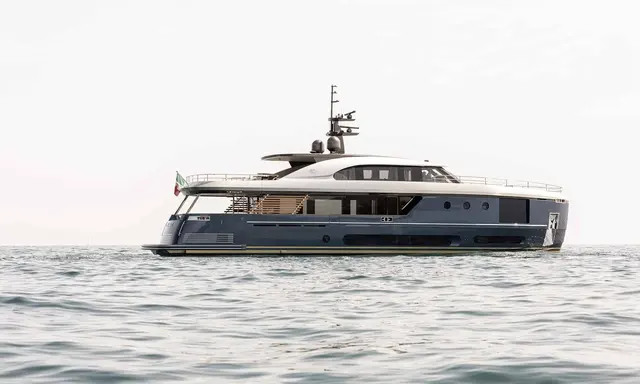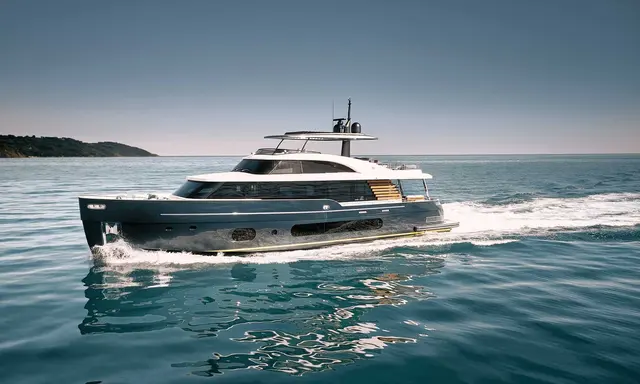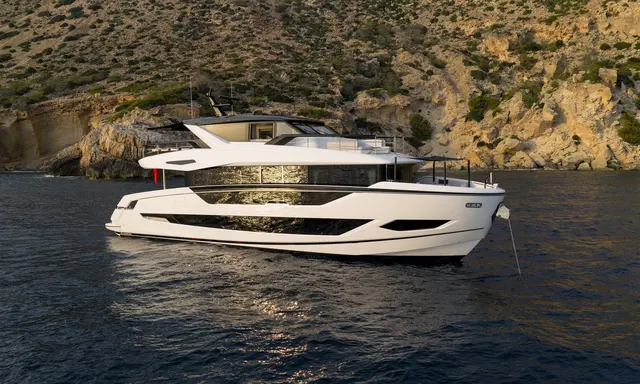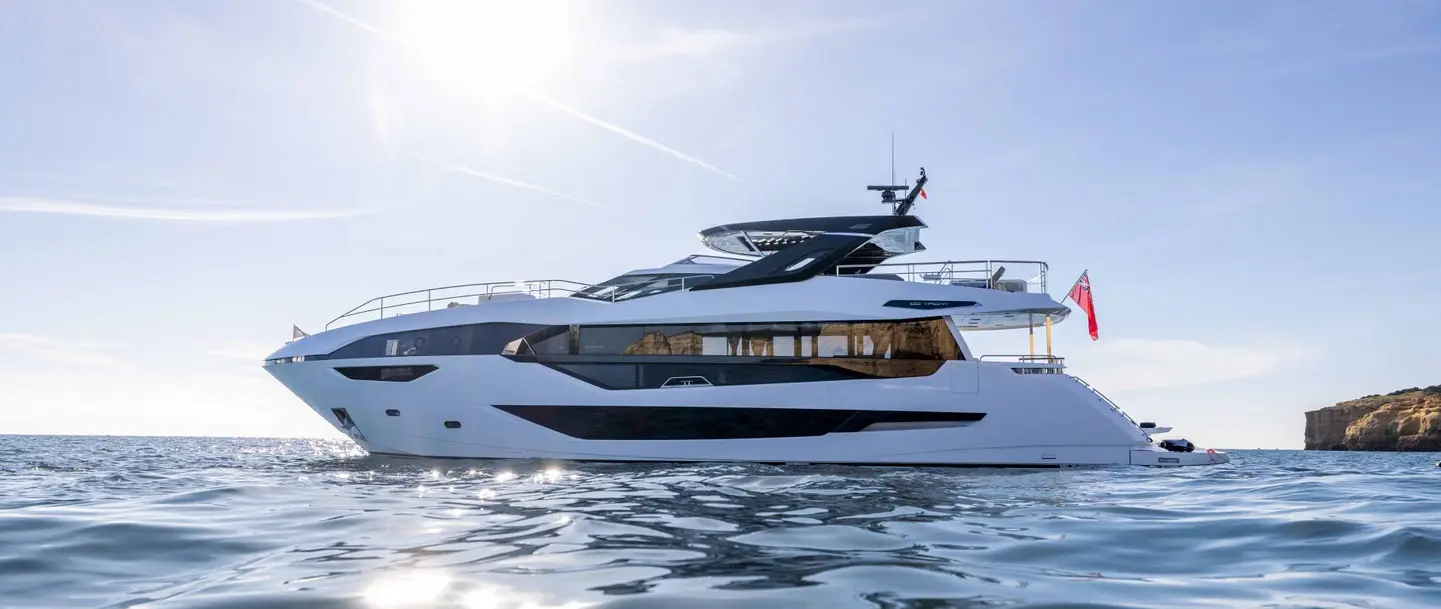
A larger presence in the 2026 display
Sunseeker lists the 100 Yacht among its vessels for the Fort Lauderdale International Boat Show, which is open from 28 October to 1 November 2026. At 29.94 metres overall, the model crosses into a scale where the choice of guest accommodation, captain and crew provision becomes a central part of the purchase decision.
The length is close to 30 metres, yet the design remains a production offering with recognisable Sunseeker styling and a defined family of engineering choices. Buyers can therefore approach it as a specified luxury motor yacht rather than a blank-sheet custom commission.
Fort Lauderdale brings together owners who cruise around the Bahamas, the Caribbean and the United States, markets where a yacht's balance of speed and longer-range comfort may be more persuasive than a single peak-speed claim. The 100 Yacht's official specifications allow some of that balance to be examined.
Ten guests and the operating team
Sunseeker's published range brochure specifies accommodation for up to ten guests and up to five crew, with a seven-metre beam. The figures indicate a vessel intended to provide a clear separation between guests enjoying the yacht and the professionals maintaining its day-to-day operation.
Prospective owners should study how guests reach the water, move between lounges and use exterior dining areas while the crew carry out tender, galley and housekeeping tasks. A headline ten-guest capacity is only meaningful if the circulation works comfortably at that occupancy.
Provisioning volume, laundry capacity, storage for watersports equipment and the location of service entrances can make a material difference on multi-week cruises. These practical details deserve as much attention during a show visit as finish materials and decorative choices.
Speed and range are different propositions
The builder's published principal characteristics give a maximum speed of up to 30 knots, with total engine output options reaching 5,280 PS. It also quotes a potential range of up to 1,300 nautical miles at approximately 10 to 12 knots, illustrating the very different fuel profile expected at slower passage speeds.
Neither figure should be treated as a guaranteed result for a fully loaded owner yacht in changing weather. Consumption curves, sea-trial records and reserve policies are necessary before drawing up any itinerary involving longer legs between reliable refuelling points.
A sensible sea trial should therefore test the intended routine, including stabilisation at anchor, comfortable overnight temperatures and speed choices in moderate conditions. A yacht that cruises quietly at the owner's normal pace may deliver more lasting value than one chosen solely for maximum performance.
Questions to settle before acquisition
The technical specification gives a draft of approximately 2.10 metres, a factor for shallow destinations and some regional marina approaches. Its beam and air-draft requirements should also be checked against favourite berths and cruising areas, particularly where bridge or channel restrictions apply.
Buyers should establish which equipment is included in the displayed yacht, what can be altered at order stage and which arrangements require shipyard approval. Crew berths, navigation redundancy, tender handling and local after-sales support can all alter the realistic annual ownership budget.
The Fort Lauderdale presentation is a chance to assess whether this yacht's scale is appropriate for a family that expects to travel frequently. Comparing operating plans and verified specification sheets is the next step after seeing the spaces aboard.