An eighteen-metre cruiser joins the Enigma family
The first Steeler Enigma 59 has been reported launched at the Dutch builder's Meppel yard, with YachtBuyer dating the milestone to 19 November 2026. The new motor yacht measures 18 metres overall and has a 5.5-metre beam, placing it within a category where owners may want substantial accommodation without committing to a considerably larger vessel. Steeler's official model page confirms the principal dimensions, steel construction and a configurable three-cabin arrangement. The launch report and the builder's model specification are complementary sources: one describes the new hull's arrival on the water, while the other provides the design's published standard characteristics.
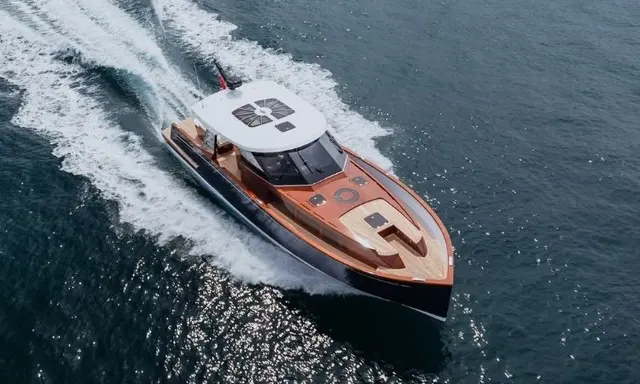
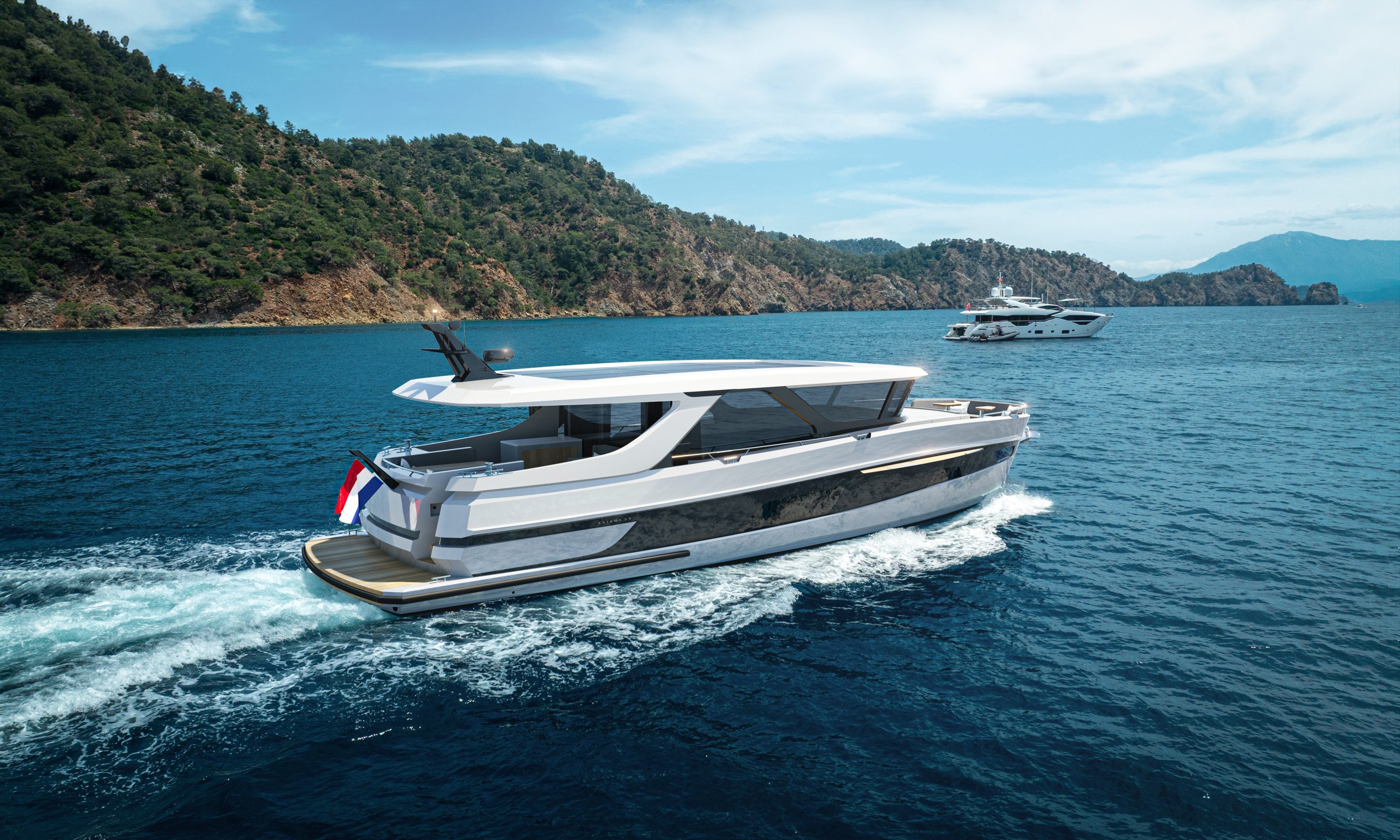
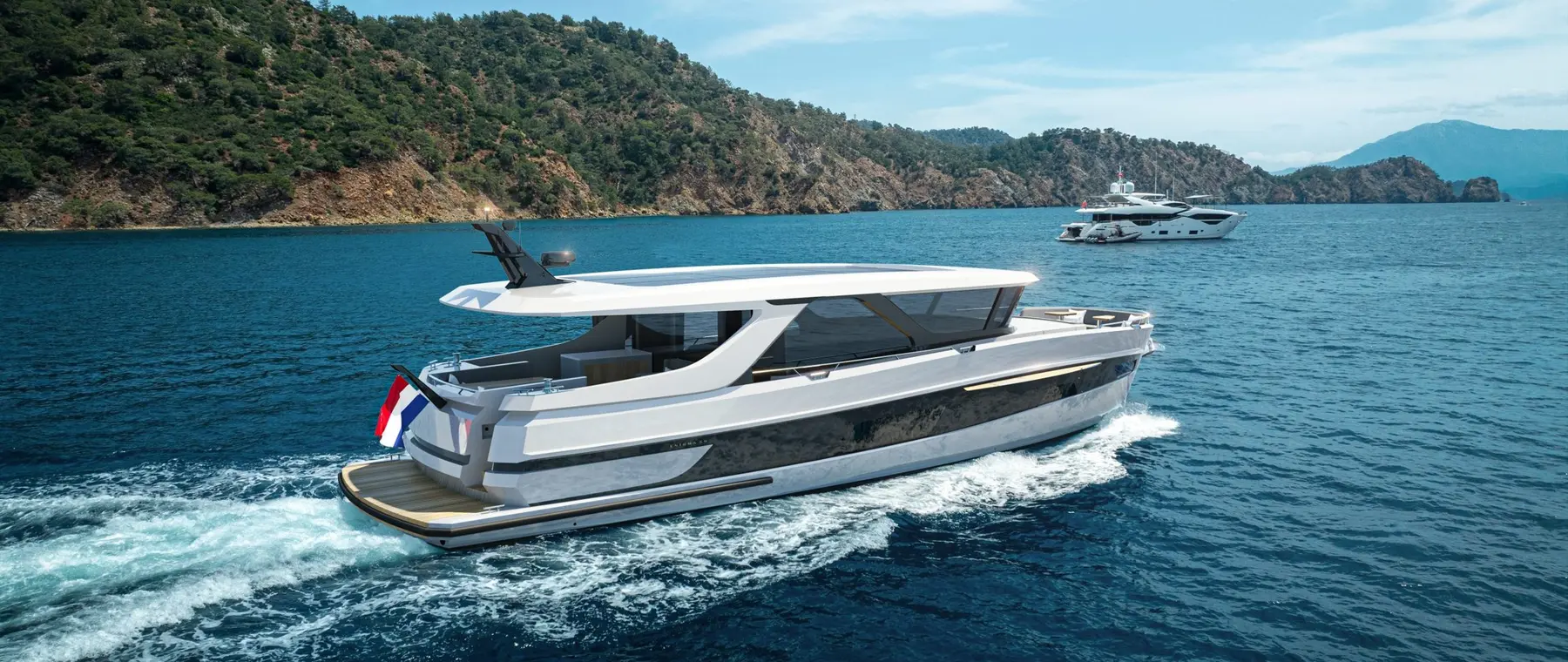
The distinction is important because the builder's official website illustrates the model through renderings, which should not be mistaken for photographs of the completed first hull. The lead image in this article is an official Steeler Enigma 59 rendering and is identified as such. A launch marks a significant construction stage, but it does not necessarily confirm that all sea trials, commissioning work or owner handover have been completed. Those later steps require separate verification. The current news is the transition from design and construction toward operation for the first example of this steel motor-yacht model.
A steel hull establishes its cruising identity
Steeler describes the Enigma 59 as a displacement yacht built with a steel hull and a steel superstructure. That construction approach differs from lightweight performance boats developed around very high speeds. Steel can offer robust structural characteristics and a material familiar to yards and specialists with experience in long-range motor yachts. But the choice of material does not automatically guarantee superior performance or a particular lifetime maintenance cost. Corrosion protection, finishing and inspections remain essential. Owners should understand the specific design and construction methods applied to the yacht they intend to acquire.
The Enigma 59's reverse-raked wheelhouse glazing is a distinctive part of its visual identity, as described in launch coverage. Such an arrangement can influence both appearance and the way the wheelhouse is used, although visibility must ultimately be judged from the actual helm. A model rendering communicates the designer's intended lines, not measured visibility in different weather or sea states. The yacht's steel character and sheltered spaces suggest an emphasis on serious cruising, yet the practical capabilities of a delivered hull depend on its installed equipment and commissioning condition.
The published beam is 5.5 metres
At 18 metres in length and 5.5 metres in beam, the Enigma 59 seeks to offer substantial interior width relative to its overall length. That can be valuable for a yacht used beyond occasional short trips, where storage, movement and living space matter every day. The published model specification also identifies a draft of approximately 1.5 metres, subject to the precise loading and configuration. Such dimensions are useful for preliminary marina planning but should be verified against the final yacht's certified particulars before booking berths or navigating shallow channels.
A generous beam may improve certain accommodation arrangements while creating practical constraints in tight marinas. The size of a berth, availability of suitable services and the vessel's manoeuvring arrangements all matter. A buyer should also consider whether the intended cruising areas have facilities appropriate to a steel displacement yacht. Measurements alone do not establish comfort at sea, and a wide yacht is not automatically steadier in every condition. The model's proportions are a starting point for evaluating the design rather than a substitute for technical assessment and experience aboard.
Three cabins permit an owner-led interior
Steeler's specification describes a layout with up to three cabins and two bathrooms, including a day head. The builder emphasises flexible planning and customisation, reflecting the fact that owners may use similar-sized yachts very differently. One family might want several private sleeping spaces, while another could prefer more storage or a separate working area. A custom layout can make a yacht better suited to an individual programme, but it also needs coordination with structural, electrical and plumbing requirements. Not every alteration can be made without engineering consequences.
The launch report describes the first hull's interior as having a tropical influence, with a more expressive material and colour palette than the neutral schemes common in some contemporary yachts. Such choices are personal and should not be represented as standard finishes available on every hull. Buyers interested in a similar arrangement should ask what materials were specified and whether they are practical for the intended use. Maintenance and ease of cleaning can become important on long passages. The value of customisation lies in balancing individual taste with the technical reality of a moving marine environment.
Different propulsion descriptions need careful reading
The official Steeler model page lists a standard propulsion arrangement of two Volvo Penta D6 engines rated at 300 horsepower each. The independent report on the first launched Enigma 59 describes two John Deere diesels rated at 375 horsepower each. These statements should not be merged into one specification or treated as though all boats use the same machinery. A model's published standard package and an individual owner's commissioned configuration may be different. The correct details for a particular yacht should be checked against its construction and engine documents.
Power is only one part of the operating picture. Displacement, hull form, propellers, gearing and weather all influence performance. A buyer should seek verified sea-trial information for the exact configuration rather than assume a published engine rating establishes the final speed or fuel consumption. The builder's website expressly notes that range and speed are indicative and depend on conditions and load. That qualification is useful because marketing figures are often compared without the assumptions behind them. A responsible owner should plan around realistic operating data supported by tests and technical records.
Six thousand litres of standard fuel capacity
Steeler lists a standard fuel capacity of 6,000 litres and a fresh-water capacity of 1,500 litres for the Enigma 59. The launch report indicates that additional fuel capacity may be available for owners with longer passages in mind. Neither statement independently establishes a guaranteed cruising range for every configuration. Actual endurance depends on engine selection, speed, weather, generators and the vessel's weight. A longer fuel range can be valuable, but carrying more fuel may also affect loading and other operational considerations.
For an owner intending to visit more remote destinations, fuel planning needs to include reserves, the availability of suitable bunkering facilities and potential delays. Fresh-water systems, provisions and equipment redundancy are equally important. A yacht can have a substantial tank capacity and still be poorly prepared for a voyage if its crew has not evaluated the entire route. Owners should request consumption information at several representative speeds and understand how ancillary equipment affects energy use. The Enigma 59's published capacities provide context but do not replace that work.
Insulation and glazing support different climates
The official model information identifies thermal foam insulation and double-insulated glass as part of the Enigma 59 specification. These elements are relevant to owners who want to extend their cruising season or visit regions with cooler weather. Insulation can help manage heat transfer and condensation, while suitable glazing can support interior comfort. However, the precise performance depends on the design, installation and operation of the heating and ventilation systems. The existence of double glazing does not prove that the boat will be comfortable in every climate without additional preparation.
A steel yacht used in colder conditions also requires careful management of moisture and ventilation. Comfort is not just a matter of adding insulation; the entire system should be considered, including the way air moves through cabins and behind interior panels. Winter cruising can place extra demands on equipment and safety procedures. The Enigma 59's design points toward a wider operating ambition than a summer-only dayboat, but buyers should establish the suitability of an individual vessel for the weather and passages they have in mind.
Stabilisation and hydrodynamic options on the first hull
The independent launch account identifies Humphree stabilisation equipment and a Hull Vane among the systems specified for the first Enigma 59. These can be important features on a cruising motor yacht, but their exact effects must be evaluated under defined operating conditions. Stabilisation may improve comfort in certain situations while creating additional maintenance and power requirements. A stern-mounted hydrofoil such as a Hull Vane is intended to influence hydrodynamic behaviour, yet the level of benefit varies with the hull and operating profile.
Readers should not treat an installed system as proof of a particular percentage fuel saving or reduction in motion without verified tests. The relevant evidence would include the final vessel's technical documentation and sea-trial results. Different owners may also choose different equipment packages. For a yacht used primarily on short coastal trips, priorities may differ from those of someone planning long passages. The first hull demonstrates one approach to outfitting, while later examples may be configured differently. A useful buying process should separate intended benefits from measured outcomes.
Classification and design purpose require explanation
Steeler's model page lists classification A, referring to the design category associated with the yacht. The significance of such a designation depends on the applicable standards and the conditions under which a vessel is operated. It does not remove the captain's responsibility to assess weather, equipment readiness and crew competence. A yacht may be designed for demanding voyages yet still face limitations based on the condition of its systems or the experience aboard. Categories should be understood through the relevant technical documentation rather than treated as an assurance of safety in all circumstances.
The Enigma 59 is positioned as a displacement cruiser rather than a high-speed sports yacht. That choice may suit owners who value predictable passage planning, sheltered living spaces and the ability to spend longer periods aboard. But every cruising programme creates specific requirements, including navigation systems, lifesaving equipment and maintenance arrangements. An individual vessel should be evaluated against those needs. The launch is an important development for the builder's range, not a certification that the yacht is appropriate for every possible passage.
The Enigma series continues to develop
The first Enigma 59 enters a broader family of steel motor yachts. Independent launch coverage notes that the Dutch builder was also working on other Enigma and ACE models at its facilities, while its own website presents several sizes and arrangements within the Enigma series. The choice of a range allows buyers to compare concepts without assuming that the largest boat is the best fit. Extra length can provide accommodation benefits, but it may increase operating responsibilities and berth requirements. A smaller, carefully specified yacht may serve an owner more effectively than a model chosen for headline dimensions alone.
A new series also needs time to build an operating record. Designers and builders may have extensive experience, yet practical feedback from the first hull can still influence later vessels. Customers considering a future order should ask about final specifications, service access, warranty support and the number of examples actually delivered. The launch of one boat is not evidence that an entire model range has entered full production. It is one milestone on which subsequent delivery and ownership experience can be assessed.
What has been verified about the launch
Steeler's first-party Enigma 59 model record confirms an 18.00-metre steel displacement design, a 5.50-metre beam, published standard tank capacities, insulated glazing and configurable accommodation. YachtBuyer independently reported the first hull's launch in the Netherlands on 19 November 2026 and described aspects of its individual owner specification. These sources establish related but not identical facts: the official page is a model specification, while the dated article reports the first vessel's construction milestone. The lead image is a builder-supplied rendering rather than a photograph of that launch.
Luxury Yacht Guide covers the Enigma 59 because it sits within the publication's 12-to-23.99-metre yacht segment and reflects demand for owner-oriented cruising designs. Claims about performance, endurance and individual options are kept distinct from verified dimensions and reported equipment. Future coverage should follow commissioning, trials and delivery using fresh documentation. The present development is the arrival of a new 18-metre steel motor yacht with a strong emphasis on custom accommodation and all-weather cruising, subject to the usual practical responsibilities of ownership.
Sources and image credits
Reporting based on Steeler Yachts: first-party official 2026 announcement or model record, YachtBuyer: independently dated 19 November launch report.
Lead rendering: Steeler Enigma 59 official exterior model rendering — image two, LYG 25 November 2026. © Steeler Yachts and original creators or photographers. First-party model rendering, not a launch photograph. Underlying rights remain with original holders. Original official image source.