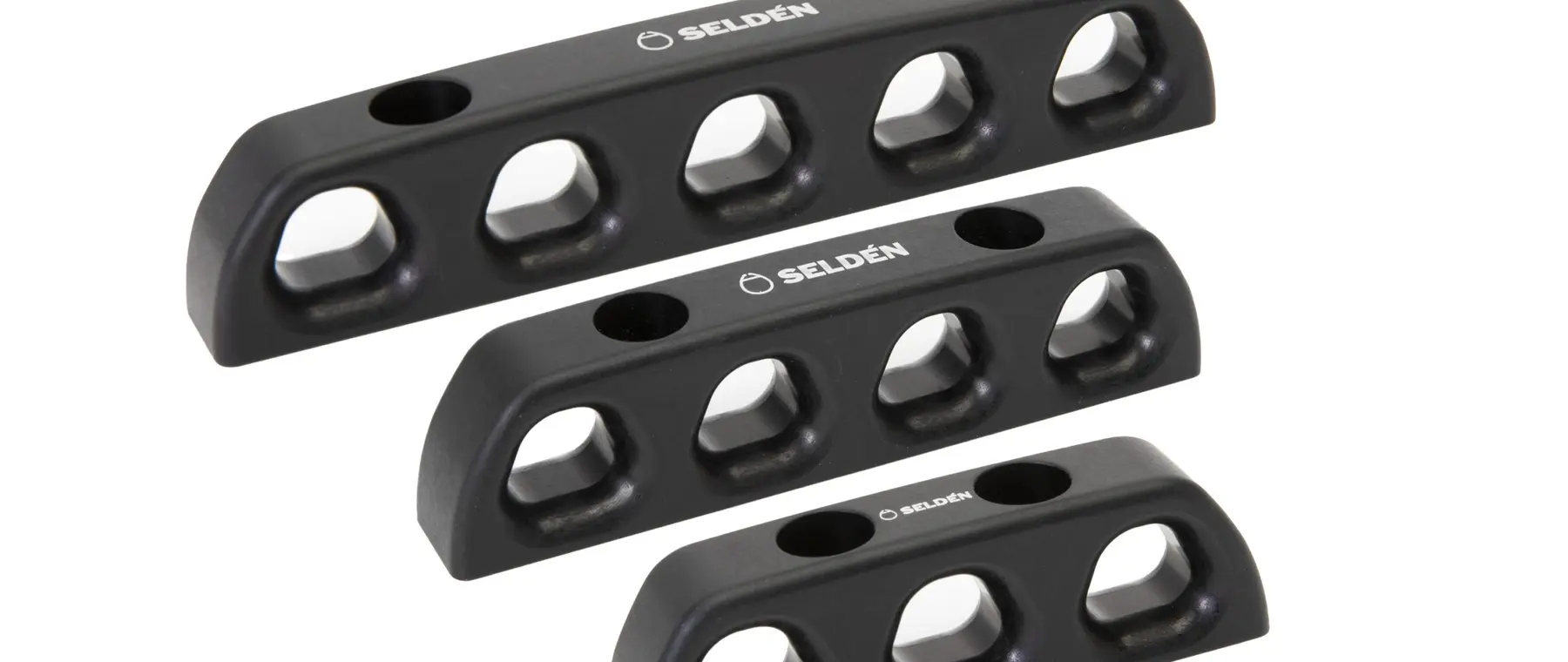
More line-routing options in one fitting
The new fairleads extend Seldén's aluminium range with three-, four- and five-hole configurations. Each opening is intended for running-rigging lines up to 12mm diameter, allowing several control lines to be grouped through a compact deck or coachroof fitting.
The fittings are secured with M8 bolts and are designed as low-profile guides rather than load-holding stoppers. Their role is to manage the lead as lines pass toward clutches, stoppers or other control hardware.
Built around cleaner deck layouts
Seldén says the fittings are already being used on yachts where running rigging is taken below deck and then routed aft to cockpit line stoppers. That arrangement removes much of the visible rope run from the coachroof and can produce a cleaner working area around the companionway.
Below-deck routing also puts more emphasis on alignment because hidden lines need to pass through structural openings without chafe or excessive turning angles. Multi-hole fairleads provide a simple way to keep parallel lines separated at the transition point.
Aluminium construction for exposed installations
Anodised aluminium is well suited to exposed deck hardware because it combines low weight with stiffness and corrosion resistance when correctly installed. The compact format also avoids the bulky appearance that can result from multiple separate fairleads positioned side by side.
For yacht builders, the choice of three, four or five holes gives more flexibility when standardising deck moulds across different sail plans or option packages. Owners carrying out refits can likewise match the fitting to the actual number of lines that need to pass through the deck.
Installation still depends on the complete rope path
A fairlead cannot compensate for poor geometry elsewhere in the system, so the path between mast, deck penetration and cockpit hardware still needs to be assessed as one continuous run. Chafe protection, drainage and access for inspection are especially important where ropes disappear below deck.
The new fittings are a relatively small hardware update, but they support a broader design trend toward uncluttered sailing-yacht cockpits. As more controls are led aft for short-handed operation, managing those line routes neatly becomes increasingly important.