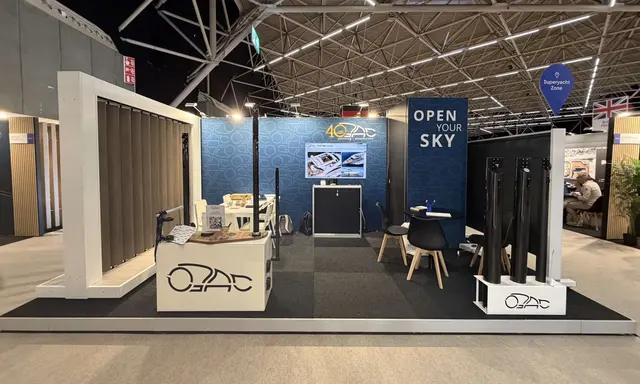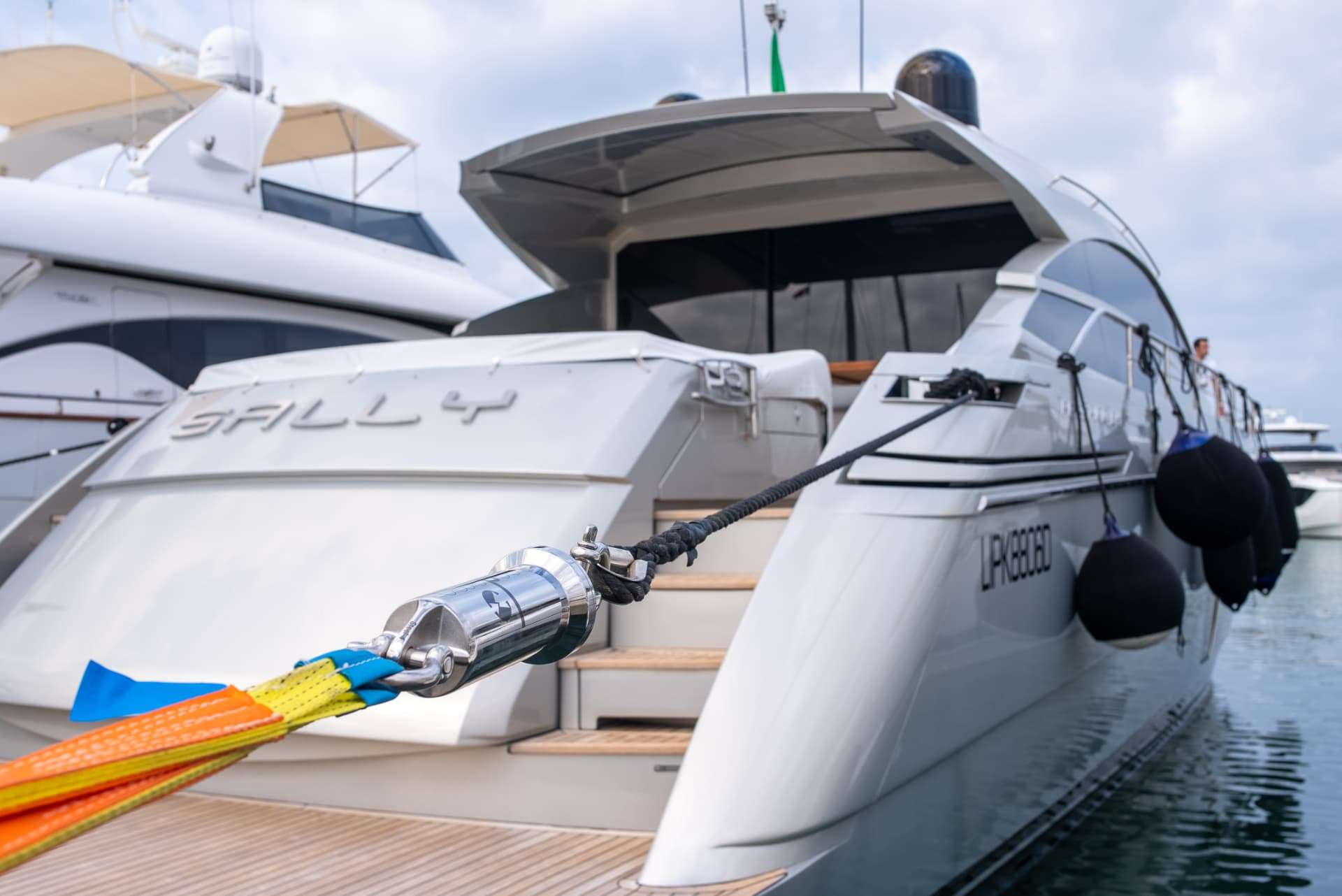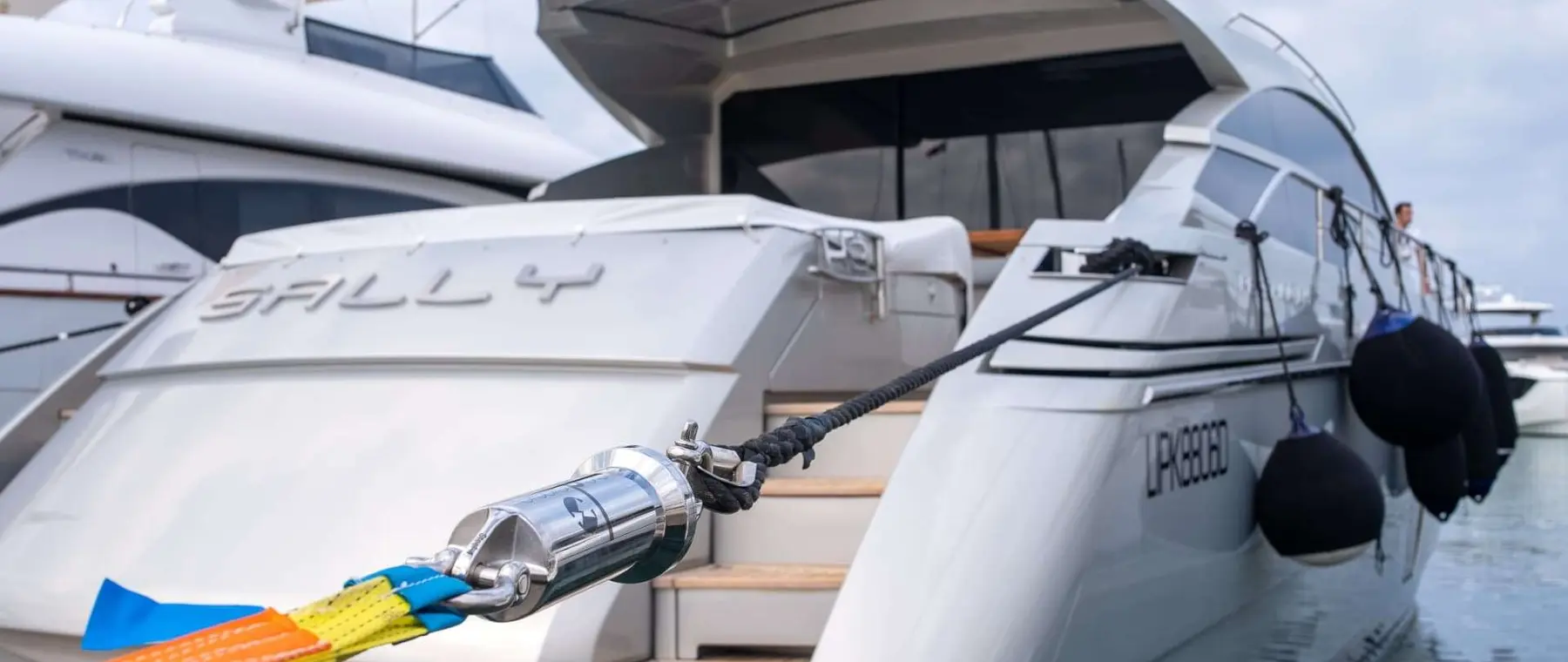
At METSTRADE 2026 in Amsterdam, Italian mooring-technology specialist Seares demonstrated its Seadamp hydraulic damper range alongside load-monitoring equipment intended to help yacht operators and marina managers understand the forces acting on mooring lines. The company showed Seadamp Heavy and Seadamp T, with scaled models of Seadamp FX, at stand 12.430 during the 17–19 November exhibition. Its modular dampers absorb energy from dynamic loads, while a network of load cells, shackles, motion and environmental sensors can feed operating data into a monitoring platform. The display illustrates how mooring hardware and measurement can be used together; it does not mean that every Seadamp product has newly acquired the same sensors or energy-recovery functions.
Seares says its equipment can reduce peak line loads by up to 90 per cent in some applications. PressMare reports approximately 90 per cent load reduction measured at a particular Yacht Club de Monaco installation, with the club planning additional berths. That result should not be generalised to every dock, yacht, line arrangement or wave condition. For owners of luxury yachts between 12 and 23.99 metres, the practical questions involve choosing appropriately rated dampers, inspecting mooring geometry, measuring stresses and ensuring that alarms and telemetry complement—not replace—sound seamanship and marina maintenance. Energy recovery is an option discussed for selected marina installations, not a proven power source fitted to each recreational damper.
Real-Time Load Monitoring: A New Dimension in Mooring Safety
The integration of real-time load monitoring into Seares Seadamp systems represents a shift from passive mooring solutions to active, data-driven infrastructure management. By embedding sensors within the dampers, Seares enables continuous tracking of forces exerted on mooring lines, providing operators with actionable insights into dynamic loads. This capability is particularly valuable for marinas hosting yachts in the 12.00–23.99 metre range, where varying sea states and docking conditions can significantly impact load distribution. The data collected by these sensors can be used to set alarms, identify trends, and build a historical record of operational performance, allowing for more informed maintenance planning.
However, the effectiveness of real-time monitoring depends on the accuracy and reliability of the sensor network. While Seares claims up to 90% reduction in peak loading based on tests at the Yacht Club de Monaco, these results are specific to certain berths and may not be universally applicable. The company’s press release notes that the reduction is observed in controlled environments, but real-world performance could vary depending on factors such as yacht size, mooring configuration, and environmental conditions. For yacht owners and marina managers, it is crucial to assess whether the system meets their specific needs and whether the data collected aligns with actual operational outcomes.
Engineering Innovations: Modular Design and Scalable Solutions
Seares Seadamp’s modular design allows for customization to suit a wide range of applications, from yachts to industrial infrastructure. The company’s dampers are engineered to absorb and dissipate dynamic loads, reducing stress on mooring lines and improving overall stability. For yachts between 12.00 and 23.99 metres, the Seadamp Heavy model is particularly relevant, as it is designed for larger vessels and can be further customized for even greater displacement. The modular nature of these systems also facilitates easy upgrades or modifications, making them adaptable to evolving operational requirements.
The scalability of Seares’ technology extends beyond individual yachts to entire marina infrastructures. By integrating smart load monitoring across multiple berths, marinas can create a centralized system that provides real-time insights into mooring conditions. This approach not only enhances safety but also supports energy management through features like wave energy recovery. However, the implementation of such systems requires careful planning, including compatibility checks with existing infrastructure and consideration of power requirements for solar-powered Monitoring Boxes.
Load Cell Integration: Precision and Reliability in Data Collection
The use of submerged load cells within Seares Seadamp systems is a key component of its real-time monitoring capability. These sensors are designed to measure forces exerted on mooring lines with high precision, ensuring accurate data collection even in challenging marine environments. The placement of these load cells is critical, as they must be positioned to capture the full range of dynamic loads without interference from external factors such as wave action or vessel movement.
For yacht owners and marina operators, the reliability of these sensors is a key consideration. While Seares emphasizes the durability and performance of its technology, the actual effectiveness may depend on installation quality and environmental conditions. Regular maintenance and calibration are essential to ensure that the data collected remains accurate over time. Additionally, the integration of multiple sensor types—such as accelerometers and weather sensors—requires careful coordination to avoid data inconsistencies or system failures.
Monitoring Box: Power Options and System Integration
The Monitoring Box serves as the central hub for real-time load monitoring in Seares Seadamp systems, connecting all sensors and transmitting data to a digital platform. One of its notable features is the ability to operate on solar power, which enhances energy efficiency and reduces reliance on external power sources. This feature is particularly beneficial for marinas with limited access to traditional electrical infrastructure or those seeking to minimize their environmental footprint.
However, the use of solar power introduces considerations regarding system reliability and data continuity. While Seares highlights the potential for wave energy recovery in selected marina models, it is important to note that this capability is not universally available across all damper variants. For yachts and marinas relying on solar-powered Monitoring Boxes, factors such as sunlight exposure, battery capacity, and system redundancy must be carefully evaluated to ensure uninterrupted data collection and operational performance.
Wave Energy Recovery: A Step Toward Sustainable Port Operations
Seares’ integration of wave energy recovery in selected Seadamp models represents a forward-thinking approach to sustainable port operations. By harnessing the mechanical energy generated by wave motion, these systems can contribute to powering port services, lighting quays, or supplying safety sensors. This innovation aligns with broader industry trends toward renewable energy and energy efficiency in maritime infrastructure.
For marinas hosting yachts between 12.00 and 23.99 metres, the potential benefits of wave energy recovery include reduced reliance on grid electricity and lower operational costs. However, the feasibility of this feature depends on specific marina configurations and environmental conditions. Factors such as wave intensity, tidal patterns, and local weather can influence the effectiveness of energy recovery systems. Additionally, the installation of wave energy recovery components may require additional infrastructure modifications, which could impact project timelines and budgets.
Yacht-Specific Applications: Tailoring Seadamp Solutions for 12–23.99 Metre Vessels
The suitability of Seares Seadamp systems for yachts between 12.00 and 23.99 metres is a critical consideration for owners and marina managers. While the company offers multiple variants—such as Evo, Steel, Heavy, and Plus—each designed to handle different load requirements, it is essential to verify compatibility with specific vessel sizes and operational conditions. The Seadamp Heavy model, in particular, is recommended for larger yachts within this range due to its enhanced capacity for dynamic load absorption.
For yacht owners, the decision to adopt Seadamp technology involves a thorough assessment of mooring needs, environmental exposure, and long-term maintenance considerations. While the company claims up to 90% reduction in peak loading based on controlled tests, real-world performance may vary depending on factors such as berth configuration, sea state, and vessel movement patterns. It is also important to evaluate whether the system’s data collection capabilities align with specific operational goals, such as safety monitoring or energy management.
Operational Tradeoffs: Balancing Safety, Efficiency, and Cost
The integration of real-time load monitoring into Seares Seadamp systems introduces a range of operational tradeoffs that must be carefully considered. While the technology offers significant benefits in terms of safety and efficiency, it also requires additional investment in sensors, monitoring equipment, and system integration. For yacht owners and marina operators, the cost-benefit analysis must weigh these upfront expenses against long-term savings from reduced maintenance, improved safety, and enhanced operational insights.
One key tradeoff is the balance between data accuracy and system complexity. While Seares’ modular design allows for customization, it also means that the installation and maintenance of multiple sensor types may be more involved than traditional mooring solutions. Additionally, the reliance on digital platforms for data management introduces potential vulnerabilities such as cybersecurity risks or software compatibility issues. For marinas with limited technical expertise, these challenges could impact the effectiveness of real-time monitoring systems.
Reliability and Maintenance: Ensuring Long-Term Performance
The reliability of Seares Seadamp systems is a critical factor in their adoption by yacht owners and marina operators. While the company emphasizes the durability and performance of its technology, the long-term maintenance requirements must be carefully evaluated. The integration of sensors and monitoring equipment adds complexity to system upkeep, requiring regular calibration, software updates, and hardware inspections.
For yachts between 12.00 and 23.99 metres, the maintenance schedule for Seadamp systems should include routine checks on load cell functionality, sensor accuracy, and data transmission integrity. Additionally, marinas utilizing wave energy recovery features must ensure that these components remain operational under varying environmental conditions. The availability of technical support and spare parts is also an important consideration, as downtime due to system failures could disrupt mooring operations and affect vessel safety.
Industry Adoption: Seares’ Growing Presence in the Yachting Sector
Seares has made significant strides in establishing itself within the yachting sector, with its Seadamp technology being adopted by notable marinas such as the Yacht Club de Monaco. The company’s success in this market is reflected in its growing number of installations and partnerships with industry leaders. However, for Seares to continue expanding its presence, it must address challenges related to scalability, integration with existing infrastructure, and regulatory compliance.
The adoption of Seadamp systems by marinas hosting yachts between 12.00 and 23.99 metres is influenced by factors such as cost, technical feasibility, and long-term benefits. While the company highlights the potential for energy recovery and safety improvements, yacht owners may be hesitant to invest without clear evidence of measurable outcomes. Additionally, the integration of smart monitoring systems into traditional mooring practices requires a shift in operational mindset, which could pose challenges for some marinas.
Future Prospects: Expanding Seadamp’s Role in Smart Marina Infrastructure
Looking ahead, the future of Seares Seadamp technology lies in its ability to evolve alongside advancements in smart marina infrastructure. As the maritime industry continues to prioritize sustainability and digital transformation, the integration of real-time load monitoring and energy recovery systems is likely to become more widespread. For yachts between 12.00 and 23.99 metres, the adoption of these technologies could lead to improved safety, reduced environmental impact, and enhanced operational efficiency.
However, the expansion of Seadamp’s role in smart marinas will depend on overcoming existing limitations, such as system complexity, maintenance requirements, and compatibility with diverse vessel configurations. As the company continues to refine its technology and expand its product range, it must also address the need for greater transparency regarding performance claims and real-world effectiveness. For yacht owners and marina managers, staying informed about these developments will be essential in making well-informed decisions about mooring solutions.
Environmental Impact: Seadamp’s Contribution to Sustainable Yachting
Seares’ focus on sustainability is a key differentiator in the yachting industry, where environmental concerns are increasingly shaping operational practices. The integration of wave energy recovery and real-time load monitoring into Seadamp systems aligns with broader efforts to reduce the carbon footprint of maritime activities. For yachts between 12.00 and 23.99 metres, these technologies offer a means to minimize energy consumption while enhancing mooring efficiency.
However, the environmental benefits of Seadamp technology must be weighed against its operational and financial implications. While the company highlights the potential for energy recovery and reduced maintenance costs, yacht owners may need to consider whether these advantages justify the initial investment in smart monitoring systems. Additionally, the long-term sustainability of Seadamp’s solutions depends on factors such as material sourcing, manufacturing processes, and end-of-life disposal, which are not explicitly detailed in the company’s current disclosures.
Conclusion: A New Era for Yacht Mooring with Seares Seadamp
The introduction of real-time load monitoring into Seares Seadamp systems marks a significant evolution in yacht mooring technology, offering enhanced safety, efficiency, and sustainability for vessels between 12.00 and 23.99 metres. While the company’s claims about peak load reduction and energy recovery are promising, their real-world applicability depends on careful evaluation of operational conditions, system integration, and long-term maintenance requirements. For yacht owners and marina managers, the adoption of Seadamp technology represents a strategic investment in smart infrastructure that aligns with industry trends toward digital transformation and environmental responsibility. As the maritime sector continues to innovate, the role of companies like Seares in shaping the future of yachting will remain crucial.
Sources and image credits
Reporting based on PressMare industry report from METSTRADE, 19 November 2026.
Lead photograph: Seares Seadamp mooring systems at METSTRADE 2026, official manufacturer-supplied press photograph.. Seares manufacturer and PressMare exhibition news media: original METSTRADE 2026 photograph, credited to the distributing rights holder. Original official image source.