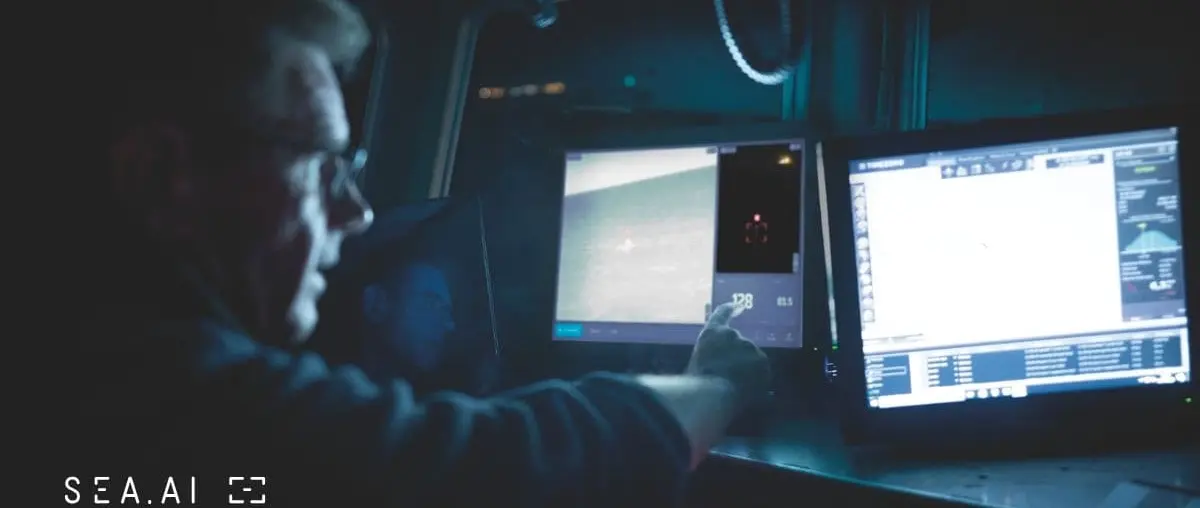
SEA.AI and Carlisle & Finch have integrated machine-vision detection with motorised searchlights so a crew can keep a selected target illuminated automatically. The link connects SEA.AI's Sentry system with Carlisle & Finch's SmartVIEW Gateway and can be used for a person overboard, an unlit vessel or another object detected on the water.
Once an operator selects the target, the searchlight is directed to its bearing and continues following it as SEA.AI updates the target position. The idea is to reduce the manual workload during a high-pressure situation when maintaining visual contact can be difficult.
Machine vision fills gaps left by radar and AIS
SEA.AI combines thermal and low-light cameras with machine-learning software to identify objects that conventional navigation systems may not show clearly. These can include floating debris, small craft without AIS and people in the water.
The company says its thermal sensors can detect very small temperature differences, helping the system distinguish a person from the surrounding water in difficult light. The technology is intended to supplement radar, AIS and visual watchkeeping rather than replace them.
The searchlight follows the selected target
The new integration passes bearing information from SEA.AI to the SmartVIEW Gateway, which controls the connected searchlight. Instead of a crew member continually steering the beam by hand, the light can remain trained on the moving target while the rescue or avoidance response is organised.
That can be particularly valuable at night, when a person or small craft can disappear from sight as soon as the beam moves away. Keeping continuous illumination also gives other crew members a clearer reference during manoeuvring.
Person-overboard response is the clearest use case
A person-overboard incident combines urgency, poor visibility and rapidly changing relative position. Even when the casualty has been detected, waves and vessel movement can make it difficult to keep them in view while the yacht turns back.
Automated tracking does not eliminate the need for established MOB procedures, flotation equipment and trained crew. Its value is in helping preserve visual contact while those other measures are put into action.
Advanced bridge functions continue moving downmarket
Machine-vision systems were initially associated with larger yachts and commercial vessels, but compact cameras and integrated displays are making the technology more realistic for owner-operated yachts. The same is true of automated searchlight control, which can now be linked into a broader navigation and safety network.
For LYG owners, the important question is how well these systems integrate with existing helm equipment and crew procedures. Used correctly, the new SEA.AI and Carlisle & Finch link is a practical example of automation supporting rather than replacing human watchkeeping.