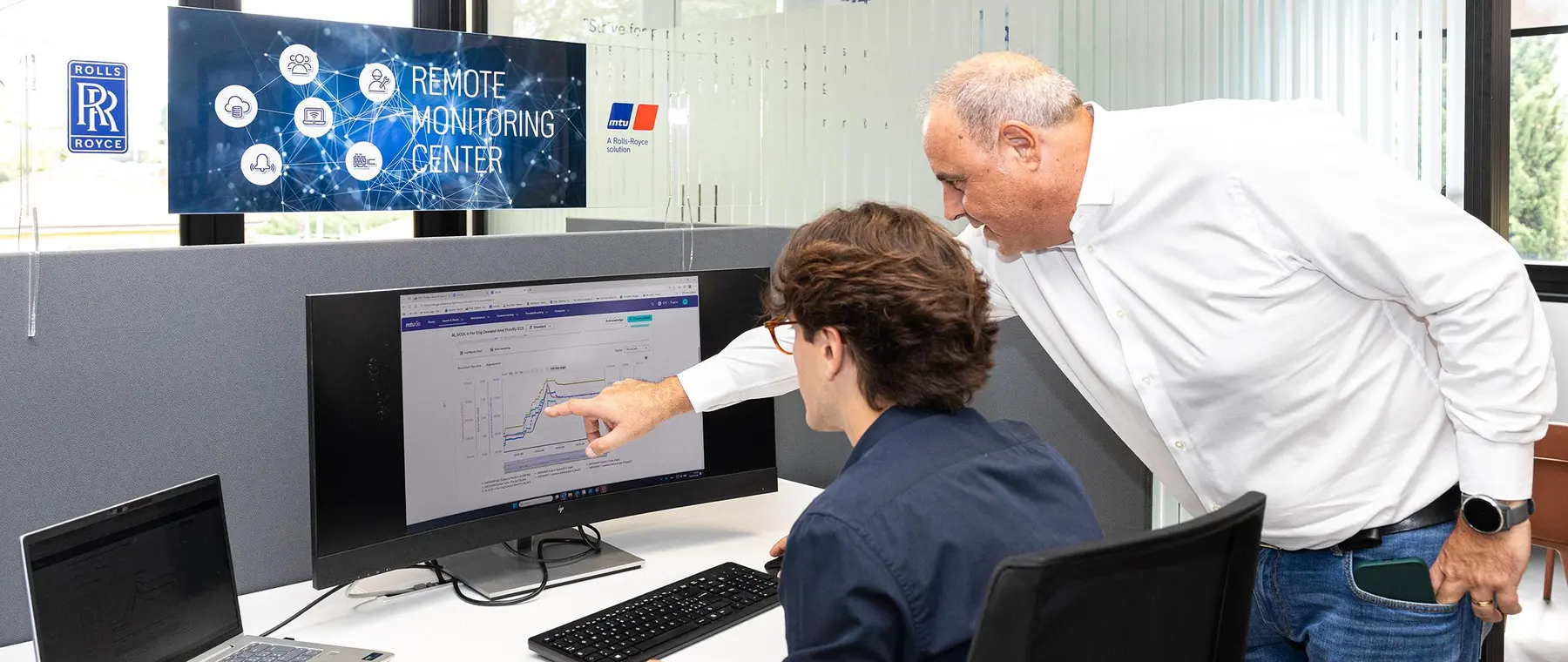
A propulsion problem is far easier to manage when it is recognised before it becomes a breakdown. Rolls-Royce is building that idea into its yacht service model with a new Remote Monitoring Centre in Arcola, Italy, focused initially on connected marine and yacht installations.
The centre continuously analyses operational data from mtu systems and is intended to identify changes in behaviour early enough for targeted action. Rolls-Royce says the Arcola site is the first Remote Monitoring Centre outside Berlin and the starting point for a wider global network.
Service shifts from response toward anticipation
Traditional technical support often begins when an alarm appears or a crew reports a fault. Remote monitoring gives service specialists a stream of operating data that can reveal trends before the problem reaches that stage.
If the Arcola team detects a meaningful deviation, it can recommend operating changes or help plan maintenance. Rolls-Royce says the same workflow can extend to coordinating spare parts or a service engineer when intervention is required.
Overmarine is already using the service
The Italian shipyard Overmarine and ferry operator Liberty Lines are among the first customers connected to the new centre. That gives the programme an immediate yacht-industry reference rather than positioning it only as a future digital-service concept.
For yacht owners, the value is likely to be highest when monitoring is linked with a strong physical service network. An early warning only becomes useful if parts, technicians and maintenance windows can then be organised before availability is affected.
mtu Go provides the digital foundation
The mtu Go platform makes operational data from compatible systems available remotely for monitoring and analysis. Rolls-Royce says existing compatible installations can also be retrofitted, so the concept is not restricted entirely to new engines or newly built yachts.
That retrofit potential matters because the installed yacht fleet turns over much more slowly than consumer technology. A service platform that can reach existing machinery has a much larger practical market than one tied only to future deliveries.
A global monitoring network is planned
Rolls-Royce intends regional Remote Monitoring Centres to support customers locally while future Remote Monitoring Hubs handle broader trend analysis and more complex problems. Data gathered from connected fleets will also feed back into the development of monitoring functions.
The larger shift is toward propulsion service becoming continuous rather than episodic. For owners, the promise is not that remote monitoring eliminates failures, but that better information may turn some unexpected failures into scheduled maintenance instead.