Why end-of-life design is entering the yacht conversation
A yacht may be designed for decades of pleasure, yet the choices made during construction can determine what happens to many of its components after that useful life ends. Conventional fibre-reinforced composites helped reshape the pleasure-boat industry with strong, versatile moulded structures. The challenge comes later: dismantling complex laminates and recovering useful materials can be difficult, especially when fibres, resin systems, adhesives and coatings have been combined into an inseparable assembly. This is now a practical design question rather than a distant environmental talking point.
Italian company Northern Light Composites, also known as nlcomp, is taking a recyclable-composite proposition to METSTRADE 2026. The Amsterdam leisure-marine equipment show has confirmed the company among its startup exhibitors for 17–19 November. Its presence gives builders, designers and owners a reason to investigate the material itself, the manufacturing process and the real route by which a component might eventually be recycled.
A verified exhibitor, with a specific proposition
METSTRADE's exhibitor listing identifies Northern Light Composites as an Italian business in the boatbuilding materials and equipment category. Its corporate material describes a proprietary rComposite system intended to facilitate recovery of materials at end of life. METSTRADE separately lists Northern Light among the leisure-marine startups, which means the Amsterdam appearance belongs in the industry's materials discussion rather than being characterised as a conventional production-yacht launch.
This distinction is important for readers considering a new yacht or refit. A materials supplier may influence a boat in several ways without supplying a complete hull. Selected mouldings, fittings or production processes can reach the market through a boatbuilder or subcontractor long before a full family of yachts is built around them. The manufacturer’s technology must therefore be judged against the precise application claimed, not a vague promise that every future composite boat will be completely recyclable.
The rComposite principle
Northern Light’s public description centres on thermoplastic resin systems and materials selected for compatibility with a recycling process. That differs from the conventional thermoset systems prevalent in many marine laminates, whose irreversible curing can make end-of-life separation difficult. The company states that its rComposite approach is designed to make composite products recoverable through an appropriate industrial route. It also describes collaborations for recyclability testing.
Manufacturers use the word 'recyclable' in several different senses. A technical material may be capable of recovery under specified conditions, while real-world recovery depends on collection, transport, sorting, contamination and available processing capacity. An owner therefore needs more than a headline material claim. The useful documentation would identify what proportion of a particular completed component is recoverable, how it must be dismantled, who will accept it and what quality of output the recycler can produce.
What the company says about verification
The nlcomp website states that rComposite has been verified by DNV against ISO 14021:2021 requirements relating to recyclability and recycled content. This is a claim in the company’s published material, not a certificate independently obtained by Luxury Yacht Guide. A purchasing team should request the exact assessment, its scope and date, and confirmation of which product formulations and processing routes it covers. Standards language can be useful when it is attached to defined materials and measured outcomes.
That caution protects the industry from an easy misunderstanding. A verification of a material claim does not automatically certify the full environmental footprint of a 20-metre yacht. Emissions from manufacturing, repairability, service life, transport, energy supply, and dismantling could still dominate a complete lifecycle assessment. Buyers should compare like with like and resist treating a single environmental metric as a substitute for a carefully documented whole-vessel analysis.
From prototypes to a production setting
Northern Light describes its rFactory as a production facility intended to scale the application of rComposite. Its website says the facility can make high-performance composite parts up to approximately 20 metres long, a scale of obvious interest to the 12–23.99-metre sector. The word 'part' is essential: nominal manufacturing capability for a long component should not be conflated with a commitment to build any specified yacht hull or a guarantee that all requisite structural tests are complete.
Industrialisation matters because pilot demonstrations and serial production create different demands. A successful showcase component says something about feasibility; repeated controlled manufacture requires stable raw-material supply, consistent laminate properties, documented quality checks, trained teams and a workable route to after-sales support. Builders also need confidence that parts can be bonded, fastened, finished and repaired alongside the other systems found on a contemporary yacht.
Marine projects already cited by nlcomp
The company’s maritime presentation references EcoRacer sailing boats and the Grand Soleil Blue project as examples in its portfolio. These are useful case studies because they show where recyclable-material choices may enter real vessel programmes. They should not be interpreted as evidence that the same material is suitable without adaptation for every structural detail, from a lightly loaded fairing to a highly loaded keel attachment or a long-range motor-yacht hull.
Owners looking at production craft should ask which components are supplied by nlcomp, whether their structural design has been independently assessed, and how the material selection affects repairs. An accurate story identifies what has been used and where. It does not broaden a company's project association into an assertion that an entire boat is fully recyclable, or that a particular lifecycle outcome has already been demonstrated for every installed system.
The case for 12–23.99-metre yachts
The middle luxury-yacht segment is a particularly interesting test bed. A 15- to 23-metre cruiser may contain large mouldings, yet still be manufactured in numbers that allow a builder to study repeatability and procurement economics. Owners expect durable surfaces, quiet interiors, predictable insurance treatment and service support across different marinas. They may admire an environmental innovation, but they are unlikely to accept significant uncertainty about the ability to repair a damaged panel far from the factory.
If recyclable composites are to spread through this market, successful adoption will depend on practical alignment. Builders need engineering evidence and economics. Surveyors require traceable specifications and repair guidance. Technicians need approved working procedures. Owners need realistic replacement-part availability. Recycling is an attractive end goal, but these immediate service-life considerations will determine whether the technology earns a place aboard.
The repair and refit perspective
Refits frequently expose the compromises built into original construction. Access panels have been bonded in, equipment has been installed behind structural mouldings, and secondary systems complicate the eventual separation of materials. A new composite strategy should be assessed not only for its resin but also for the design of joints, surfaces and interfaces. A readily separated panel may be more useful to a future recycler than an ostensibly recyclable laminate permanently bonded to incompatible components.
Yards considering rComposite should request repair schedules covering common damage: local impact, delamination, punctures, heat exposure and cosmetic finish defects. Thermoplastic terminology alone does not establish that a yard can safely weld or reshape any finished component. Repairs remain specific to formulation and reinforcement. The boat's classification, flag, intended use and insurer may all influence which procedures and evidence are acceptable.
Collection and industrial recovery
One of the most significant barriers is logistical rather than chemical. A luxury yacht often changes country, owner or operating base during its life. At retirement, the vessel may be dismantled far from the original builder. A component that is technically recyclable in a specialist facility will need identification, separation and transport to the right processor. The more complicated or expensive that chain becomes, the less certain the advertised recycling pathway.
For this reason, a credible circular-material offer would ideally include durable identification of parts, a list of compatible processing partners, clear take-back or disposal instructions and realistic cost assumptions. Such measures are especially valuable for smaller builders that do not control a global recycling network. The industry has an opportunity to build traceability while the technology is young, rather than trying to reconstruct forgotten material histories decades later.
How to assess environmental claims fairly
An owner comparing two similar yachts should first ask which outcomes are being claimed. Recyclability is one property. Recycled content is another. Reduced production emissions, lower operational fuel consumption and longer service life are separate metrics. A component can perform well on one measure without automatically leading on all the others. Suppliers should make the boundaries of their calculations visible and avoid vague expressions that cannot be checked.
Durability remains central. A panel requiring frequent replacement may carry more total resource demand than a longer-lived alternative, even if the first panel has an attractive end-of-life treatment. Conversely, a material that retains performance while enabling recovery of useful fibres or resin could create real benefits. These possibilities deserve measured engineering work and documented lifecycle analysis, rather than either enthusiastic assumption or blanket dismissal.
What builders can ask at METSTRADE
The Amsterdam exhibition offers an opportunity to request physical samples and technical files. Designers should ask for mechanical properties, fatigue data, moisture and temperature behaviour, fire characteristics where relevant, compatible surface finishes and procedures for joining to conventional materials. Production managers will want cycle times, training requirements, scrap rates and realistic capacity for repeat orders. Purchasing departments need price certainty and a plan for quality assurance.
At the same time, environmental teams should inspect the evidence underpinning each recycling or recycled-content statement. That includes the named process, availability of the processor, expected yield and whether recovered materials have a demonstrated onward use. If the company can provide clear responses, the conversation moves from broad sustainability positioning to the concrete requirements of a yacht-building programme.
Beyond the show floor
Northern Light’s participation at METSTRADE does not mean every boatbuilder will immediately change materials. Marine construction is conservative for understandable reasons: components are exposed to loads, moisture, sunlight, vibration and often years of service in remote conditions. New approaches earn trust through consistent results, transparent failure analysis and competent support. A promising startup can accelerate that process, but careful builders will still require evidence appropriate to the proposed use.
For Luxury Yacht Guide’s audience, the development is worth watching because it asks a constructive question: can future 12–23.99-metre yachts combine the practical dependability expected today with a clearer route for recovering materials tomorrow? The answer will be demonstrated in production details and end-of-life operations, not in a trade-show slogan. Northern Light’s Amsterdam appearance gives the industry a place to examine those details.
Primary sources and photo note
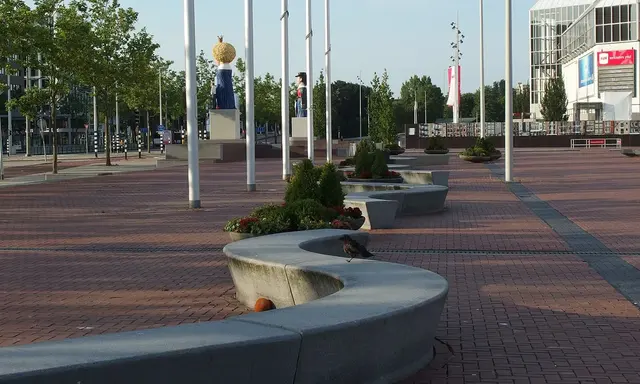
Sources checked: METSTRADE startup announcement, exhibitor listing, nlcomp corporate overview and nlcomp marine applications. Manufacturer claims about testing, verification and factory capability are attributed as such. The hero shows the Amsterdam exhibition venue, not a Northern Light composite product.