Can a yacht's movement help its batteries?
A yacht moving at anchor produces an unmistakable sensation: a gentle roll, a change of trim as a wave passes, and the continuing movement of mass against gravity. Most owners associate that motion with comfort, shelter and the decision to shift berth. Slovenian business Primum is exploring a different aspect of it. The company plans to introduce Elvalen to the international marine industry at METSTRADE 2026 as a device that converts movement into a modest electrical output.
The concept is an example of energy harvesting rather than a new means of propelling a yacht. The distinction is essential. According to the organiser's published profile, Elvalen is aimed at maintaining 12-volt onboard batteries and providing supplementary charging when conditions allow. For Luxury Yacht Guide's 12–23.99-metre audience, that makes it a story about low-power management and the practical realities of long periods afloat or in storage, not a claim of limitless renewable electricity.
What the organiser has reported
METSTRADE's 26 October 2026 feature on its startup exhibitors identifies Primum as the Slovenian company behind Elvalen, describing approximately a decade of development work. The organiser says the product is intended for a public introduction at the 17–19 November exhibition in Amsterdam. Primum is also included in the official list of startups participating in the wider leisure-marine area of Hall 5.
The published technical outline is relatively specific but comes from the founder, Primož Kunaver, through an exhibition feature. He describes a moving eccentric mass, mechanical gearing and electronics that turn a variable generator output into a voltage suitable for a 12-volt battery system. These are manufacturer-supplied descriptions. The public article does not provide the detailed independent performance curves, laboratory test conditions or installation manuals a yacht engineer would need before making a recommendation.
The mechanical idea inside the device
Energy harvesting from motion relies on relative movement. As the vessel changes angle or moves in response to waves, an internal mass can shift relative to the surrounding equipment. A mechanical mechanism converts that motion into movement of a generator. Electronics then condition the intermittent electrical output so that it is usable by a battery system. Such devices must deal with irregular input rather than the controlled shaft speed associated with an engine-driven alternator.
Several questions follow immediately. How does output change with the frequency and amplitude of motion? Does installation orientation matter? How much parasitic friction or mechanical noise results? What protections prevent a damaging interaction with the vessel's existing charging system? These questions do not undermine the idea; they define the due diligence needed to move from a clever demonstration to a reliable marine component.
Why three watts should be interpreted carefully
The METSTRADE profile quotes a figure of approximately three watts in moderate waves. That is a power figure measured under described conditions, not a promise of continuous production. To understand its scale, a hypothetical device operating steadily at three watts for a full 24 hours would deliver 72 watt-hours before allowing for conversion and battery losses. Real output could be materially lower, or absent, when the boat barely moves. The average over a day is the relevant number for battery management.
A typical luxury yacht uses far more energy for refrigeration, air-conditioning, navigation electronics, pumps and hotel services. Elvalen is therefore not positioned credibly as a substitute for a generator, shore connection or a properly sized solar array. Its potential role is much narrower: helping to offset a small parasitic draw or support battery condition when other sources are unavailable. Whether it can do so depends on the actual electrical system and the amount of motion the vessel experiences.
The quiet problem of stored yachts
The company's stated emphasis on winter battery maintenance addresses a familiar ownership issue. Yachts can sit for extended periods at a berth or on a mooring while small loads continue to draw power. Alarms, monitoring systems, memory circuits and other equipment may remain active. If charging is interrupted or insufficient, a battery can be discharged below a desirable threshold, causing inconvenience and sometimes premature damage.
A low-output harvester might contribute to a maintenance strategy, but it cannot replace regular inspections and correct battery-management design. The owner still needs to know the battery chemistry, recommended charging conditions, quiescent current and available reserves. Some vessels must remain connected to approved shore-power systems, while others can operate safely with selected loads isolated. Those decisions belong in the electrical plan rather than being delegated to an accessory.
The 12-volt compatibility question
Elvalen is described as intended for a 12-volt battery system. Many 12–23.99-metre yachts have several electrical circuits, sometimes mixing 12V, 24V and higher-voltage equipment. A visitor should therefore ask exactly which battery or bus the device can serve and whether approved interfaces exist for different architectures. It would be unsafe to assume that a product described as 12V can be attached directly to any multi-bank marine electrical network.
Owners should also seek clear information about charging profiles for different battery chemistries. Lead-acid, lithium-based and other systems have distinct requirements, and a battery-management system may control charging access. Any new device needs suitable fusing, cabling, isolation and protection against fault conditions. A competent marine electrician should assess the integration. Marketing material is not an alternative to documented wiring arrangements and applicable standards.
Where movement comes from at anchor
The appeal of the concept is that a yacht may continue to move even when its engines are off. At some anchorages, low swell makes the motion persistent. At others, the hull may lie almost motionless for long intervals. Marinas sheltered by breakwaters are deliberately designed to reduce wave action, creating a less favourable environment for a motion-based generator. A buyer therefore needs to distinguish theoretical availability of wave energy from practical output at the yacht's usual berth.
Wave direction also matters. A craft rolling gently may excite the internal mechanism differently from one pitching in a short sea, though the present public product description does not establish the sensitivity. The installer would need guidance from the maker. It would be a mistake to seek a rougher anchorage just to generate a few watts: comfort, shelter and safety must remain the primary considerations.
A supplement to solar and shore power
Small maintenance loads can sometimes be managed by solar panels, a properly configured shore charger or battery monitoring and isolation. A motion harvester would enter that menu as another possible contribution. Solar depends on sunlight and installation angle, whereas a wave-driven device would depend on motion. The two sources may be complementary at certain times, but the relative output and reliability must be established through actual measurements.
The correct comparison is not simply whether Elvalen produces some electrical power. It is what that energy costs, how reliably it arrives, how much maintenance the mechanism requires and whether it improves the owner's overall battery regime. The conversion efficiency and self-consumption of the electronics will matter when the power level is small. No sensible purchasing decision can be made from the peak or illustrative wattage alone.
Questions for the manufacturer in Amsterdam
An owner or builder considering the product should ask for a graph of generated wattage against vessel motion and time, together with the conditions under which the reported three-watt value was observed. A credible engineering file should state usable battery types, operating temperature, ingress protection, mounting orientation, noise, mechanical life, inspection interval and service arrangements. Electrical diagrams and an explanation of fault handling are especially important.
It would also be useful to know whether the company has completed trials on boats of different length and displacement, and whether the results include long periods in relatively calm harbours. Measurements from a small dayboat cannot automatically predict performance on a heavier 20-metre yacht. A battery-maintenance device should be judged by its contribution over weeks and months, not only by a short demonstration in energetic conditions.
The economics of tiny energy flows
Three watts may sound negligible alongside the capacities of a modern yacht, but small energy streams can have value when the objective is equally small. If a product reliably offsets a low standby current, it could reduce the frequency of certain charging interventions. Yet installation, inspection and replacement costs might exceed that benefit. The calculation needs the real output profile, expected product life and cost of alternative solutions.
The balance also varies by owner. A boat with secure, monitored shore power may gain little. A vessel on a mooring without electrical infrastructure could face different constraints. A long-range yacht with a sophisticated energy-management system may find that correct integration is more important than the wattage. The tool must solve an identified problem, not become another piece of equipment requiring attention.
What the concept signals for yacht design
Elvalen belongs to a wider search for ways to reduce idle losses and improve the resilience of onboard systems. Some innovations attempt large energy conversions, while others target an overlooked maintenance problem. This design falls in the latter camp. The attraction of harvesting energy from motion is intellectually satisfying, but successful marine products tend to win owners through reliability and clear usefulness rather than novelty alone.
Builders can learn from the discussion even if they never install such a unit. Better knowledge of parasitic electrical loads, storage-state monitoring and battery-health routines can prevent real ownership problems. An integrated strategy may include deliberate low-power modes, a clear isolation scheme and alerts that work without creating excessive continuous demand.
A measured debut, not a propulsion revolution
At METSTRADE 2026, the most valuable demonstration would show how the prototype or production device responds to realistic motion, and how the output reaches a real 12-volt battery safely. That would allow an informed conversation about its place among existing chargers, monitors and management devices. The organiser has confirmed the company's participation and published the founder's technical explanation; independent in-service evidence remains the next relevant milestone for prospective buyers.
For 12–23.99-metre luxury yachts, the lesson is proportion. A few watts cannot run the hotel loads, but perhaps a few watts can help with a defined maintenance task. The value of Elvalen will be proven if it consistently makes battery care simpler in the places and seasons where owners need it most. That is a useful, testable proposition in its own right.
Sources and photograph context
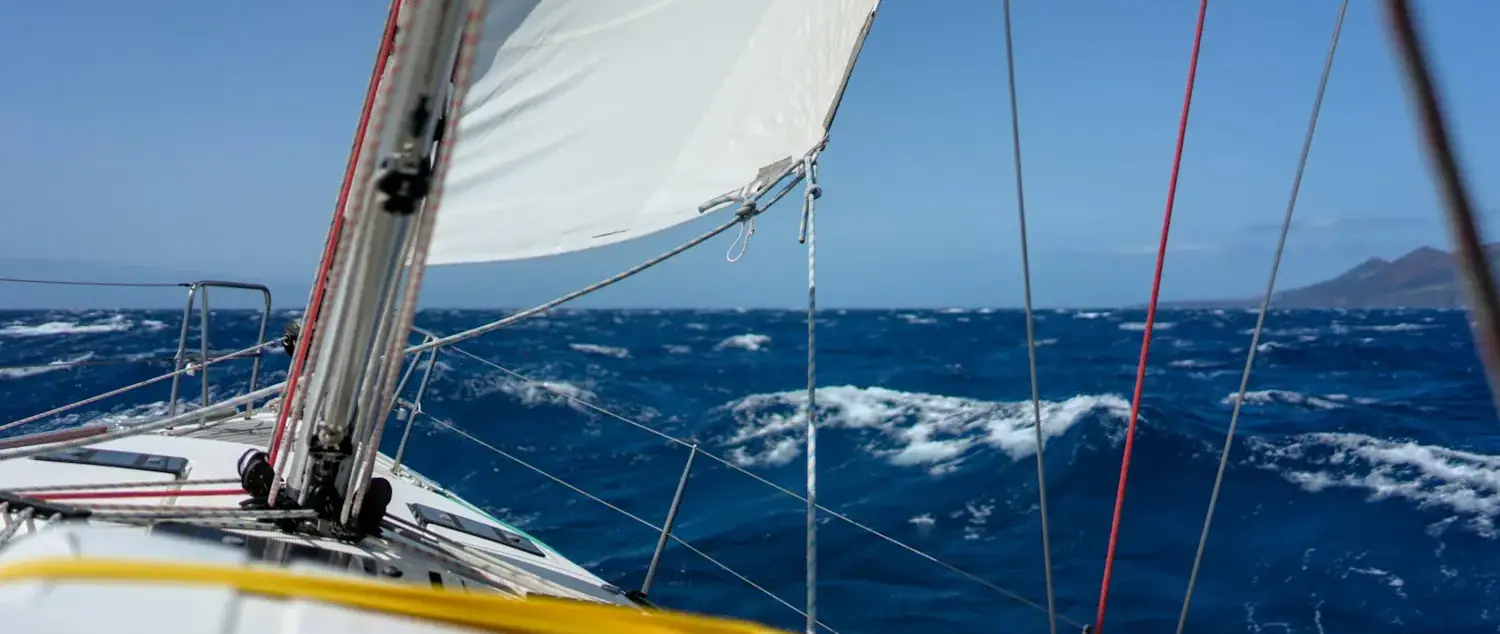
Primary reports: METSTRADE's 26 October 2026 interview and technical description, official startup roster, and the organiser's September announcement. The three-watt output is a manufacturer statement under moderate-wave conditions, not an independent continuous-output test. The hero photograph shows a sailing yacht in waves, not the Elvalen device.