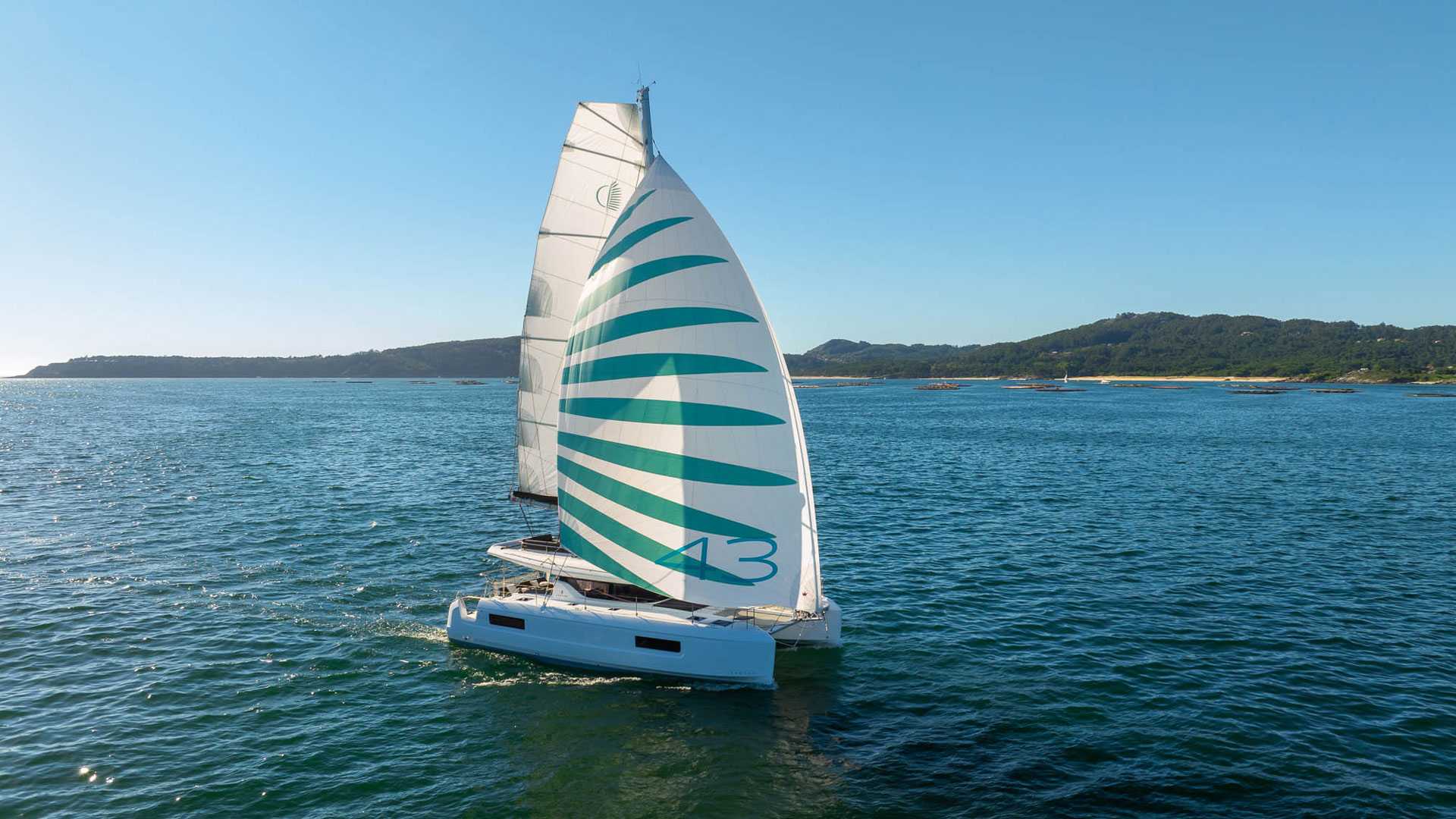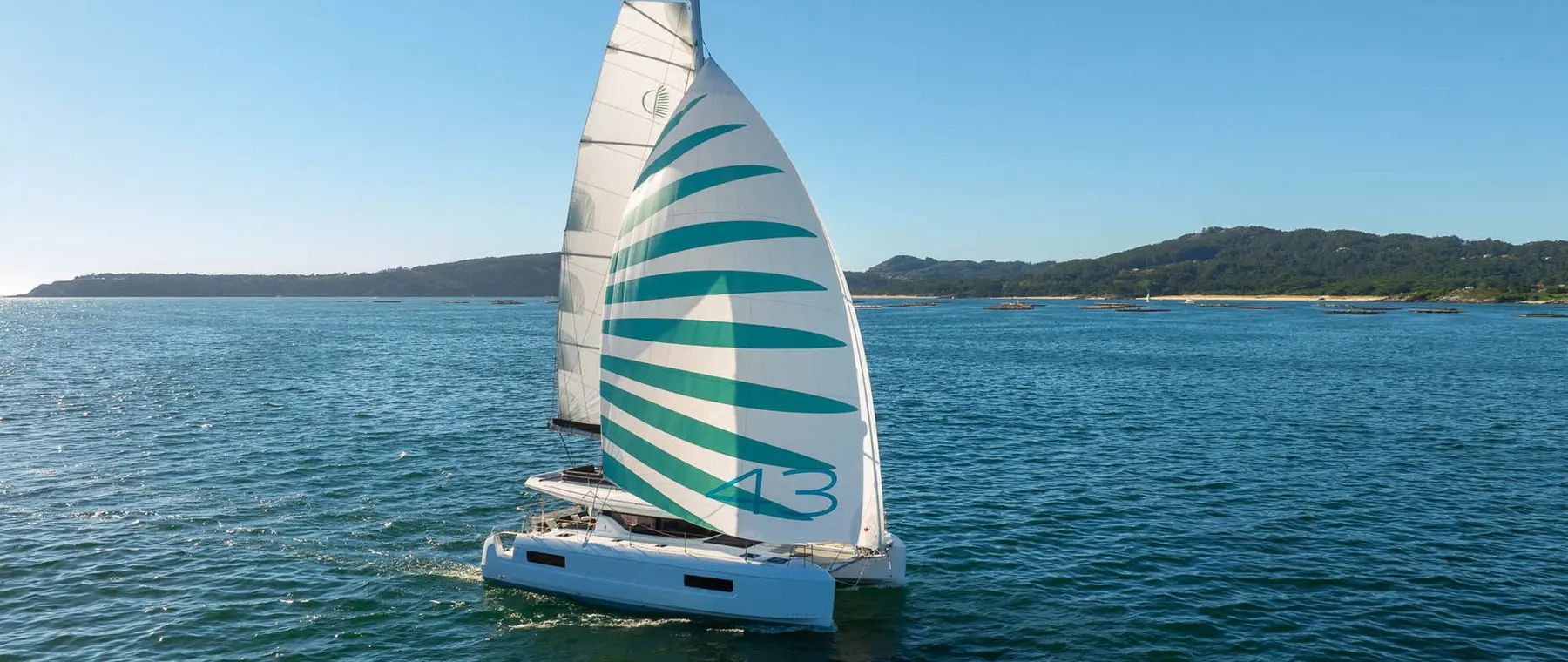
Lagoon is using the Paris Nautic Show, opening on 25 November at Paris-Le Bourget, to give visitors a close look at the Lagoon 43 sailing catamaran. Unlike events at which a company merely discusses its range, the manufacturer's official announcement identifies the Lagoon 43 as an actual boat on display. That distinction will matter to prospective buyers who want to assess how a 13.85-metre cruising catamaran feels in person before arranging an on-water trial. The exhibition runs through 29 November, and Lagoon says visitors can register for a personalised invitation and an appointment with its team. For the luxury-cruiser audience, the news creates a timely opportunity to examine a specific yacht rather than relying entirely on renderings, photographs or a list of options. The boat's nominal size places it firmly in the 12-to-23.99-metre sector, where demands for living space, owner operation and charter flexibility increasingly overlap.
A confirmed display, not just a sales consultation
The builder's Paris event page explicitly says that visitors can discover the Lagoon 43 on display at the show. Buyers should nevertheless distinguish stepping aboard an exhibition boat from watching how it behaves at sea. The value of a land-based inspection lies in judging deck movement, sightlines, ergonomic details, furniture placement and the compromises that cannot be appreciated in photographs. The show is also a chance to ask which cabin and equipment configuration the exhibited yacht represents. A high-specification display boat may carry optional items that change the original price and operational requirements. Anyone building a comparison shortlist should record the equipment on the particular vessel alongside the published standard specification. The difference can affect a boat's electrical loads, maintenance schedule, displacement and future resale appeal. Paris supplies evidence of physical layout; a later sea trial is still needed for questions of handling, comfort and performance.
The Lagoon 43's dimensions frame the choices
Lagoon's official model information lists an overall length of 13.85 metres and an overall beam of 7.69 metres. Those figures are especially relevant because a catamaran's usable platform is gained partly through width, not simply through length. The resulting deck and accommodation possibilities are attractive for families and owners who want to spend longer periods aboard, but wide berthing requirements can influence where a yacht can be based and how easily it can be welcomed by transient marinas. A prospective owner should therefore investigate berth availability and actual harbour charges well before ordering. Beam also matters for haul-out arrangements and travel-lift capacity. These are operational issues, not reasons to dismiss the design. They show why a 43-foot cruising catamaran should be evaluated against the owner's intended home port and destinations, not only against the cabin volume of a similar-length monohull.
The importance of moving between cockpit and saloon
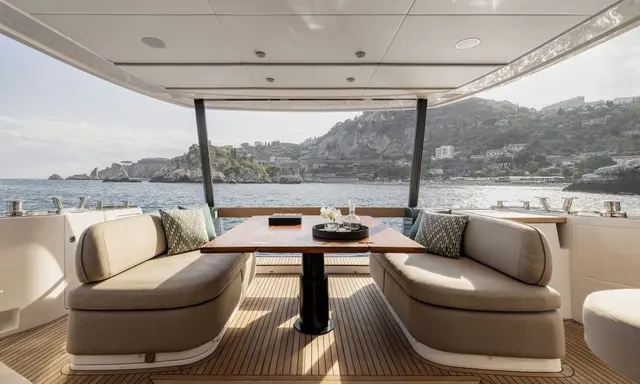
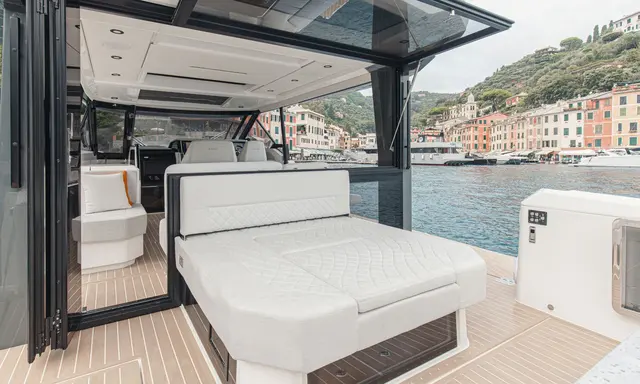
Aft-cockpit and saloon arrangements can determine whether the boat works naturally for a mixed crew of experienced sailors, children and occasional guests. Lagoon markets the 43 around social living and a sense of connection between inside and outside. On a show visit, it is useful to imagine ordinary activities rather than a staged entertaining scene: preparing lunch while another person keeps watch, carrying wet clothing out of the saloon, moving between shaded seating and the helm, or closing the boat after a sudden shower. Check how thresholds, door openings and furniture affect movement when the yacht is rolling or pitching. Assess the number and position of secure handholds. The integration of social spaces is appealing at anchor, but passage-making has different requirements. A yacht's best layout is one that remains practical when the weather is uncooperative, and those small details are easiest to discover by walking the actual deck.
Owner accommodation versus charter flexibility
The Lagoon 43 has been discussed by its designers in terms of both private ownership and multi-cabin operation. An owner-focused layout and a four-cabin arrangement serve different purposes, even when the outer hull remains the same. A couple may prioritise one larger private cabin, personal storage and a quieter area for working or reading. A family or a charter programme may place more emphasis on balanced sleeping arrangements, bathroom access and circulation for several people. Lagoon's design material notes the importance of berth placement and the opportunity for four more evenly matched double cabins in a charter-oriented configuration. These choices should be checked on the plan for the actual yacht being considered. Beds, partitions, service runs and tank locations can alter the practical effect of a layout. Do not assume that every feature of one cabin plan carries across unchanged to the others.
The design team's roles are relevant to the result
Lagoon's official information credits VPLP Design for naval architecture, Patrick le Quément for exterior styling and Nauta Design for interiors. For buyers, that division of responsibility is more useful than simply listing well-known names. Naval architecture affects hull form, structure and the way displacement is managed; exterior styling shapes sightlines, protection and the feel of the deck; interior design decides how people live inside the available envelope. In a production cruising catamaran the three must work together. A dramatic window arrangement is less valuable if it raises heat-management problems, while an impressive social area can be undermined by poor stowage or complicated service access. Visitors to Paris can trace the advertised design approach through particular features on the boat. Ask not merely what looks new, but why a change was made and which real-world problem it is intended to solve for a cruising owner.
What can be learned about systems on a static visit
The exhibition provides a practical setting to discuss equipment choices with the manufacturer. Electrical demands are rising as cruising catamarans add air conditioning, induction cooking, larger navigation displays and more hotel services. At the same time, owners increasingly ask about battery capacity, charging sources, solar generation and silent operation at anchor. These discussions should be quantitative rather than aspirational. A credible energy plan starts with a list of actual loads and the number of hours each may run; it then compares generation and storage with the intended cruising pattern. Ask how batteries and service machinery can be inspected and maintained, where heat is rejected and what redundancy remains when a component is unavailable. The Lagoon 43 display can reveal whether there is adequate access to the relevant spaces. An impressive option list is only useful if the operator understands the system that results.
Sail handling and crew workload remain decisive
A yacht in this size range is often operated by an owner and one other adult, sometimes with less experienced family or friends aboard. Under those circumstances, line leads, reefing arrangements, helm visibility and the ability to move safely between working areas matter more than a theoretical maximum speed. When inspecting the Lagoon 43, visitors should ask to see how the mainsail is reduced, how headsails are controlled and how the crew moves from cockpit to foredeck. A static boat cannot demonstrate its motion, but it can reveal whether working positions are clear and whether essential tasks require avoidable exposure. Ask also about autopilot integration, watchkeeping visibility and emergency controls. The right configuration depends on whether the boat will be used for short summer passages, extended Mediterranean cruising or longer offshore routes. Performance figures should be compared only where the test conditions and loading are understood.
Building a realistic ownership budget
A 13.85-metre cruising catamaran sits in a category where lifestyle decisions and financial planning are closely connected. The purchase quotation is the beginning, not the complete capital requirement. Buyers should account for commissioning, sails, optional navigation and safety equipment, local tax treatment where applicable, a home berth, insurance and the tools needed to maintain the boat. Operating costs will depend heavily on use: a yacht kept close to its owner's residence and operated personally has a different profile from one moved between seasons or supported by professional management. Marina fees may reflect the 7.69-metre beam. Haul-out and antifouling are also affected by underwater area and the facilities available for multihulls. The Paris show is an opportunity to request comparable written quotations, with consistent assumptions, rather than making a decision on advertised prices that exclude materially different equipment.
A sensible follow-up after the Paris exhibition
Lagoon's event invitation encourages registration so visitors can receive show access and arrange a dedicated conversation. For a serious buyer, the most productive follow-up is a structured comparison document listing the displayed layout, confirmed options, known limitations and outstanding questions. A yacht selected for its comfort at anchor should still be tested under power and sail, preferably in conditions representative of its proposed service. An independent surveyor can help evaluate construction, systems access and acceptance procedures before purchase. Owners contemplating charter should establish which specifications, coding requirements and insurance provisions apply to their intended area and business model. None of that can be settled by walking through a stand, but the confirmed presence of a Lagoon 43 makes the show a useful first inspection. The verified news today is straightforward: the manufacturer is inviting visitors aboard this particular model at Paris-Le Bourget during 25–29 November, offering a tangible starting point for a much more detailed purchasing decision.
Sources and image credits
Reporting based on Lagoon Catamarans: official Paris Nautic 2026 exhibitor page confirming the Lagoon 43 on display, Lagoon Catamarans: official Lagoon 43 model reference and technical details.
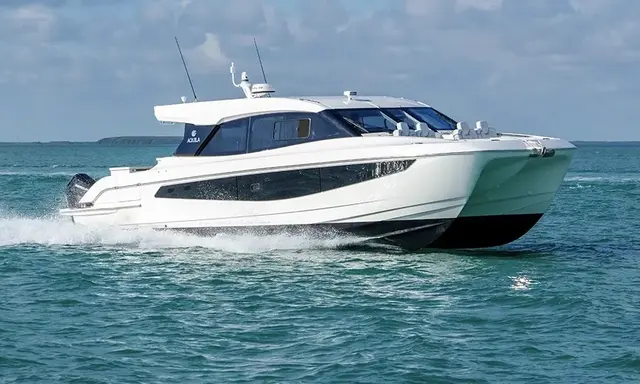
Lead photograph: Lagoon 43 in official builder model photograph displayed on its Paris Nautic Show 2026 event page; archive model image, not live exhibition photography. © Lagoon Catamarans and the original photographer. First-party official Lagoon 43 product photograph; original rights retained. Original official image source.