Kimpton turns its restaurant identity into a global programme
Kimpton Hotels & Restaurants has introduced The Curious Palate, a food-and-beverage programme that aims to connect the brand's chefs, bartenders and individual properties through original dining experiences. Announced by parent company IHG on 22 October 2026, the initiative includes chef collaborations, off-menu ideas, distinctive drinking rituals and events that extend beyond the conventional hotel restaurant. It is a hospitality-brand announcement rather than the opening of one new dining venue.
The idea is built around a familiar challenge for upscale hotels. A group can offer recognisable service standards in multiple cities, but diners increasingly want meals that feel connected to the place they are visiting. Kimpton's response is a shared creative network intended to generate locally interpreted ideas instead of requiring every hotel to serve an identical menu or stage the same branded promotion.
A network of chefs from Asia, Europe and the Americas
The brand's official release identifies culinary voices from Tokyo, Bangkok, Barcelona, Riyadh and the United States, joined by bartenders working in Hong Kong, Edinburgh and Grand Cayman. Such geographical breadth provides a potential exchange of techniques and ingredients, although the announcement does not claim that every participating chef will appear physically in every hotel. Collaborations and special guest appearances depend on the programmes individual properties eventually arrange.
The release names chef Jeremy Acuña of Kimpton Mirador Pacific Grove, Kristin Beringson of Kimpton Aerston in Nashville and Michele Di Bonito of Kimpton KAFD Riyadh among the participants. Marcel López of Kimpton Vividora Barcelona, Shinsuke Nakajima of Kimpton Shinjuku Tokyo and Lamberto Valdez Lara of Kimpton Maa-Lai Bangkok are also identified. Their inclusion illustrates how a brand-wide platform can draw on different culinary traditions without presenting one country as the source of all its ideas.
Kimpton is positioning chefs and bartenders as authors of the guest experience, not anonymous operators of a standardised concept. That distinction matters in a competitive luxury hotel market, because a traveller might choose a restaurant for a particular personality, neighbourhood or signature preparation. The practical test will be whether those individual identities survive as the programme expands.
The first Table of Curiosity was staged in California
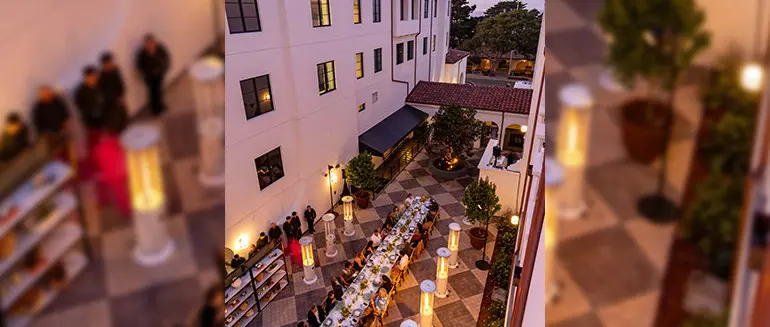
A launch showcase took place at Kimpton Mirador Pacific Grove on California's Monterey Peninsula, bringing culinary and bar specialists together for a shared dinner. According to IHG, the menu drew inspiration from places far beyond the immediate coastline. The examples named by the company include a Hong Kong-inspired margarita, a Saudi Arabian camel preparation and sea urchin risotto informed by Tokyo.
These dishes were presented as part of a specific demonstration event, not as permanent items guaranteed across the Kimpton portfolio. Their significance is the attempt to put unfamiliar combinations into conversation through a one-off meal. The photographs supplied by IHG show a long garden-style table, carefully plated food and social dining rather than a formal banquet in a hotel ballroom.
The Monterey setting also makes the programme's ambition tangible. A hotel can create a compelling experience by connecting a place's own produce and atmosphere with techniques brought by visiting professionals. Yet the best culinary collaboration still needs a coherent menu, dietary consideration and attention to service; novelty alone is not enough to make a meal memorable.
What guests may actually encounter
The Curious Palate is intended to appear at different moments of a stay, not just at dinner. IHG uses the Kimpton Kickstart name for morning drinks and identifies an off-menu strand called IYKYK, alongside immersive dinners, lively social events and nightcap concepts. These branded components describe a flexible direction rather than a public directory showing identical offers at every location.
That flexibility is attractive for a guest who wants an unusual experience without booking a private dining room or travelling to a celebrity-chef restaurant. An interesting coffee preparation might suit the morning; an unexpected cocktail or short tasting menu could punctuate the evening. Availability, reservations and prices still need to be checked locally, and the announcement does not provide a global schedule or uniform costs.
Good execution will depend on communication. A hotel must make a discovery feel special while giving guests enough practical information about ingredients, allergens, alcohol content and accessibility. An unannounced secret menu can be fun for some travellers, but others will appreciate knowing in advance that a chef-led experience is available.
Why a shared programme is a business decision
For IHG, Kimpton sits within the group's Luxury & Lifestyle portfolio, so food and drink can influence brand distinction as well as hotel occupancy. A destination restaurant can attract residents who never book a room, while a successful bar or dinner series gives overnight visitors a reason to spend more time on site. Those are plausible strategic benefits of the initiative, not measured outcomes demonstrated by the launch release.
The announcement emphasises the idea that different locations should reinterpret shared themes in their own way. That approach avoids some of the sameness associated with tightly controlled restaurant concepts, but it also puts responsibility on individual teams to maintain consistency of quality. The strength of the creative network will be tested by recurring guest experiences, rather than the novelty of one promotional dinner.
Kimpton's founder made restaurant culture part of the brand's identity, and the new initiative draws on that history. Yet a contemporary hotel diner may care little about corporate storytelling unless the food, welcome and atmosphere merit a visit. The best test is whether a traveller would choose the restaurant even without the accommodation upstairs.
What to watch over the coming months
IHG's release describes ideas moving between properties, with guest-chef appearances, bartender pop-ups and unexpected pairings among the possibilities. This suggests that The Curious Palate could develop as a series of local programmes rather than a single fixed product. The publication does not promise that every hotel will launch all these elements immediately, and travellers should not assume that photographs from the California event represent the restaurants in other cities.
Anyone planning a stay around a distinctive meal can ask the local Kimpton property whether it is taking part, what events are confirmed, which chefs are involved and whether bookings are available to non-residents. Special experiences may have limited seats or particular dietary requirements, so direct confirmation makes a difference. A well-curated tasting experience is most enjoyable when the logistics feel effortless.
The Curious Palate represents a considered response to the idea of luxury as discovery. Its long-term value will depend on individual hotels translating the global invitation into meals and moments that genuinely belong to their cities. For diners interested in the people behind the food, that could make Kimpton's next set of culinary collaborations worth following.