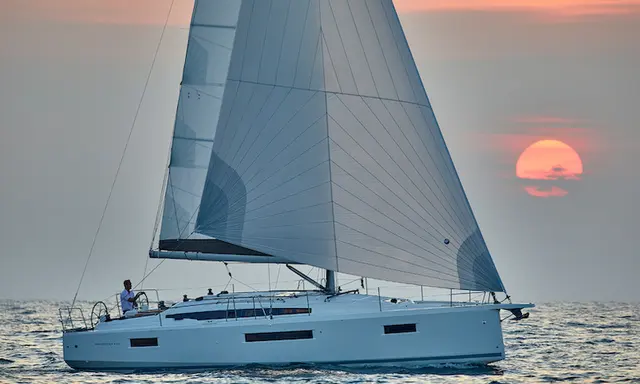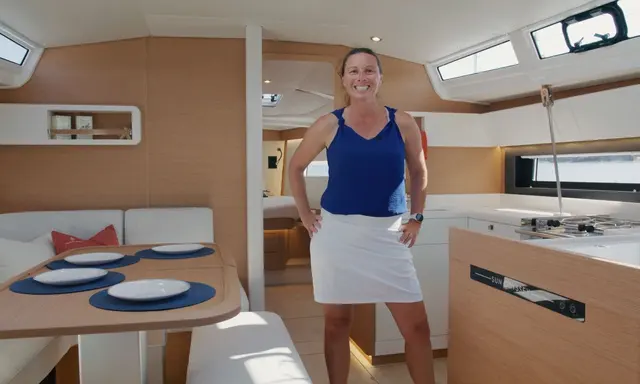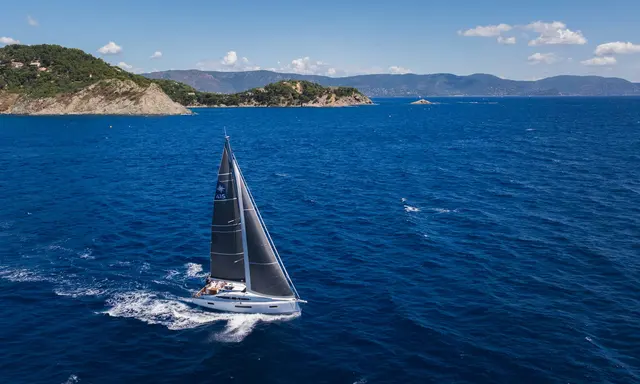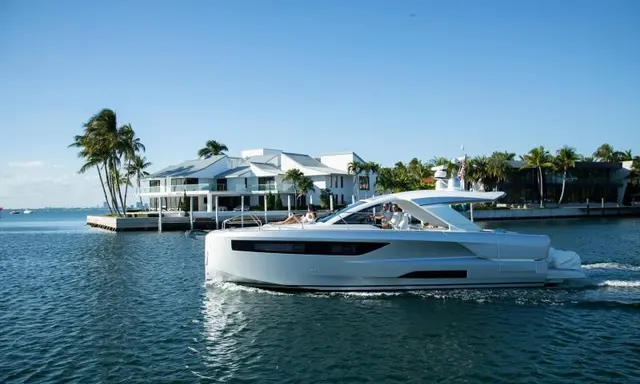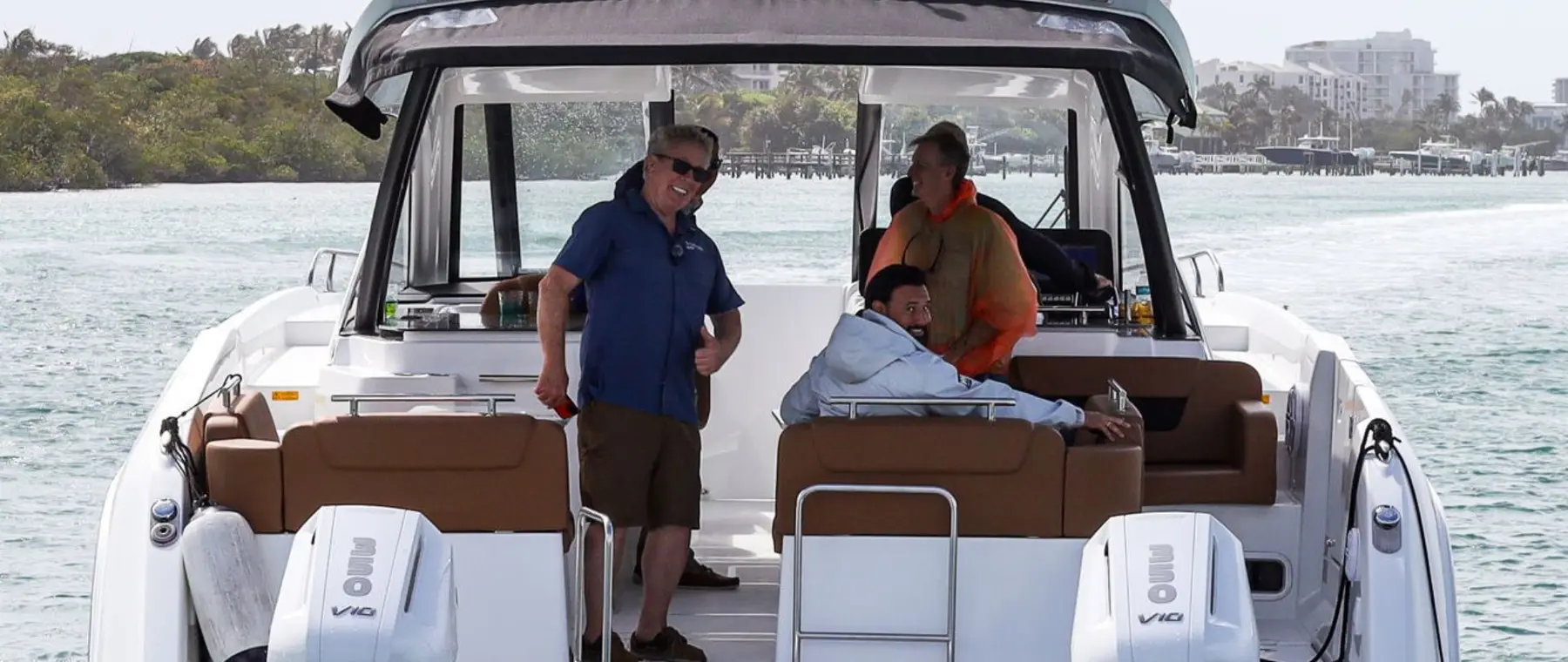
Jeanneau has taken a more practical route to presenting its latest boats by putting journalists on the water for a dedicated press sea-trial programme. Rather than relying only on static displays, the event gave media representatives an opportunity to experience current models underway and judge how design decisions translate into handling, visibility, circulation and comfort.
For production-yacht builders, that distinction matters. A boat can look convincing at a show berth, but steering position, trim, noise, acceleration, deck security and the relationship between indoor and outdoor spaces become much easier to understand once the yacht is moving through real water.
Why sea trials matter more than static launches
Boat shows remain central to the industry's sales calendar because they gather buyers, dealers and large fleets in one place. Yet the compromises of a marina display are obvious: engines stay off, berths restrict the view of hull form, and crowded decks make it difficult to understand how a boat feels when used by a normal family or crew.
A structured media trial lets journalists examine those questions directly. It also gives builders less control over the experience, because wind, waves, harbour traffic and changing loads expose characteristics that cannot be recreated in a carefully staged interior tour.
From layout claims to observable behaviour
Jeanneau's current portfolio spans sailing yachts, conventional powerboats and increasingly varied concepts such as power catamarans. Those categories behave differently on the water, so a multi-model trial gives the press a chance to compare more than styling and specifications.
On a sailing yacht, helm balance, sightlines, sail handling and movement around the cockpit can dominate the impression. On a powerboat, acceleration, turning behaviour, noise and the transition between displacement and planing speeds may matter more, while on a catamaran the relationship between beam, stability and interior volume becomes easier to judge once the boat is underway.
Media testing feeds into buyer confidence
Independent reporting after a manufacturer sea trial is not the same as a long-term ownership test, but it can still add useful information for buyers. A journalist who has actually driven or sailed a model can describe ergonomics and behaviour that are difficult to infer from a specification sheet, giving customers a more realistic list of points to investigate during their own trial.
This is particularly useful in the production-yacht market, where adjacent models can appear very similar online. Differences in helm position, cockpit protection, deck access or ride comfort may ultimately matter more to an owner than another decorative finish or a small increase in cabin volume.
A useful counterweight to digital product launches
The industry has become highly effective at digital launches, computer-generated imagery and carefully edited model films. Those tools are valuable for explaining concepts before the first boat is complete, but they can also make very different yachts look equally polished on a screen.
Putting a group of boats in front of the press on the water introduces a useful reality check. It demonstrates confidence in the finished product and encourages discussion of operational details rather than limiting coverage to launch language, which is valuable both for experienced owners and for newcomers trying to understand what separates one yacht from another.
Jeanneau's press trial therefore deserves attention as more than an event story. It reflects an approach to product communication that makes physical experience part of the launch process, and it gives the market better information at a time when production-yacht ranges are becoming broader and more complex. For buyers, the lesson is equally simple: specifications narrow the field, but a meaningful sea trial remains one of the best ways to decide whether a yacht actually suits the way it will be used.
Real-world feedback can travel back into the product
There is another benefit for the manufacturer when several journalists test boats in a concentrated programme: recurring observations become easier to identify. If different testers independently comment on helm ergonomics, visibility, access or system behaviour, those points can give the builder useful evidence about what is working and what may deserve attention in future production updates.
That does not turn a press event into an engineering test programme, and owners should still arrange their own trials before buying. It does, however, create a broader feedback loop than a static launch. For a high-volume builder such as Jeanneau, even relatively small improvements in instructions, equipment selection or ergonomics can matter when repeated across many boats, so structured time on the water has value beyond the immediate publicity generated by the event.