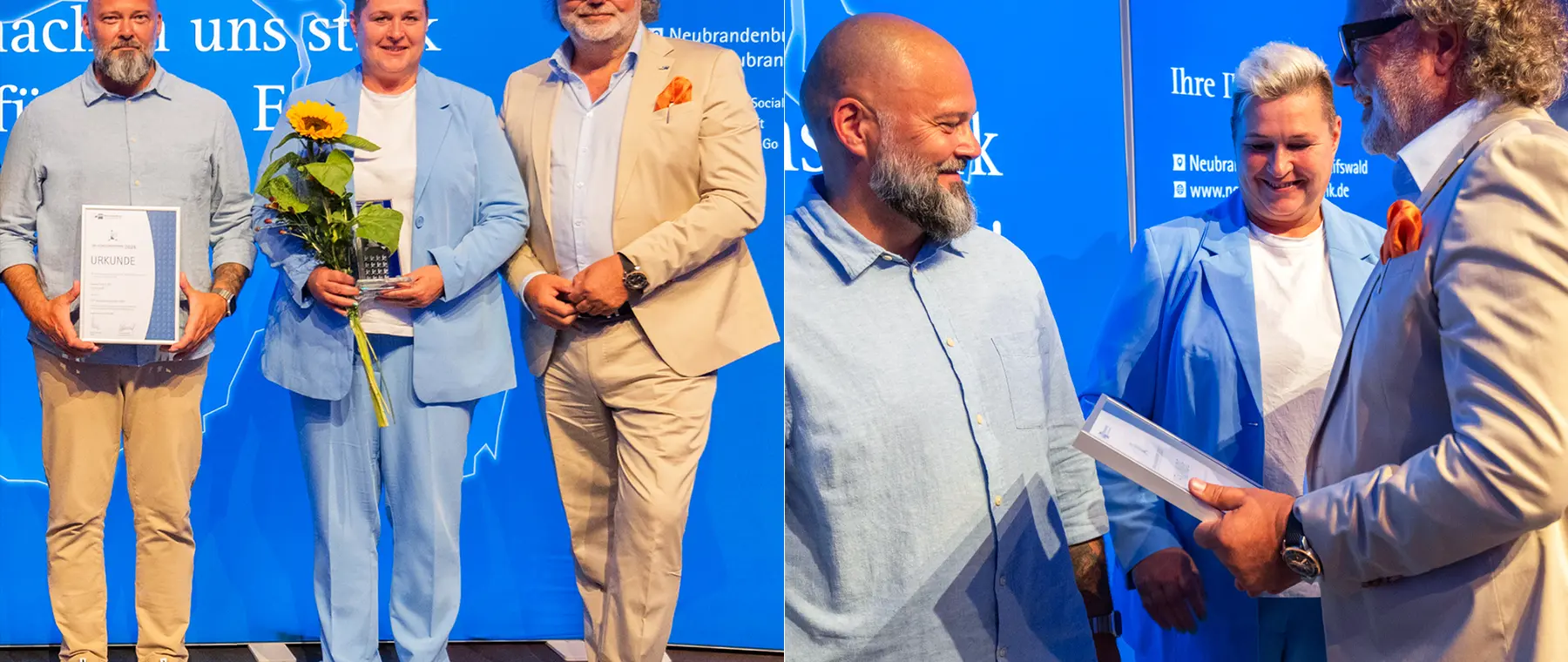
HanseYachts AG has been recognised for its vocational-training programme for the ninth time, receiving the 2026 TOP Training Employer award from the Chamber of Industry and Commerce in Neubrandenburg. The award was presented after an independent jury selected 71 businesses from a field of more than 1,000 companies, giving the recognition a relevance that extends beyond the yacht builder's own recruitment programme.
For a large production-yacht manufacturer, skilled labour is a strategic issue rather than simply a human-resources concern. Modern yacht construction combines composite work, joinery, electrical installation, systems integration, engineering and quality control, and maintaining those capabilities depends on a steady pipeline of people who can develop practical expertise over several years.
Training as part of industrial capacity
HanseYachts says its vocational programmes are intended to create long-term value for both the company and the surrounding region. That approach matters in Greifswald because yacht building depends on teams of specialised workers whose skills are difficult to replace quickly when demand rises or experienced employees retire.
A production yard can invest in moulds, machinery and new model development, but those assets only become productive when a workforce can turn designs into repeatable finished boats. Apprenticeships and structured training therefore sit alongside factory investment as part of the manufacturer's real capacity, even though they receive less attention than a new launch or boat-show debut.
Ninth award signals continuity rather than a one-off campaign
The fact that HanseYachts has now received the training-employer distinction nine times is important. A single award can reflect one particularly successful intake or initiative, while repeated recognition suggests that vocational development has been maintained through different market cycles and model programmes.
The company says it focuses on modern, high-quality training and on developing specialists internally, with long-term career prospects forming part of the programme. That can help a yard retain knowledge because apprentices who progress into permanent technical roles learn not only a trade but also the manufacturer's specific production systems, quality expectations and design language.
Regional skills have consequences for yacht quality
Owners may rarely think about apprenticeships when comparing yachts, yet the connection to finished-product quality is direct. Consistent joinery, reliable systems installation and accurate assembly depend on repeatable processes carried out by people who understand both the task and the standards expected by the builder.
The same is true when a yard introduces new technology. Battery systems, digital switching, increasingly complex propulsion packages and integrated onboard networks require technicians whose training keeps pace with the equipment, making workforce development a necessary part of product innovation rather than a separate social programme.
A signal to the next generation of marine workers
The 2026 award ceremony took place on 23 June, with HanseYachts represented by head of human resources Ivonne Schwarz and vocational-training coordinator Arne Brinkmann. IHK president Krister Hennige presented the recognition, placing the yacht builder within a wider group of regional employers judged to be making a significant contribution to vocational education.
For HanseYachts, the immediate benefit is reputational: strong training credentials can help attract school leavers and career starters in competition with other technical industries. The longer-term benefit is more substantial, because a reliable internal skills pipeline gives the company greater control over the knowledge base required to build and support its yachts.
That makes the award relevant to the luxury-yacht market even though it is not a product launch. The ability to keep producing complex boats at consistent quality depends on people, and a ninth training-employer award suggests HanseYachts is treating that requirement as part of its industrial strategy. In an industry frequently concerned about skilled-labour shortages, that continuity may prove as valuable as any single new model.
Skills retention affects the whole ownership cycle
The value of training does not stop when a boat leaves the factory. Production knowledge influences warranty diagnosis, spare-parts support and the ability to explain how systems were installed years after delivery, particularly as model generations overlap and owners keep yachts in service for long periods. Employees who understand the construction process can therefore support both current manufacturing and the installed fleet.
That continuity is difficult to measure in a brochure, but it is one of the foundations of a mature yacht builder. A company that develops people internally can preserve practical knowledge as techniques and suppliers change, while giving younger employees a route into more specialised roles. HanseYachts' repeated recognition suggests the yard is treating vocational training as an enduring capability rather than a short recruitment campaign tied to one production cycle.