Modernising infrastructure installed for the America’s Cup
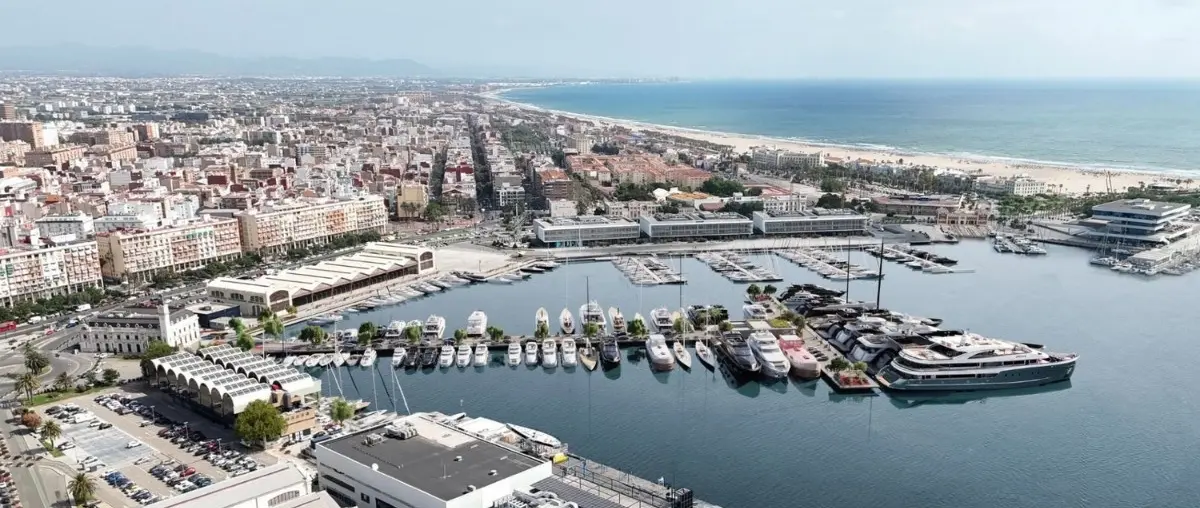
Marina Port Valencia is renewing its wastewater collection system nearly two decades after the original equipment was installed for the 2007 America’s Cup. Engineering specialist FLOVAC has completed the first stage of a phased upgrade, with one renovated vacuum station now operational and work on two more stations planned.
The project demonstrates how marina systems age even when berth facilities remain visually attractive. For owners of cruising yachts, reliable wastewater disposal is a fundamental shore service that influences practical maintenance, environmental compliance and confidence during a longer stay.
How the vacuum system works
The marina’s network uses central vacuum stations to create suction through a pipe system connected to vessel pump-out points and drainage from shore buildings. Wastewater can then be moved through the system without depending on gravity-driven gradients along every section of pipe.
FLOVAC also uses air-operated collection valves, which can work without a dedicated electrical supply at each discharge location. That arrangement can simplify some elements of shore infrastructure, though central pumps, controls and maintenance remain essential to dependable operation.
For smaller luxury yachts, pump-out facilities reduce the temptation to discharge wastewater in environmentally sensitive or restricted waters. They can also make a busy marina more convenient for boats without extensive onboard waste holding capacity, although individual hose fittings and service procedures must still be checked.
A planned three-station upgrade
According to the 12 October announcement, the first vacuum station has returned to operation after refurbishment. FLOVAC intends to begin the second station’s renewal before the end of 2026, while the third station is scheduled for a later stage that has not yet been given a precise completion date.
This staged approach can help operators maintain some functionality during engineering work, although the extent of temporary disruption for individual moorings has not been detailed publicly. Captains planning pump-out services should therefore contact the marina before arrival, particularly while the later stages are under way.
The existing system was built to serve a prominent international sailing venue and now supports a broader waterfront mix of boats, yachts and buildings. The replacement programme is intended to maintain its reliability as the original equipment reaches an age at which major component renewal is increasingly important.
Why invisible systems matter to yacht owners
Wastewater treatment and transfer may not feature prominently in marina marketing, but a failure can affect berth availability, local water quality and the experience of visiting vessels. Preventive upgrades are consequently an important part of the investment required to keep a mature marina competitive.
Marina managers need to consider the cost of pipes, access chambers, pumping equipment and staff training alongside more visible improvements such as restaurants and pontoons. Owners, in turn, benefit when facilities provide clear rules and dependable service for handling blackwater and other waste streams.
The first completed station is a practical milestone in Valencia’s programme, not proof that the entire network has already been replaced. Further milestones and any effects on customer services should be confirmed with Marina Port Valencia as FLOVAC progresses through the remaining stations.