Cameras become part of a boat monitoring ecosystem
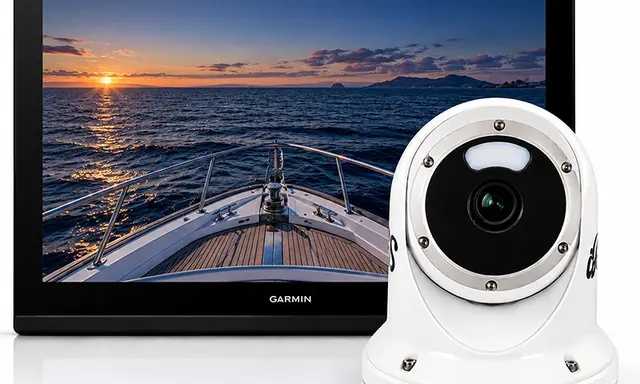
Vanemar has presented wireless security cameras as the latest addition to its connected boat monitoring platform, during the International BoatBuilders’ Exhibition and Conference held in Tampa from 6 to 8 October 2026. The company describes the development as an extension of a system already used to monitor equipment and security conditions while owners are away from their vessels.
The new cameras are rechargeable and include passive infrared motion detection, allowing a device to begin recording when movement is detected. Vanemar says footage and alerts are accessible through its mobile application alongside the existing data from connected sensors.
For an owner who keeps a cruiser in a marina for extended periods, having visual information can be useful when an entry or movement alert is triggered. However, the ability to view video should not be confused with a guarantee that an incident will always be recorded or that a remote alert will reach the owner without internet connectivity.
Wireless installation aims to reduce cabling
The manufacturer describes the cameras as easy to position, with an IP65 rating against dust and splashing water. Wireless installation can be appealing in finished interiors where running a cable would disturb joinery or require extensive dismantling.
Owners should nevertheless consider practical limitations such as the camera’s field of view, privacy, battery maintenance and local radio coverage. An IP rating does not mean equipment can be immersed in water or placed without regard to the temperatures and conditions expected aboard.
A professionally managed yacht may also need clear rules for who can view recordings and how crew or guest privacy is handled. Security technology should be installed with a defined purpose and appropriate access controls, not simply because cameras can be added easily.
NMEA 2000 brings alarms to the helm
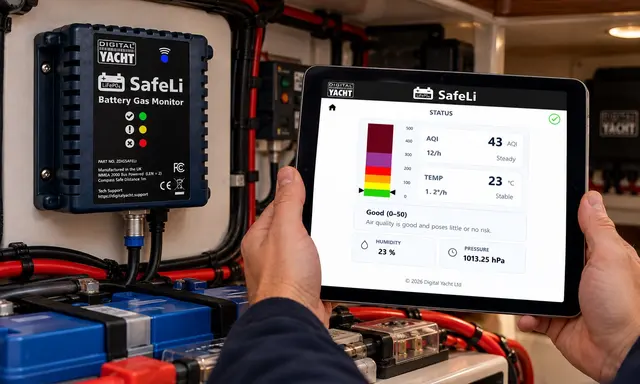
Vanemar’s monitoring platform is centred on a gateway, with GPS tracking, mobile connectivity and wireless sensors for smoke, bilge water, motion and entry. Its NMEA 2000 boat adapter can also receive compatible engine, tank and battery information and support related digital-switching functions.
The operator can configure selected alarms to appear on a compatible multifunction display rather than relying solely on a phone. That means a skipper at the helm may receive an important warning without turning away from their normal navigation screens.
The feature requires correct networking and configuration, and an alert on a screen cannot replace dedicated alarms or the vessel’s normal safety systems. It is especially important to establish which warnings will still function if a gateway, sensor battery or network connection fails.
What is new and what owners should check
The manufacturer’s IBEX announcement focused on the wireless cameras and the demonstration of its wider integrated monitoring features. Some NMEA display-alert capabilities had been previewed previously, so the show should not be treated as the first creation of the entire Vanemar platform.
The potential appeal extends from a private weekend motor yacht to a small professionally managed fleet, where staff may need to understand the condition of several boats without visiting each berth. Reliability, notification handling and battery maintenance become more critical as the number of monitored vessels increases.
Before purchasing, an owner should verify which sensors are included, any subscription charges, supported displays, data access and the requirements for storing video footage. The new cameras offer another way to understand conditions aboard, but their effectiveness will depend on a careful installation and sensible operating procedures.