Croatia extends ACI marina operating rights
Croatia's government has approved a longer concession framework for Adriatic Croatia International Club, the company generally known as ACI, running towards 2058. The decisions were adopted on 1 October 2026 and subsequently confirmed in the operator's announcement. ACI identifies twenty-two marinas covered by the extended system, a figure that should be distinguished from counts used in some secondary articles describing the wider marina network.
The news concerns legal operating periods and future investment opportunities, not a change of ownership of the Croatian coastline. ACI has managed a connected group of marinas across several parts of the Adriatic for many years. A longer framework may make expensive infrastructure projects more feasible, but it does not guarantee that every marina has begun building new facilities or changed the terms for existing berth holders.
A longer horizon beyond the previous expiry dates
Most of the concession arrangements were due to expire around 2030, leaving a limited period for capital investments to earn a return. The new decision adds approximately twenty-eight years. ACI gives 10 November 2058 as the end date for Umag, Rovinj, Pomer, Opatija, Cres, Supetarska Draga, Jezera, Vodice, Split and Dubrovnik, while other locations have slightly different dates.
The second group, including Pula, Rab, Žut, Skradin, Trogir, Milna, Vrboska, Palmižana, Piškera, Slano and Korčula, is listed through 31 December 2058. Šimuni has a stated date of 27 July 2058. These dates describe concession arrangements and should not be treated as the term of a yacht's annual berthing contract. Reservation rules and fees remain matters for each operating marina.
Why concession duration matters to marinas
Marina facilities require ongoing replacement and renewal. Pontoons, power systems, water supplies, berthing equipment and sanitary areas face continuous exposure to salt, movement and demanding weather. Modernising a major installation can involve expenditure that takes years to recover. Short remaining concession terms may make an otherwise useful project commercially difficult, especially if the operator cannot be confident of managing the asset for long enough.
Croatia's transport ministry explained that extending operating periods creates a more practical basis for planned improvements. The decision is not itself a building permit, however. Detailed works still need engineering assessments, investment decisions and any required environmental authorisations. For owners and captains, the eventual value lies in facilities that work reliably, not merely a longer date printed in the operator's legal documents.
A network of coast and island destinations
ACI's facilities serve several distinct areas of the Croatian Adriatic, including Istria, Kvarner and Dalmatia. The network includes city marinas, island locations and sheltered sites used by cruising yachts travelling between mainland ports and archipelagos. Its size allows owners to encounter the same operator along different stages of an itinerary while still experiencing the particular character of each destination.
That geographic reach should not be confused with identical facilities. Individual marinas differ in depth, berth dimensions, seasonality, fuel access and shore-based services. A berth that suits a vessel in Rovinj may not correspond to a suitable place in a small island harbour. Navigators should check the marina's current technical information and local approach guidance rather than rely on a system-wide announcement.
Proposed investment across the system
Croatian government material accompanying the extension discusses approximately €139.5 million of planned future investment in the marina network. The figure forms part of the longer-term development case, and it should be understood as a proposed programme rather than money already spent. Officials describe works associated with maintaining, modernising and improving the infrastructure that supports nautical tourism along the coast.
Examples in the regulatory material include renewing worn piers and mooring equipment and improving energy, water and wastewater systems. Such projects can influence safety, operating efficiency and environmental performance, but their detailed specifications and completion dates vary. ACI has not announced that each individual project covered by the investment plans was completed when the concessions were extended.
Rovinj shows an established marina facility
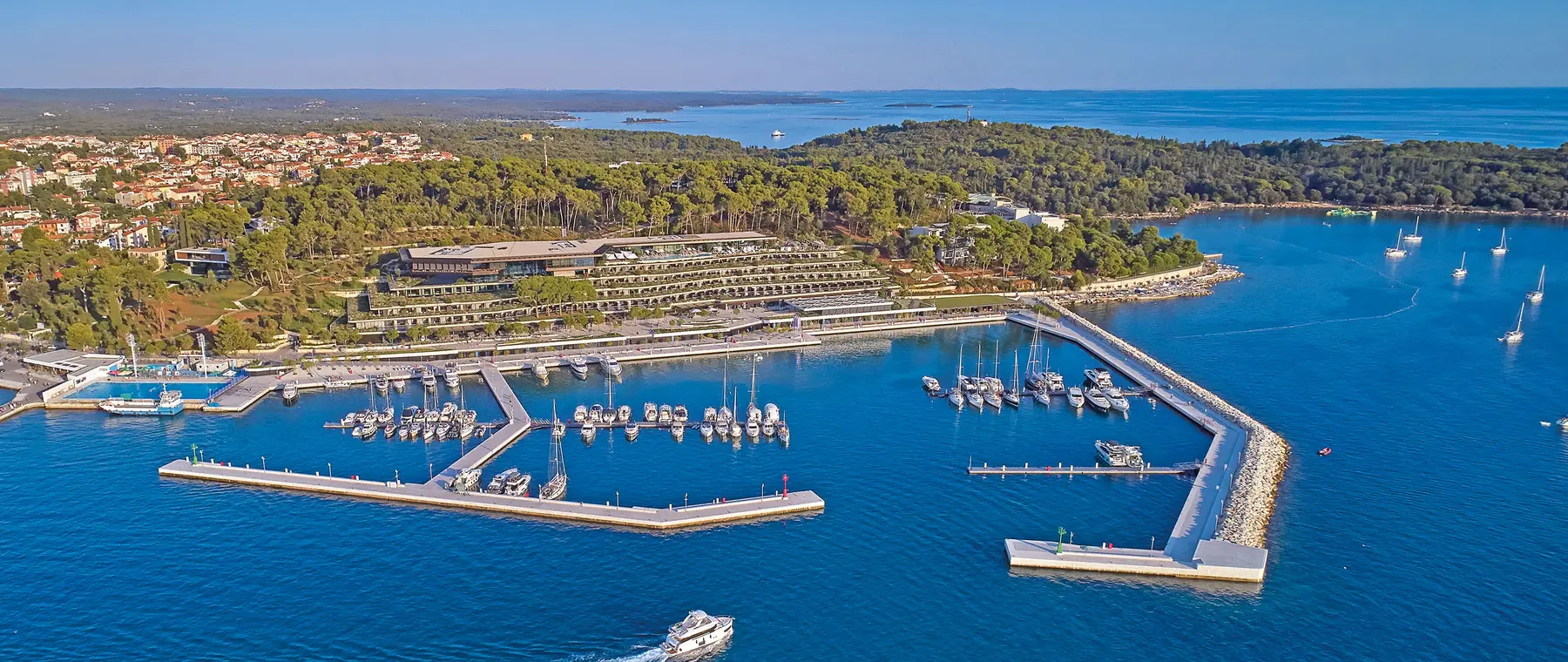
ACI Marina Rovinj is among the named locations. It lies beside the historic town on the Istrian coast and has already undergone a large reconstruction, which the operator says was completed in 2019. The modern marina combines berths with land facilities and looks towards the old town and its waterfront. Aerial imagery of Rovinj illustrates the scale of an existing, developed ACI site.
The photograph used for this report depicts Rovinj as an established facility, not construction taking place after the October 2026 decision. The difference matters when evaluating a new investment announcement. Owners considering a call at Rovinj should check published daily and annual berth limits and the services currently offered, because even one marina may apply different restrictions to different booking categories.
Environmental rules still apply
Marine infrastructure works take place in sensitive coastal settings where water quality, seabed habitats and public access need consideration. The Croatian government's supporting papers discuss environmental constraints and the need for careful planning around technical upgrades. More efficient consumption of water and electricity, modern sanitation and the replacement of deteriorated equipment are among the areas considered in the long-term investment case.
None of this means that a concession extension exempts an operator from national rules or grants permission for every contemplated alteration. Projects must proceed through applicable procedures. Their eventual impact would need to be judged from actual designs, approvals and performance, rather than inferred from an ambition to modernise the network or from a promotional description of sustainability.
What boat owners should watch next
ACI describes the decision as an opportunity to plan a new development cycle and maintain its role in Croatian nautical tourism. The immediate visitor experience is unlikely to change simply because the future concession date has moved. Booking a berth still involves checking the marina's opening period, dimensions, availability and price for the vessel and dates required.
The meaningful milestones will be the operator's detailed project announcements and the completion of improvements at individual locations. Captains and managers can follow those developments when planning Adriatic itineraries over future seasons. The October 2026 agreement establishes a longer horizon for maintaining and investing in twenty-two existing marinas, rather than announcing a new marina or immediate capacity across the entire network.