Bering's first aluminium catamaran is delivered
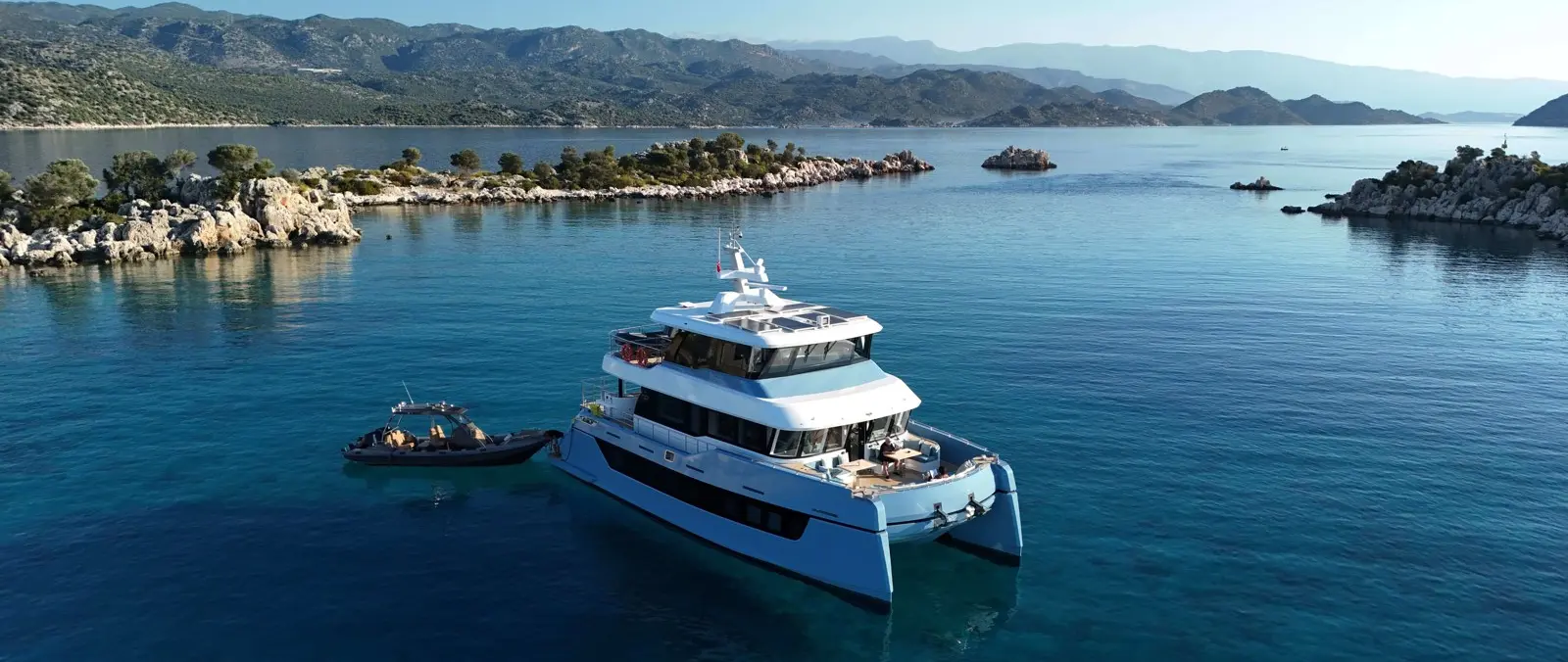
Bering Yachts has published a detailed walkthrough of its first BC60 expedition catamaran, already delivered and afloat. The 18.9-metre yacht marks the builder's effort to bring the autonomy of its larger expedition vessels to a twin-hulled platform.
The BC60 is not presented as a high-speed leisure catamaran. Founder Alexei Mikhailov says the priorities are reliable systems, quiet running and the ability to remain self-sufficient during an extended passage.
A wide but relatively shallow explorer
Bering lists an 8.6-metre beam and approximately 1.58 metres of draft, with aluminium construction throughout the vessel. Its broad platform creates generous living areas, while the shallow draft may be useful in carefully selected anchorages.
An owner should remember that beam matters as much as draft for marina planning. Wide vessels may need special berths and handling procedures, particularly in places designed around narrow monohulls.
Fuel and water for long distances
The shipyard reports more than 13,500 litres of fuel and an estimated range exceeding 3,500 nautical miles at eight knots. Its fresh-water capacity is about 3,000 litres, with grey- and black-water tanks of approximately 1,500 litres each.
These are published design and operating estimates, not an unconditional range guarantee. Weather, displacement, equipment use, hull condition and reserve policy all influence the practical endurance of a passage.
The main saloon and owner's accommodation
A central saloon includes a full helm station and extensive outward visibility, while the professional-style galley is arranged around the working space. This arrangement suits passengers who expect to spend substantial time aboard rather than use the boat only for afternoon trips.
The owner's cabin occupies one hull with a walk-in wardrobe, panoramic glazing and a generous ensuite. Two guest cabins in the opposite hull also have private bathrooms, offering some separation between sleeping and shared spaces.
Room for crew and provisions
The yacht provides a dedicated crew cabin, laundry areas and additional refrigeration and pantry storage. These details support longer journeys when provisioning opportunities can be limited and maintenance is managed aboard.
The crew arrangement and storage capacity should be assessed together. Owners may value independent operation, but professional assistance and the correct technical spares can be particularly important in remote cruising areas.
Machinery spaces beneath the living areas
The deep hull sections have a two-level machinery layout designed for access to engines, generators, watermakers and wastewater systems. Bering says the arrangement also helps keep machinery vibration and noise away from the main living rooms.
A large engine room is a practical luxury: technicians can inspect critical systems more easily, and regular servicing need not require disturbance throughout the accommodation. A buyer should still verify accessibility on the actual hull.
An enclosed flybridge for multiple uses
Above the main deck is an enclosed upper-deck lounge with panoramic visibility, a bar, refrigeration and a day bathroom. Bering suggests the area could work as a second salon, office or fitness space.
The flexibility matters to owners who may live aboard for weeks. The most suitable arrangement depends on how frequently passengers work remotely, entertain guests or require privacy away from the main deck.
Comfort is the operating goal
The builder highlights quiet running at displacement cruising speeds rather than quoting a high top speed. The combination of aluminium hulls, machinery separation and extensive storage is intended to make long passages more comfortable.
Prospective owners should compare the BC60 with conventional motor yachts on the basis of intended route, crew arrangements and maintenance access. Bering's walkthrough gives a better picture of the first hull, but final details of another boat must be confirmed separately.