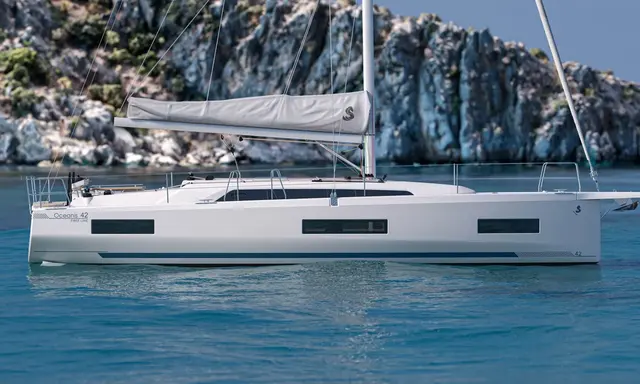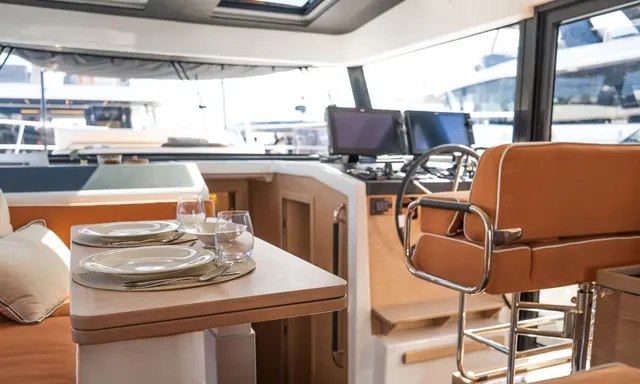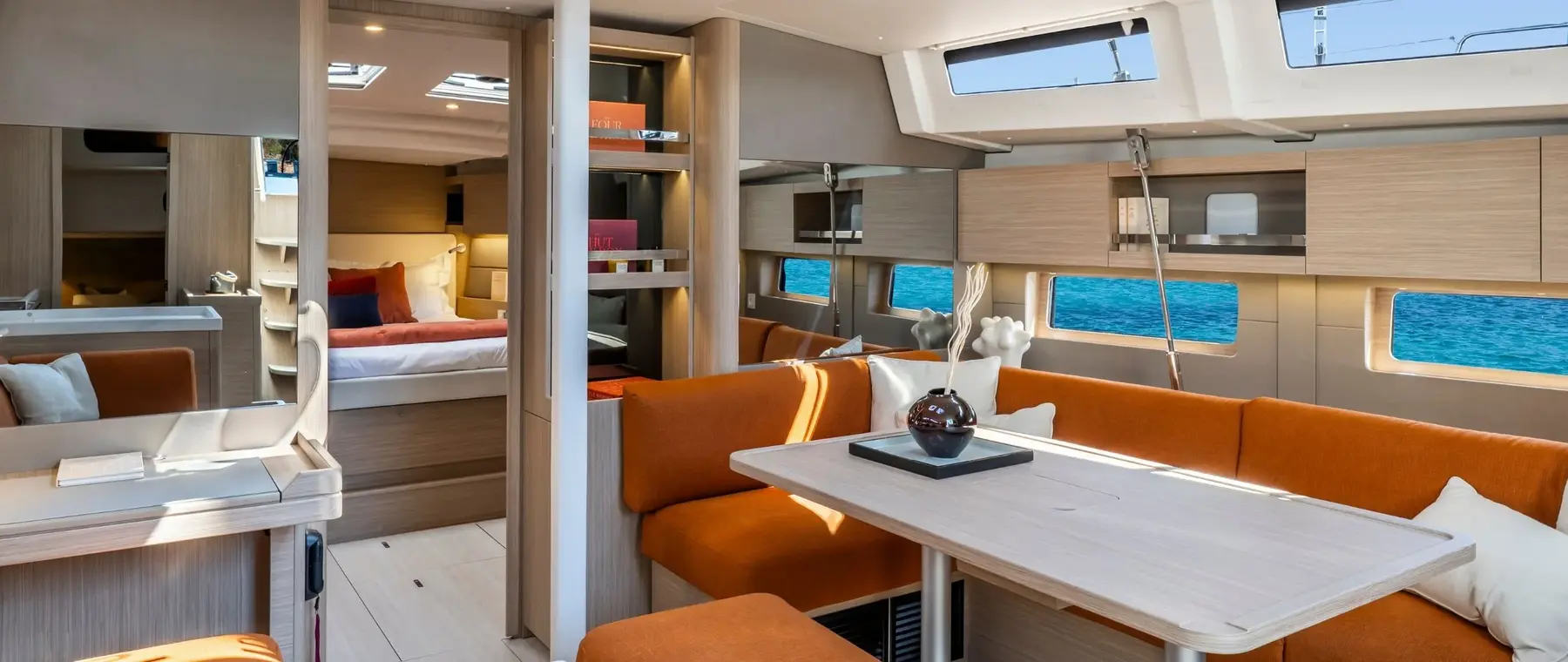
Beneteau has refreshed three of its smaller Oceanis cruising sailboats for the 2026 season, concentrating on materials, finishes and standard equipment rather than introducing completely new hulls. The Oceanis 30.1, 34.1 and 37.1 receive revised interiors and updated specifications intended to make the established models feel more contemporary without changing the basic qualities that built their market position.
The update was announced on 31 August, almost 40 years after the first Oceanis range appeared in 1986. That longevity gives Beneteau a different challenge from a start-up brand: it needs to keep familiar production models fresh while avoiding unnecessary redesign that can increase complexity, cost and risk for owners.
Interior materials take centre stage
The most visible changes are inside. Beneteau has revised the selection of wood finishes, flooring and upholstery, including Alpi sand-coloured oak panelling, Nordic Teak or brown-oak laminate floors and a new Noah upholstery collection.
Three coordinated interior atmospheres—Ivory, Sunset and Pacific—are intended to give owners a clearer choice of mood rather than a long list of unrelated finishes. The approach reflects a broader production-yacht trend in which builders use curated material packages to offer personalisation while retaining the efficiency and quality control of series manufacturing.
Refinement without changing the successful formula
Beneteau is explicit that the 30.1, 34.1 and 37.1 keep the features that have already contributed to their success. That matters because these are not concept yachts; they are practical cruising boats expected to work for private owners, charter users and families who may value familiarity and resale confidence as much as novelty.
Updating perceived quality through touch points, colour balance and lighting can therefore be more useful than changing a proven deck or accommodation arrangement. Small material decisions have an outsized effect on how a compact yacht feels because owners spend so much time close to cabinetry, flooring, seating and work surfaces.
More equipment moves into the standard specification
The refresh is not purely cosmetic. Beneteau says several items that were previously optional are now included as standard, with the aim of offering better-equipped yachts at the base configuration and reducing the gap between headline pricing and the specification many owners actually choose.
That is an important commercial point in the production market. Buyers comparing boats often face option lists that can change the real purchase price substantially, so moving popular equipment into the standard package can make the proposition easier to understand and simplify ordering for both customers and dealers.
Oceanis evolves as the wider range changes around it
Beneteau's current sailing portfolio is expanding elsewhere with new-generation Oceanis 42, 47 and 52 models, while the Oceanis Yacht line continues at larger sizes. Refreshing the 30.1, 34.1 and 37.1 allows the company to keep the entry and mid-size end of the family visually aligned with newer products without replacing every model simultaneously.
That staggered approach is typical of mature production ranges. It spreads development cost and factory disruption while giving existing platforms a longer commercial life, provided the builder can keep design details, equipment and perceived quality in step with customer expectations.
For buyers, the practical result is a more polished version of three known cruising boats rather than a radical change of direction. Owners who already understand the Oceanis concept gain updated materials and a stronger standard specification, while new customers see interiors that better reflect the current Beneteau design language. The 2026 refresh therefore looks less dramatic than a world premiere, but it is exactly the kind of incremental product work that can determine how competitive an established series remains between major model launches.
Small yachts make finish choices especially visible
On a larger yacht, owners can experience several distinct interior zones, but on a 30- to 37-foot cruiser the same joinery, upholstery and flooring are constantly within view. That makes colour temperature, texture and perceived quality unusually important, because a relatively small change can alter the character of the whole accommodation rather than only one cabin or saloon area.
Beneteau's three coordinated schemes therefore serve a practical as well as aesthetic purpose. They allow buyers to personalise the atmosphere while keeping combinations under factory control, which can reduce the risk of mismatched finishes and simplify replacement parts later. In a price-sensitive part of the market, that is a more scalable route to individuality than opening a long list of bespoke material choices that would slow production and increase cost.