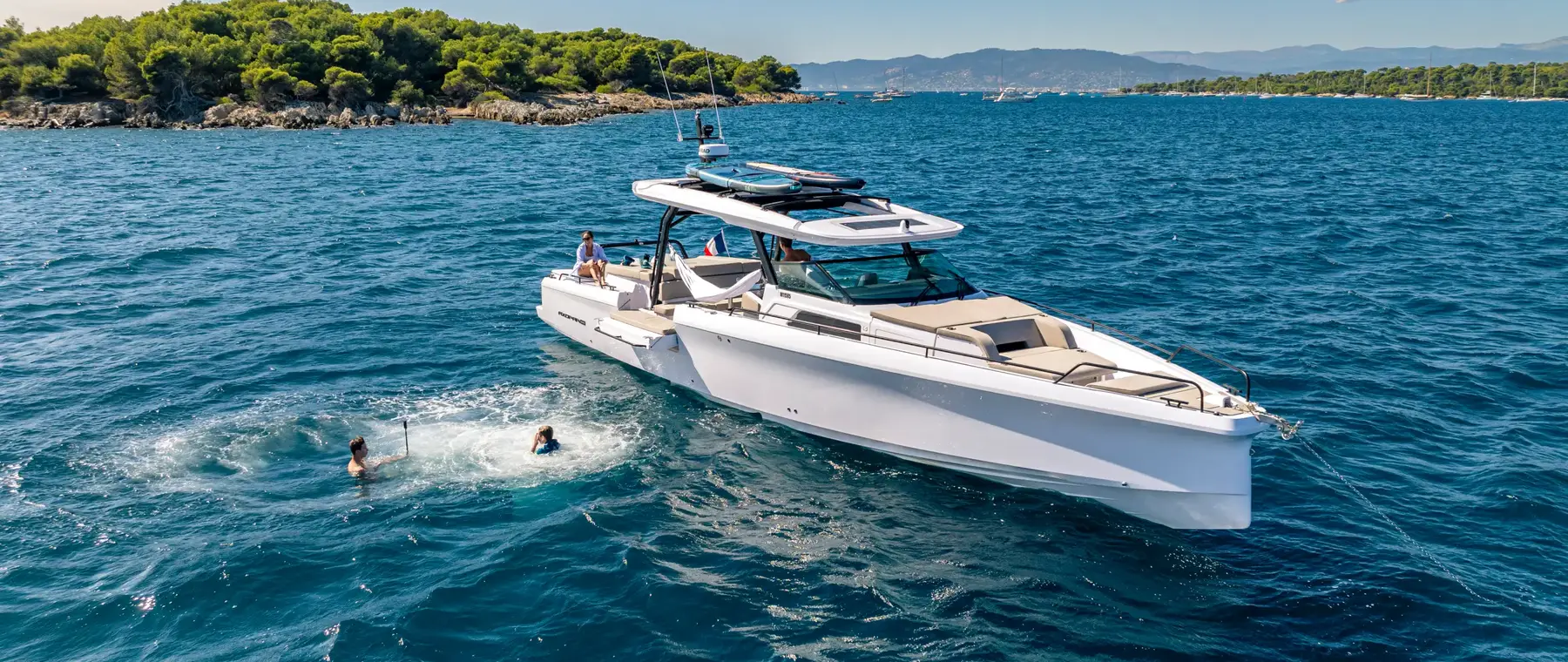
The design story starts below the waterline
Axopar says every one of its boats begins with the hull rather than with interior styling or optional equipment. The new Hull of Fame display was created to make that philosophy visible, showing visitors how the shape below the waterline influences handling, efficiency, comfort and confidence at the helm.
The exhibition is built around scale models and explanatory material rather than a simple branding installation. Axopar's aim is to show owners why apparently small details in chine geometry, bow shape and step placement have a large effect on how a boat behaves underway.
Twin steps are only part of the formula
The company's hulls combine a sharp-entry bow, pronounced forward chine, a second chine and twin steps. Those elements are designed to work together rather than as isolated features, balancing lift, spray control, efficiency and predictable behaviour across different speeds and sea states.
For owners, the practical result should be judged in the way the boat accelerates, turns and remains composed rather than through any single technical specification. Axopar argues that the hull is the foundation on which every other aspect of the boating experience depends.
More than 7,600 boats share the philosophy
Axopar says more than 7,600 of its boats have been sold worldwide since the first Axopar 28 appeared in 2014. Over that period, the company has applied the same hull-first philosophy across a growing family of models while continuing to revise geometry and construction as the range develops.
The scale of that fleet gives the design approach more weight than a one-off concept exercise. It also means the brand has accumulated a large amount of real-world owner and dealer feedback that can feed into later generations of hull development.
Engineering becomes part of the buying conversation
The Hull of Fame shifts attention away from the visible furniture and styling that often dominate boat-show presentations. By putting underwater engineering on display, Axopar is encouraging buyers to ask how a boat is meant to drive and why certain design choices were made before focusing on optional extras.
That emphasis is particularly relevant for performance-oriented owner-drivers, who may spend much of their time at the helm rather than being carried by professional crew. It turns hull design from an abstract technical subject into a more understandable part of the purchase decision.
Official sources: www.axopar.com.