Spanish yachtbuilding returns to Florida
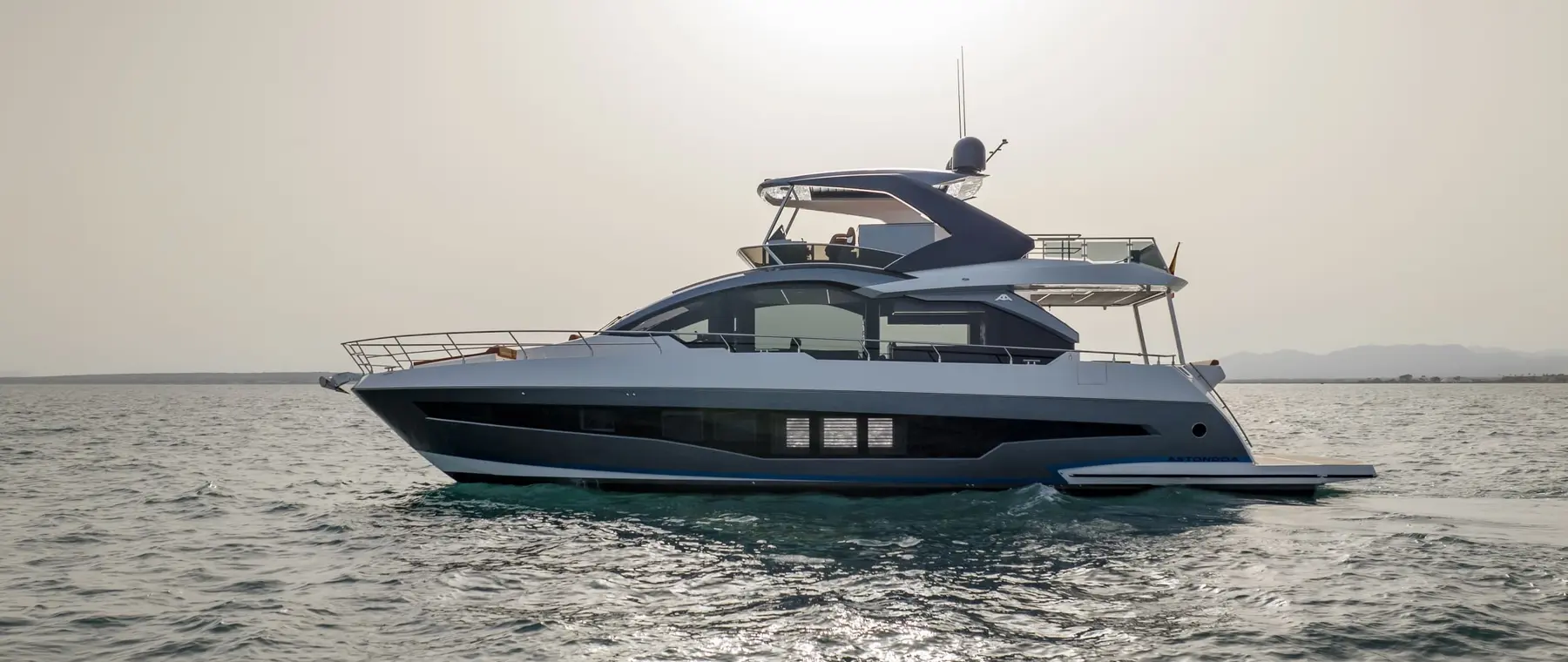
Astondoa’s 66 Flybridge is represented in the 2026 Fort Lauderdale International Boat Show fleet, offering another perspective on the luxury cruising yacht at around 20 metres. The Spanish shipyard has long used this model to illustrate how customisation and usable space can coexist with sporty performance. Its appearance is an opportunity to assess a developed design against newer options from other builders.
This is not a claim that the 66 Flybridge is making its world debut in 2026. The model has an established history, and its relevance at the current show lies in understanding how the layout works for owners who want the flexibility of either self-operation or professional crew support.
A remarkably flexible flybridge
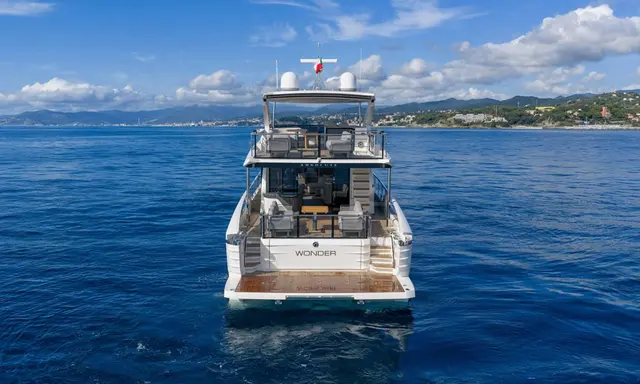
The builder describes an extensive upper deck that can be adapted with seating, dining, sunlounges and a covered helm area. A retractable sunroof and outdoor galley are among the principal design choices. The result is a space intended to remain useful during varied activities rather than serve exclusively as an additional navigation station.
Customisation is most valuable when it is tied to a specific ownership programme. A family might prioritise shade and dining, while an owner regularly entertaining guests could prefer a more open layout. Changes to furniture and equipment should be considered together with crew movement, weight and the positions of safety gear.
Four staterooms across a compact yacht
The 66 Flybridge’s published accommodation consists of four cabins serving up to eight overnight guests, supported by three bathrooms and a separate crew cabin. This is a considerable interior commitment within a yacht of approximately 20 metres. Astondoa’s use of large hull windows is intended to make the lower-deck spaces feel brighter and more comfortable.
Prospective buyers should check the precise configuration on the vessel being viewed. A layout with four cabins may have different storage from a three-cabin alternative, and convertible berths can change how the rooms are used. Good access, ventilation and sound insulation are more important over time than an impressive cabin count alone.
A bow area planned for social use
Ahead of the wheelhouse, the design uses a Portuguese-bridge lounge with a table and a forward sunpad. A retractable Bimini is intended to provide shade. This gives guests another outdoor destination and helps distribute people around the yacht when cruising or relaxing in calm anchorages.
Forward lounges need particularly careful consideration because movement and wind exposure can be more pronounced in this part of a motor yacht. The crew should establish when the space may be occupied and how cushions and shade systems are secured before departure. Beautiful exterior arrangements must be operated within sensible limits.
A 20-metre hull with substantial beam
Astondoa’s current product information identifies a length overall of approximately 20.12 metres and a maximum beam of around 5.3 metres. The designer’s emphasis on beam and glazing is evident in the saloon and guest-cabin arrangements. Fuel capacity is listed around 3,600 litres, with approximately 1,000 litres of fresh water.
Quoted dimensions and tankage should be checked against the actual year and specification because earlier brochures show some variation. Draft, loaded displacement and equipment choices all affect operating plans. A buyer interested in smaller Mediterranean marinas should obtain accurate vessel-specific measurements before committing to a berth.
Engine options and published performance
The yard identifies Volvo Penta IPS and MAN diesel arrangements across the published equipment material. It quotes maximum speed in the region of 30 to 31 knots and cruising speeds in the mid-twenties, depending on the actual configuration. A 300-nautical-mile range also appears in the builder’s published information, but it must be interpreted with the conditions used for the estimate.
No prudent captain should plan a passage at the full brochure range without appropriate reserves. Fuel use depends on engine selection, load, speed, water conditions and maintenance. Buyers should request performance records for the specific yacht and assess close-quarters manoeuvring as well as open-water handling.
An established design with practical questions
The 66 Flybridge’s main attraction remains the quantity of usable space within a relatively compact overall length. Its broad flybridge, four-cabin option and forward social deck can make a strong package for a family seeking regular luxury cruising. The design also offers room for an owner to shape the final arrangement around personal priorities.
At Fort Lauderdale, the model can be assessed in the company of several newer yachts with different propulsion and deck concepts. A professional survey and careful study of the actual equipment are essential. The right comparison is not purely age or headline speed, but the usefulness of the entire vessel for its intended owner.