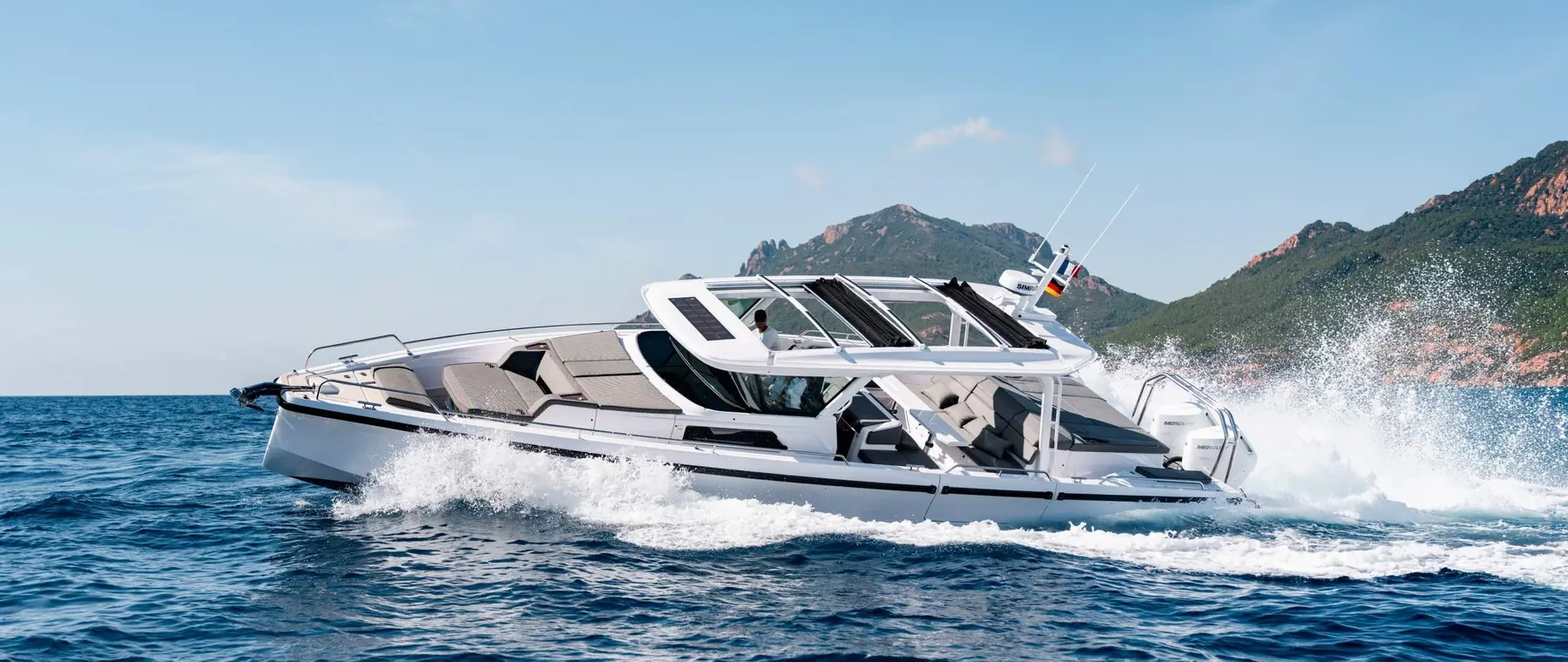
A different approach to an open luxury cruiser
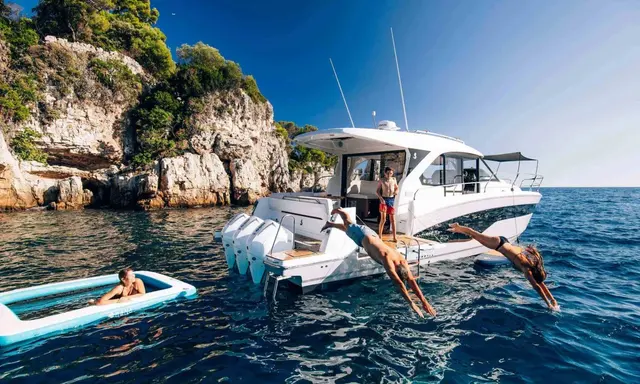
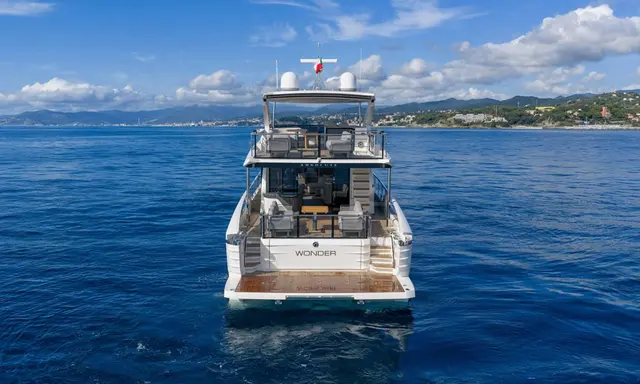
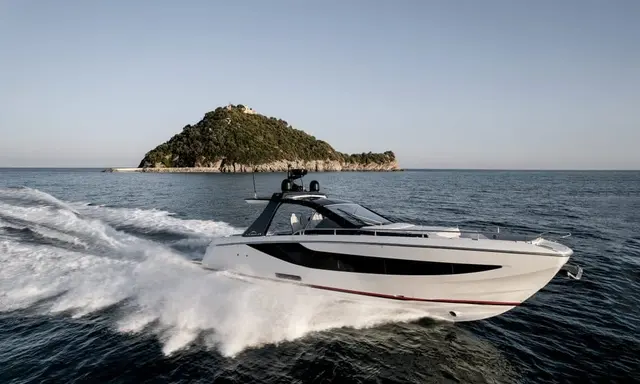
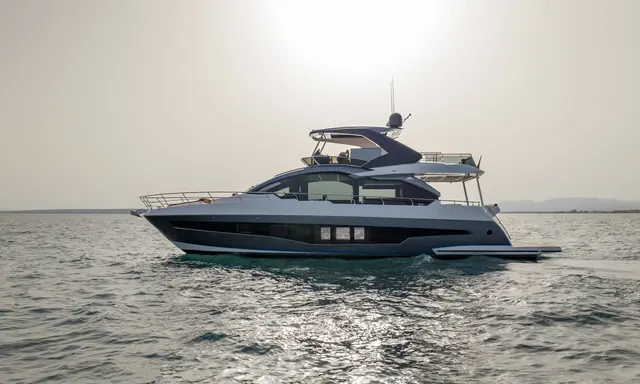
Axopar is displaying its 45 Cross Top at the 2026 Fort Lauderdale International Boat Show, alongside a wide selection of smaller Axopar and BRABUS Marine craft. The 45 Cross Top belongs to the Finnish builder's largest current hull family and is intended to preserve an open feeling around the cockpit without leaving the helmsman fully exposed. Its presence at the Florida show is a chance to compare this layout directly with the enclosed 45 XC and the more open Sun Top.
The boat is not being presented here as a brand-new worldwide debut. Its relevance is the way the Cross Top roof and deep windscreen address the everyday problem of enjoying warm-weather passages while retaining sensible shelter when the wind rises. A dockside walk-through can reveal more about that compromise than the headline speed figure alone.
A hull in the fourteen-metre class
Axopar publishes an overall length of 13.91 metres excluding engines and a beam of 4.11 metres. The model uses a twin-stepped, 22-degree deep-V hull and glass-reinforced plastic construction. It has a stated fuel capacity of 1,390 litres and a draft to the propellers of approximately 1.2 metres, figures relevant to both cruising arrangements and marina access.
The choice of length measurement deserves attention because outboard engines can add to the practical berth footprint. Owners should ask a marina to account for their exact propulsion and boarding arrangement before reserving space. The twin-stepped hull also merits a careful handling demonstration, particularly at the lower speeds and in the turns that make up most ordinary harbour manoeuvring.
Roof and windscreen as functional equipment
The Cross Top design uses a protected driving area with a wraparound, reverse-angle windscreen and electrically operated canvas roof sections. The intention is to move between open-air cruising and a more sheltered environment without enclosing passengers in a conventional fixed saloon. Around the helm, paired navigation displays and integrated controls keep the navigation task central.
Sun and spray can affect driver concentration as much as comfort. A useful evaluation should include seated and standing visibility, operation of the roof in a breeze and access to the side decks with the cockpit occupied. Ask how the fabric systems are maintained and where water drains after a shower. Protection matters only when it is quick to deploy and simple to use.
Outboard choices and performance claims
The manufacturer's current technical sheet lists different engine installations, including twin 425-horsepower and triple 300- or 350-horsepower outboard options. It quotes a maximum speed up to 50 knots and, for a particular triple-300 installation at 25 knots, a cruising consumption figure of 4.1 litres per nautical mile. Those numbers are not interchangeable between all engine and loading combinations.
Buyers should request a performance sheet for the precise power package being quoted and check the fuel burn at their likely travelling speed. A comfortable cruise speed can be very different from a model's maximum. Engine placement also affects boarding, noise and access to propellers, so the correct choice should reflect ordinary family use rather than the attraction of peak speed alone.
An adaptable cockpit for passengers
Axopar's layout includes a rear bench, wet bar and dining furniture, with a folding table that can be adjusted for different activities. The published standard equipment includes a drawer refrigerator, a sink and practical stowage around the seating. This allows the cockpit to function as a social space while leaving enough structure around the wheelhouse for passengers to feel secure underway.
Buyers should open the storage compartments and test how passengers move when the seating is occupied. The route to the stern matters particularly when guests are swimming, boarding or handling lines. Optional equipment can also change the practical layout, so the display boat's exact specification should be confirmed before comparing it with another 45-foot model.
Sleeping capacity and realistic trips
The manufacturer lists accommodation for two people in the normal arrangement, extendable to four with an optional aft cabin. That gives the yacht genuine overnight flexibility without turning it into a multi-cabin displacement cruiser. For couples who normally cruise alone, the additional space may be used differently from an owner who intends to take friends for a weekend.
Prospective buyers should inspect the access and ventilation of each sleeping area, as well as the location of the toilet and washing facilities. The important question is not simply how many berths exist but whether the crew can live comfortably with luggage, provisions and safety equipment aboard. A trial night in comparable conditions is often a useful final test.
What the Florida display can establish
At Fort Lauderdale, the 45 Cross Top can be judged against the 45 XC Cross Cabin in the same manufacturer fleet. The Cross Top's advantage may lie in its balance between a highly social main deck and a more controlled helm environment. Its performance potential is considerable, but the boat's true utility will come from seating, circulation and operating simplicity.
Visitors should ask the dealer to demonstrate the canvas roofs, helm electronics, engine service access and the aft cabin if fitted. A sea trial with a normal passenger load should follow the dock inspection. That process gives a more reliable basis for selecting the Cross Top than choosing purely by speed, appearance or a show-day equipment list.