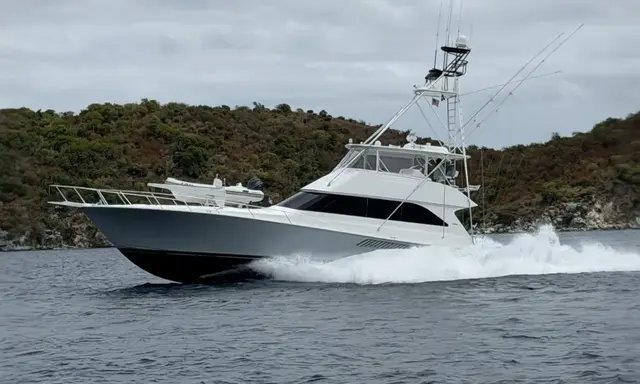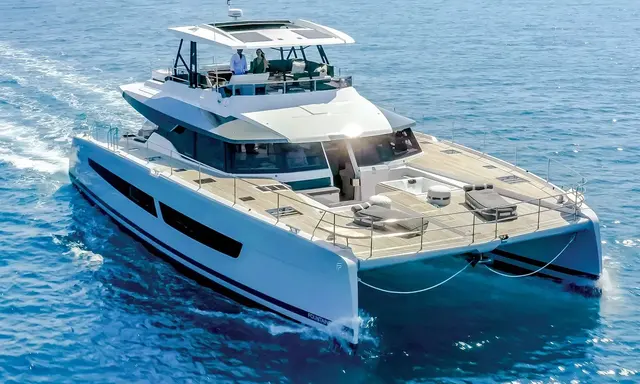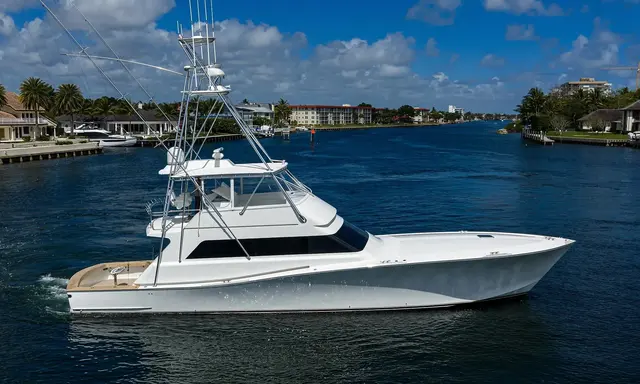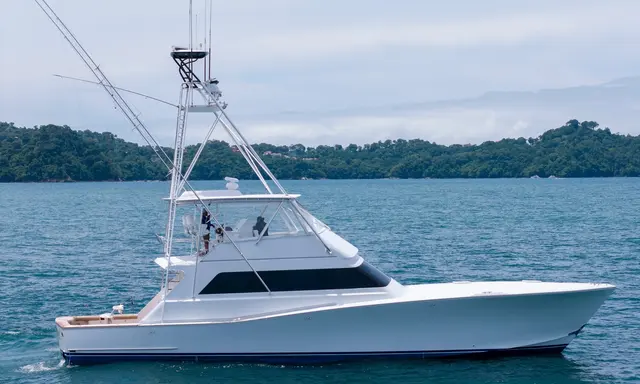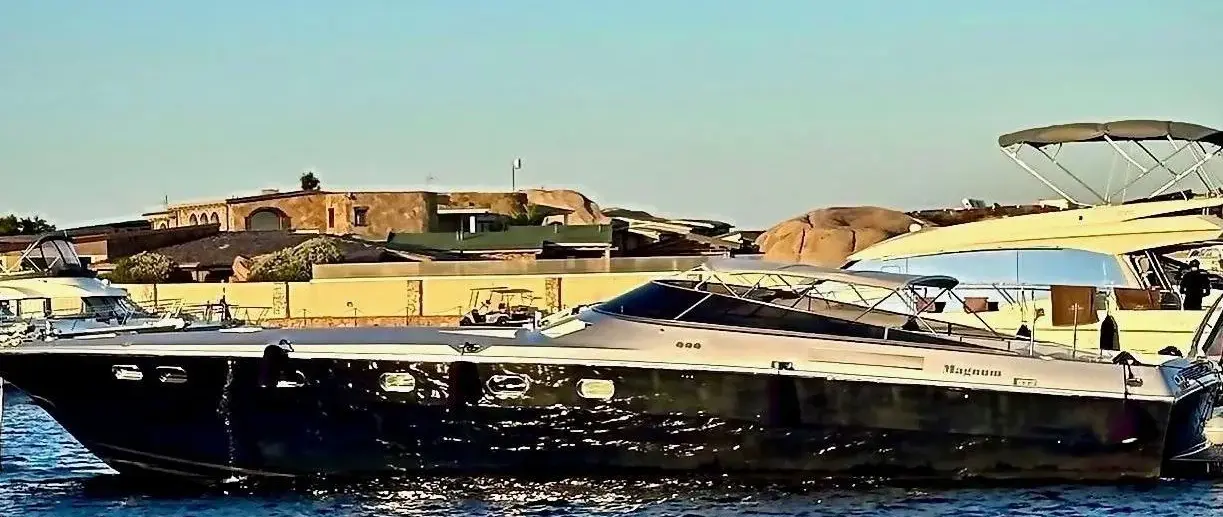
The restoration is the defining feature
The brokerage describes the Magnum as having undergone a complete restoration. On a yacht of this age, the quality and documentation of that work are fundamental because systems, structure and machinery condition matter more than the original launch year alone.
Magnum’s offshore styling remains distinctive decades after launch. The long foredeck, low profile and performance-oriented hull give the yacht a visual identity very different from contemporary flybridge cruisers.
MTU power supports 40-knot-plus performance
The listing records MTU engines, a cruising speed of around 35 knots and a maximum of approximately 43 knots. Those figures underline the model’s original purpose as a fast offshore yacht rather than a slow-displacement cruiser.
Fuel capacity is listed at roughly 5,200 litres across two tanks. That substantial volume supports high-output machinery and gives the yacht useful range despite its performance focus.
Three cabins keep the yacht usable for overnight cruising
The interior includes three cabins and four heads, allowing the Magnum to function as more than a day boat. While the layout is compact compared with a modern 63-footer, it provides enough accommodation for longer weekends and coastal passages.
Air conditioning, updated domestic systems and modernised interiors are typical priorities during a full restoration. Buyers should review documentation carefully to understand exactly which systems were renewed and when.
Fiumicino places the yacht close to central Italian cruising
The yacht is based in Fiumicino near Rome, with straightforward access to the Tyrrhenian Sea, Sardinia and the Pontine Islands. The area also offers established marine services for high-performance yachts.
The Magnum 63 appeals to a buyer looking for character and speed rather than maximum interior volume. Its rarity and restoration history give it a different market proposition from newer production yachts at the same length.
Official sources: www.denisonyachtsales.com.