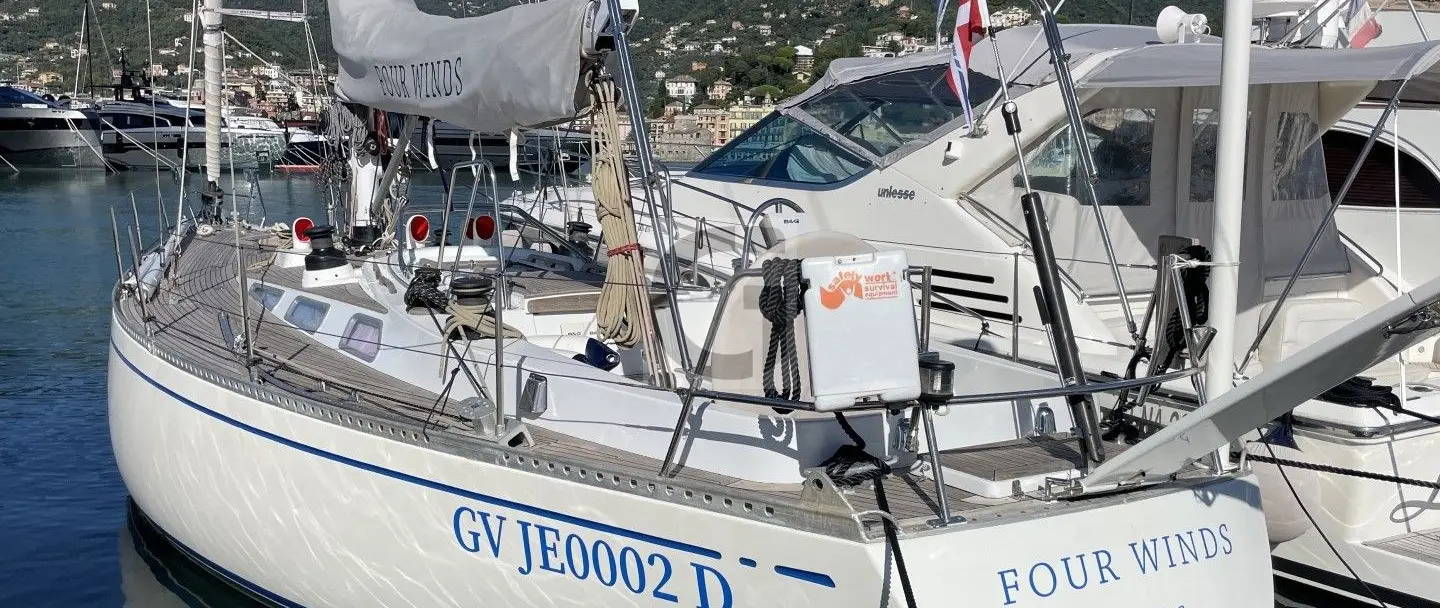
A classic Swan returns to the brokerage market
Grabau International has announced a fresh listing for FOUR WINDS, a Nautor Swan 44 dating from 1973. The yacht is offered at €220,000 with European VAT paid, according to the broker's 3 November 2026 announcement. The class is one of the recognised Sparkman & Stephens designs from Swan's early production era, with 76 hulls built between 1972 and 1975. FOUR WINDS is hull number 14. Its age is an important part of its identity, but the sale proposition rests equally on the considerable programme of work undertaken in recent years.
A yacht of this vintage should not be assessed as if it were a nearly new production cruiser. Materials, original structure and later alterations interact in ways that demand detailed inspection. At the same time, a carefully maintained classic can provide an ownership experience that appeals to enthusiasts of design history and traditional sailing. The broker's announcement gives potential buyers a detailed maintenance narrative, but an independent survey and access to invoices remain essential before making any assumption about present condition.
A long history under several names
FOUR WINDS was initially launched as FOUR WINDS II for an English owner. Grabau recounts later French and Italian ownership, including a significant interior refit after a 2001 purchase and subsequent changes of name. The vessel was known as MOHAWK for a period before returning to the FOUR WINDS name. In 2014 a Danish enthusiast began a major refit programme at Caffarena Boatyard in Italy. The current Italian owner acquired the yacht through Grabau in 2020 and continued the work while sailing in the Mediterranean.
This continuity of attention is relevant to buyers because extensive older-yacht projects can be difficult to evaluate without an understandable record of what changed and when. A narrative of dedicated ownership does not by itself prove that hidden areas are free of defects. However, invoices, photographs and service histories can make a survey more informative. A prospective purchaser should ask the broker for the documentation supporting the published list and clarify which recent improvements remain under any transferable warranty.
The 2026 and 2025 improvements
The current listing records a new carbon-fibre semi-battened mainsail from Millenium Sails in 2026, described as unused, together with a new autopilot actuator. Work in 2025 included a package of Harken Performa self-tailing winches, another mainsail, and new canvas protection including sprayhood and bimini. These additions can change the experience of handling a classic yacht, reducing some of the practical compromises associated with older gear while retaining the underlying Sparkman & Stephens sailing character.
The value of such equipment depends on installation quality, suitability for the rig and the demands of the intended crew. Buyers should confirm the exact sail inventory, condition and measurements, since a list can span several generations of sails intended for different conditions. Updated winches may improve control but need proper servicing, and a new autopilot actuator should be tested as part of a complete steering system. A recent component is only one part of a reliable working arrangement.
Machinery and navigation revisions
The broker reports a replacement Beta Marine 38-horsepower diesel engine and MaxProp in 2023. In 2024, work included B&G H5000 instruments, Halo+ radar, a Schenker watermaker, inverter and galley upgrades. Earlier additions included plotters, VHF, wiring attention and new standing rigging. These are material changes for a yacht originally delivered more than five decades ago. The modern equipment can improve comfort and practical operation, provided it has been integrated coherently with the yacht's electrical and mechanical architecture.
A buyer should distinguish refurbishment from total rebuilding. Machinery access, seacocks, tanks, wiring and hull structure all require careful attention even when visible electronics are current. The listing describes solid laminate glass-reinforced construction, a fin keel and skeg-supported rudder, which deserve a knowledgeable survey. The objective is to understand the yacht as she exists today, rather than make assumptions solely from her launch date or the number of items installed during later refits.
Accommodation and racing heritage
FOUR WINDS retains a teak interior with accommodation offered across cabins and the salon, and the broker mentions revised forward sleeping arrangements from earlier ownership. The published specification includes a watermaker, solar panel, heating and practical cruising equipment. These features may help make the boat comfortable for extended Mediterranean passages, but space and privacy will differ markedly from those of a contemporary wide-beam cruiser. Prospective owners should experience the accommodation rather than relying only on a berth count.
The yacht has also been active in classic Swan events. Grabau lists a second overall result at the 2023 Sparkman & Stephens Swan Rendezvous, along with earlier class honours. Racing results can demonstrate continued participation and an owner's investment in sail handling, although they are not a technical certification. An enthusiast may value the combination of pedigree, upgraded systems and eligibility for class gatherings. The appeal is strongest to buyers who genuinely want the character of an older offshore design.
Why this particular listing matters
The 3 November announcement brings FOUR WINDS back into view with a definite asking price and an unusually extensive catalogue of works. It should be treated as a new brokerage offering, not as a new yacht launch or an assurance of survey condition. The seller is described as moving to a larger yacht. Interested parties can approach Grabau for full particulars and negotiate inspection arrangements, including any checks needed for the intended flag and cruising programme.
For the smaller luxury sailing market, FOUR WINDS illustrates how owners can keep a historically important design in active use by investing steadily in equipment and maintenance. That approach can preserve sailing character while reducing some operational compromises, but it does not eliminate the obligations of classic-yacht ownership. The asking figure is best understood alongside technical condition, inventory and documentation. A successful purchase would match an informed enthusiast with a vessel whose strengths and responsibilities are equally well understood.