A Singapore auction explores the handbag as a collectible
The most desirable luxury accessories can carry stories far beyond a single season's wardrobe. A bag may reveal a distinctive leather, a rare colour combination, an unusual hardware choice or an important moment in a fashion house's design history. Sotheby's latest Singapore sale places those details at the centre of a curated selection rather than treating handbags as interchangeable fashion objects.
The Singapore Collectors' Edit: Rare and Collectible Handbags, curated with Nina Kaginda, opened online on 19 October 2026 and is scheduled to close on 28 October. The official catalogue contains 36 lots, spanning contemporary creations and older examples from major luxury houses. This is a preview of what is being offered, not a report on prices achieved after bidding ends.
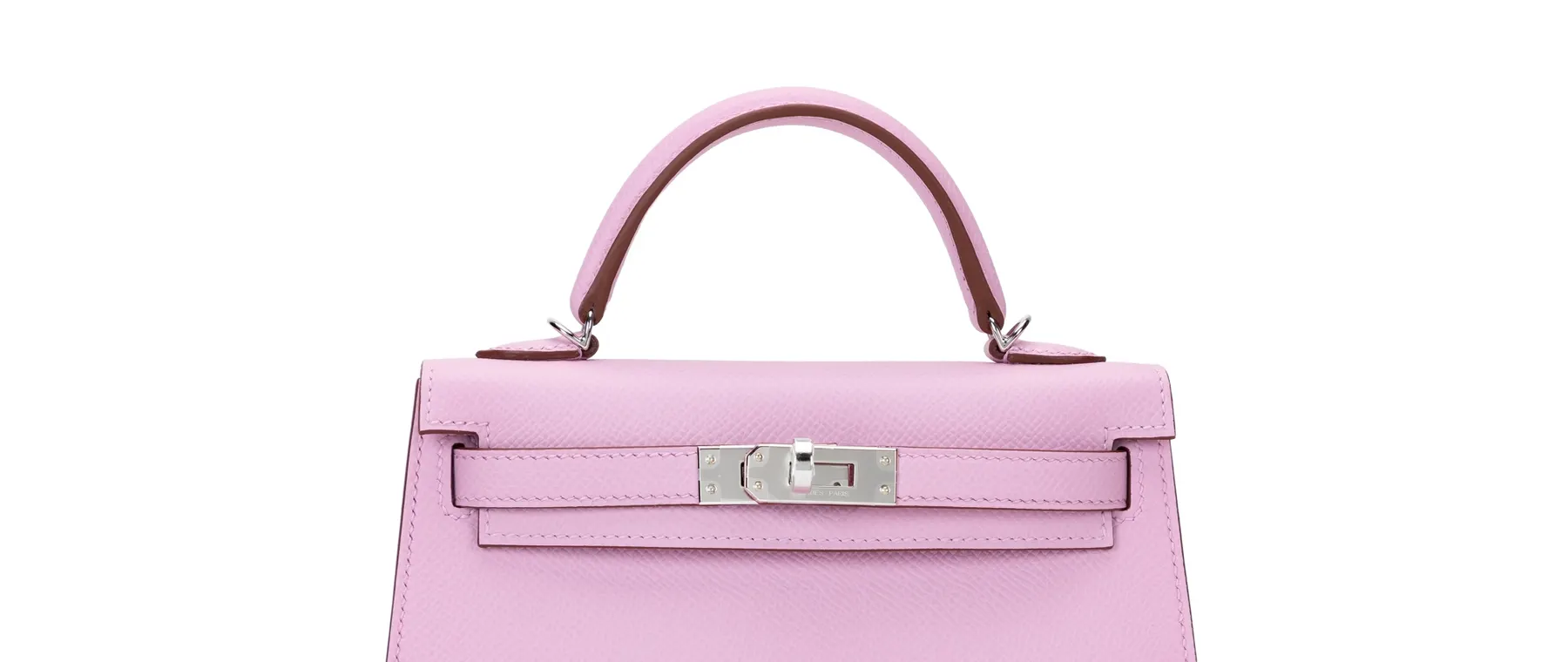
A miniature Kelly opens the selection
Lot 201 is a Hermès Mini Kelly II 20 in Mauve Sylvestre Epsom leather with palladium hardware, catalogued as a 2026 piece. The combination makes colour and scale the headline elements: a compact silhouette, a vivid shade and the cooler appearance of pale metal fittings. It demonstrates why two bags sharing a familiar shape can still make very different visual statements.
At the time of the published sale listing, Sotheby's placed an estimate of 24,000 to 32,000 Singapore dollars on that example. An estimate is the auction house's pre-sale expectation, not a guaranteed resale value or the figure a buyer will ultimately pay. The amount of any final invoice may also be affected by fees, taxes and other applicable charges.
The miniature format is an interesting collecting category in its own right. It offers less carrying capacity than a large travel bag but can work as an evening accessory or an expression of colour with an otherwise restrained outfit. Its attraction is as much about styling and craft as practical storage.
The catalogue ranges across leather and rare finishes
The next lot changes the mood dramatically: a white matte Niloticus crocodile Himalaya Birkin 25, dated 2013, with palladium hardware. Sotheby's lists a presale estimate of 130,000 to 220,000 Singapore dollars, underscoring the different scale at which some rare-material handbags are valued. That is an auction estimate for one specific lot, not a general price for all Birkin bags.
Other entries include a Rose Sakura Swift Birkin 25 from 2015, a fuchsia Porosus crocodile Birkin 30 from 2012 and examples combining contrasting colours and leathers through special-order configurations. Together they show how colour, material, year and construction can produce a highly varied catalogue even within a small number of recognised silhouettes.
Exotic-skin items involve considerations beyond design. Buyers should confirm the provenance and documentation provided for an individual lot and seek authoritative guidance on any restrictions relevant to shipping or importing it. The existence of a public auction listing does not establish that a particular material can be moved without controls across every national border.
Chanel brings a contrasting design language
The sale is not devoted solely to Hermès. Sotheby's includes Chanel Kelly-style bags, such as a pink quilted tweed example with aged-gold hardware and a white quilted calfskin version. Their presence introduces differences in texture, construction and the relationship between heritage styling and contemporary reinterpretation.
Tweed and quilted leather give a bag quite different surface qualities from the relatively structured finish of Epsom leather. A viewer might respond first to colour, but careful inspection moves on to stitching, the condition of edges, metal fittings and how the bag holds its form. Those details can be particularly important when comparing a used collectible with a recent piece.
The term 'Kelly' in a catalogue description should also be read in context. A Chanel Kelly-style bag is not a Hermès Kelly, and brand attribution is fundamental to an informed purchase. Describing an item's shape is useful, but it cannot replace the precise product identity documented by the auction house.
Vintage pieces and unusual commissions
Several entries reach into earlier decades, including a Hermès vintage Sac à Malice created around 1989 to mark the bicentenary of the French Revolution. Its contrasting colours and distinctive commemorative concept give it a story separate from the familiar everyday handbag. Other vintage Kelly examples in the sale are dated to the 1970s and 1980s.
These older pieces invite questions that do not arise in quite the same way with a new seasonal release. Wear, restoration, alterations and the survival of original packaging or documentation may affect both the object's appeal and the confidence a collector places in its history. A catalogue date also describes the auction house's attribution, not a warranty that an item has never been changed.
Special-order bags contribute another dimension. The initials HSS in several Hermès entries indicate special-order pieces associated with personalised configurations, but collectors should rely on the exact lot description when evaluating what was ordered and how it differs from ordinary production. General assumptions about scarcity are no substitute for documentation.
Why the online format changes the experience
Sotheby's has arranged the sale as an online event ending on 28 October 2026, with lots closing independently at short intervals according to the website. That means a buyer following more than one handbag needs to watch the specific closing schedule rather than assume the whole catalogue ends at a single instant. The platform also notes that closure times can change.
An online sale allows a wider audience to study the catalogue and its photographs, but it does not make the objects any easier to assess physically. A potential bidder should read condition reports, seek clarification on marks or restoration and confirm the precise dimensions of the bag. Colour reproduction may differ between displays, and a photograph cannot convey every tactile property of leather or fabric.
Financial discipline matters as much as enthusiasm. Bids, premiums, delivery costs and relevant taxes can turn a tempting estimate into a much larger total commitment. Prospective participants should check the current sale conditions and their own maximum budget before entering a competition for a desirable item.
Collecting for enjoyment and longevity
A fine handbag can be enjoyed in use, retained as a design object or treated as a part of a wider collection. Those are different aims, and the condition considered acceptable for occasional evening wear may not be the condition demanded by a buyer who wants an archive-quality example. Being clear about the purpose helps avoid collecting solely because a name is fashionable.
The Singapore selection illustrates how a relatively compact 36-lot sale can contain unusually different objects: a bright Mini Kelly, exotic-material Birkin models, textured Chanel bags and vintage commemorative pieces. It also shows why individual identity matters more than broad claims about a brand's investment potential.
The most thoughtful response to an auction catalogue is curiosity supported by verification. Asking how a bag was made, what survives of its history and whether its materials and proportions suit the owner's life can lead to a satisfying decision, whether or not that decision involves bidding. Sotheby's October event offers plenty to study before any sale result is known.