A focused collection within the London autumn programme
Sotheby’s Contemporary Day Auction on 16 October 2026 includes forty-one works on paper from the Duerckheim Collection. The group has been assembled by Count Christian Duerckheim over decades of engagement with post-war German art, and it is presented within a broader sale that also includes contemporary paintings and sculpture. The selection offers a concentrated way to explore the artists’ graphic practices.
The overall Duerckheim presentation comprises forty-four works, but three prominent Baselitz pieces are being offered separately in the Contemporary Evening Auction on 15 October. This division is worth noting because the group crosses different bidding sessions. Collectors should verify exactly which catalogue contains an object before planning a visit or setting a bidding limit.
German art represented through works on paper
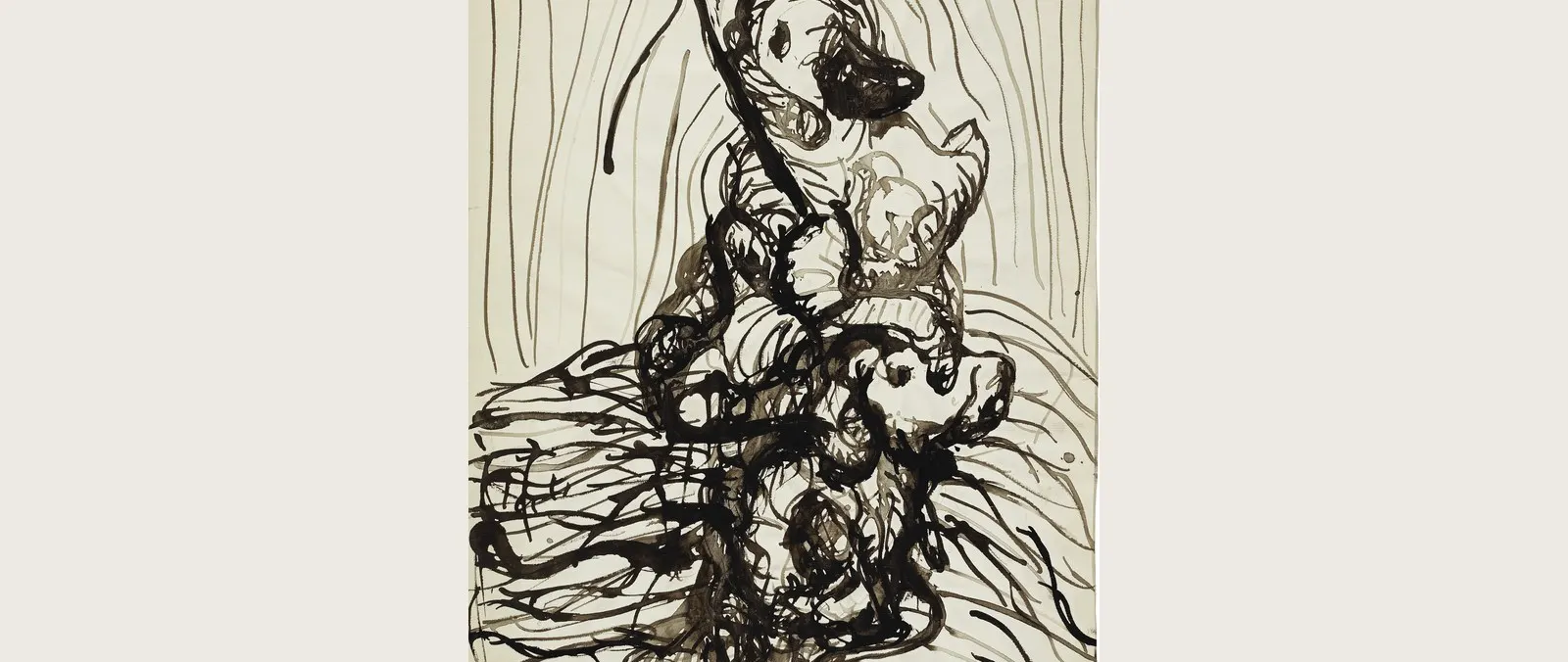
The day selection includes works by Georg Baselitz, Gerhard Richter, Sigmar Polke, A. R. Penck and Blinky Palermo. Sotheby’s lists Richter’s 2.1.1978 with a pre-sale estimate of £80,000 to £120,000, while Baselitz’s Ohne Titel (Bandit) is estimated at £100,000 to £150,000. Such figures indicate auction expectations, not sale outcomes or a ranking of artistic importance.
Works on paper can reveal direct experimentation with line, colour and form. An intimate drawing may show decisions that are less visible in an ambitious canvas, although a sheet should not automatically be labelled preparatory. Some works were intended as finished pieces in their own right. The collection encourages viewers to understand the purpose and materials of each work rather than treating paper as a single category.
The significance of provenance and continuity
Sotheby’s presents Duerckheim as a committed collector whose relationship with German post-war art extends across more than fifty years. A previous single-owner sale in 2011 drew attention to this collecting history and its influence on appreciation of German artists. The new group therefore matters as an ensemble as well as a set of objects available for separate purchase.
Provenance still needs to be examined at individual-lot level. An exhibition record, archival reference or invoice can explain a work’s journey, but documentation varies from object to object. Even where a collection has a prominent name, a purchaser should request the exact information available for the piece being considered. A distinguished collection history is valuable context rather than a substitute for due diligence.
Conservation responsibilities after purchase
Works on paper can be sensitive to excessive light, moisture and poor framing materials. Appropriate glazing, archival mounting and conservation advice may be necessary before display in a private residence. A collector who owns many works on paper might rotate them so that particular sheets are not exposed continually to light and environmental change.
Size also changes how an artwork should be experienced. A small drawing may be most powerful at close viewing distance, whereas a large composition might support a more expansive setting. Good display practice addresses both the maker’s artistic intention and the object’s physical limitations, especially for rare works with a long history of handling or exhibition.
Why the collection deserves attention now
The Sotheby’s selection coincides with London’s October art events, when international collectors, advisers and galleries are already active in the city. A concentrated group of works from a documented collection can encourage a richer discussion of the German post-war period than an assortment of unrelated catalogue highlights.
The auction’s published descriptions and estimates may be updated before 16 October, and a collector should consult the official lot page for conditions and current information. Beyond any individual price, the central value of this presentation is the opportunity to study how a sustained collecting commitment can preserve relationships between artists, techniques and historical ideas.